





Key Summary
- Age UK has pointed out that over 50,000 patients were aged over 80.
- Some of them had to lie on the floor and wash in the toilet sinks during their prolonged waits.
- Age UK charity director Caroline Abrahams observed that in most hospitals, it has become routine.
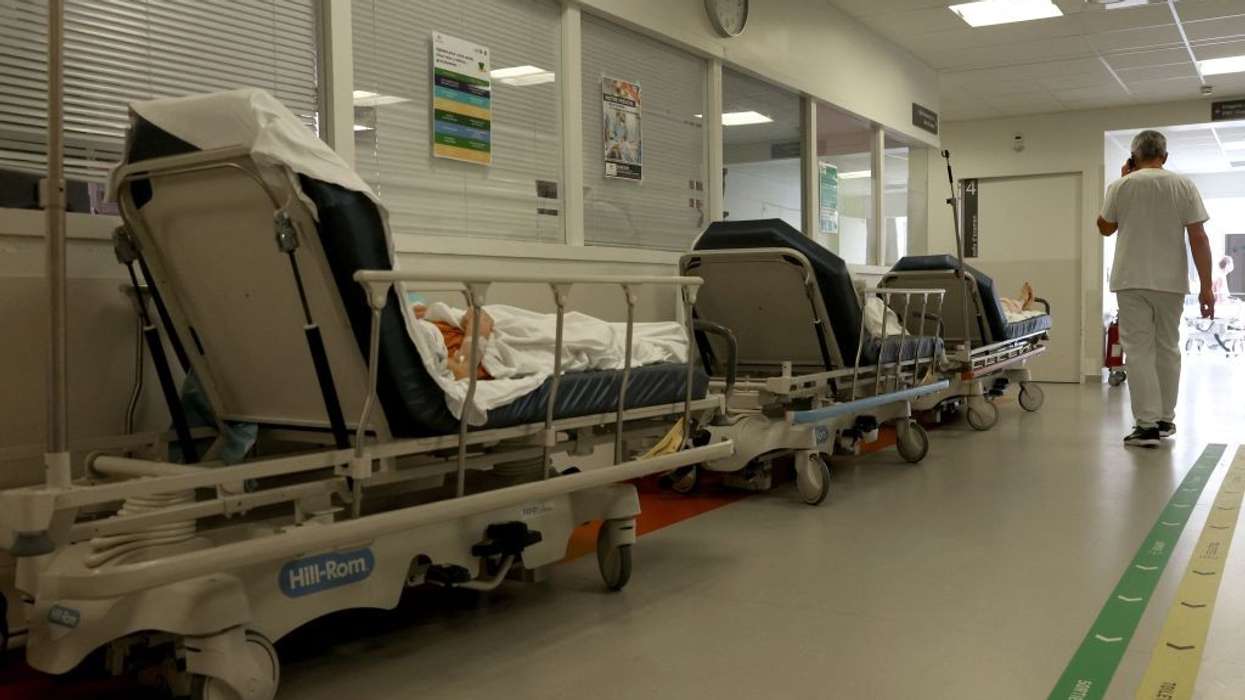
A report by charity Age UK has stated that elderly patients are bearing the brunt of the national A&E 'corridor care' crisis and have to wait for days to get a hospital bed.
It stated that in 2024/25, more than 100,000 individuals aged 65 or over endured waits on trolleys for up to three days in A&E corridors.
The charity obtained these details via a Freedom of Information request about unplanned attendances at major, consultant-led A&E departments.
Age UK pointed out that over half of these patients, totalling 53,870, were aged 80 or over.
Some of them had to lie on the floor and wash in the toilet sinks during their prolonged waits.
Jennifer, 76, who waited for 36 hours, told Age UK, “I had no washing facilities at all. I was told to wash in a toilet sink with no plug. I felt like something that had been left on the streets.”
Others describe being left vomiting while sitting on plastic chairs or lying on the floor, alone, too unwell to even move, some developing pressure sores, or self-discharging against medical advice because they felt safer taking their chances outside the hospital than staying.
They said they were exhausted, frightened, and robbed of their dignity when they were at their most vulnerable, and in some cases, not even being offered a glass of water.
It may be recalled that health secretary Wes Streeting had pledged to end the use of corridor care in England by 2029, if not sooner.
Age UK said there’s a pressing need for ministers to publish a plan setting out how this is to happen, to give hope to hospital staff who are in despair about having to work in these awful conditions, and reassurance to older people, growing numbers of whom are fearful of what a trip to the hospital may bring.
To mitigate the suffering of older patients, Age UK said hospitals should ensure that doctors and other professionals who specialise in the health of older people work in or close to A&E and are available 24/7.
They are better able to assess older people’s needs accurately and quickly, it added.
Age UK charity director Caroline Abrahams said, “Waiting for more than 24 hours, often on a hard chair in a corridor or other overspill area, when you are extremely unwell, in pain, probably alone, maybe fearing for your life, would be horrific at any age, let alone if you are in your eighties or beyond,” she said.
“And yet this is happening day in, day out in the worst affected hospitals, to the extent that it’s become routine.”
NHS Confederation acute and community care director Rory Deighton said, “This new analysis paints a deeply shocking picture of people’s experiences waiting for care in busy A&E departments.
"As well as being undignified, unsafe, and frustrating for patients and their families, corridor care can leave NHS staff with the moral injury of being unable to provide the quality of care they would like to.
“It is also true that corridor care has gone from being a last resort during the busiest periods to an increasingly common way of managing the rising demand the NHS is facing. It is a symptom of wider system pressures, including problems with patient flow, rising demand due to an ageing population, and fragility in the social care sector."
The Age UK findings come shortly after an investigation by the Health Services Safety Investigations Body (HSSIB), an executive non-departmental public body sponsored by the Department of Health and Social Care, which showed the rampant rise in corridor care across the NHS.
The HSSIB had noted that these temporary care environments are used throughout the year, not just during ‘winter pressures’, and these spaces are not originally designed, staffed, or equipped for patient care.
The risks include difficulty in monitoring patients, insufficient staff, infection risk, a lack of piped oxygen and suction, and compromised response to medical and fire emergencies.