








Key Summary
- The investigation, carried out between August and December 2025, specifically looked at acute hospitals in England
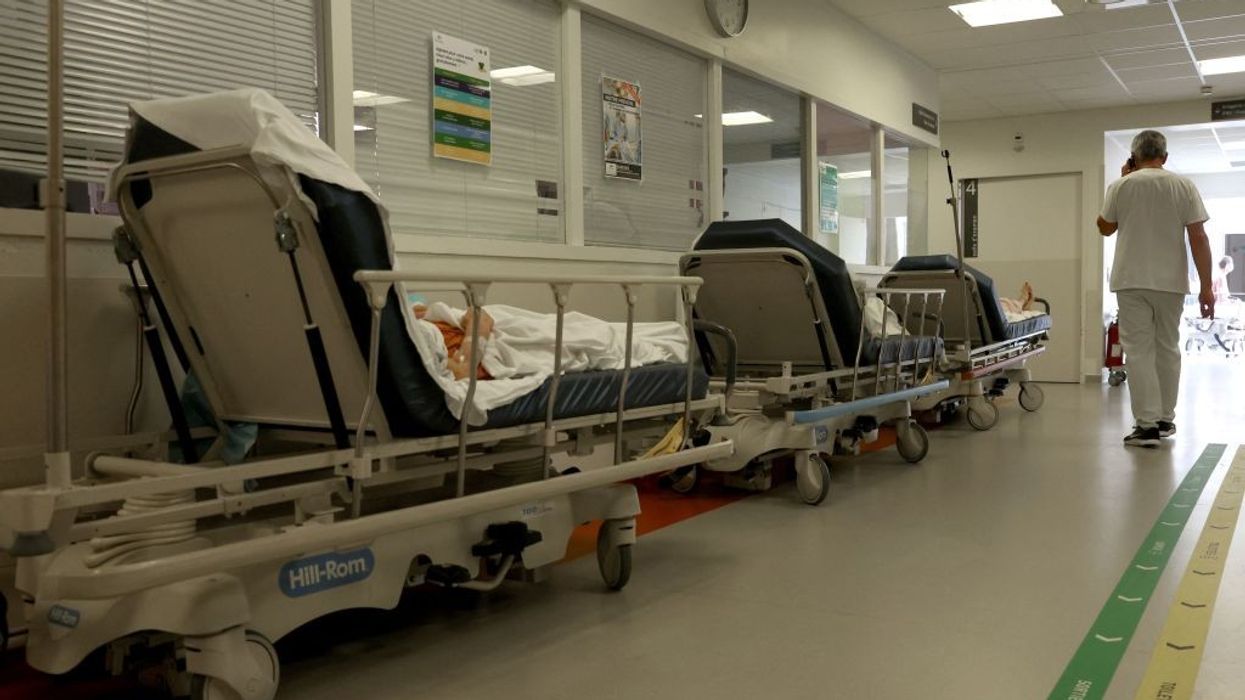
- Temporary care environments include beds and trolleys in corridors, upright and reclined seating areas, extra spaces being made on wards or in cubicles, and other converted spaces
- The Royal College of Nursing has slammed the normalisation of this practice and said there is no "safe level of corridor care"
The Health Services Safety Investigations Body (HSSIB), an executive non-departmental public body sponsored by the Department of Health and Social Care, has released a new report on the rampant rise in corridor care across the NHS.
The report noted that these temporary care environments are used throughout the year, not just during ‘winter pressures’.
The patients' safety watchdog observed that these spaces were not originally designed, staffed, or equipped for patient care.
"Their use requires a difficult compromise in patient experience, including privacy and dignity, in the interests of sharing risk and supporting patient safety."
The investigation, carried out between August and December 2025, specifically looked at acute hospitals in England and the actions trusts were taking to mitigate patient safety risks.
The risks include difficulty in monitoring patients, insufficient staff, infection risk, a lack of piped oxygen and suction, and compromised response to medical and fire emergencies.
The study found that the staff had a strong desire not to have to use corridor care, and were motivated to make things as good as they could for patients within these limitations.
The staff described feelings of "moral injury" for having to take care for patients in temporary care environments and the resulting compromise in patients’ experience.
Temporary care environments were located across hospital estates, in emergency departments, and in ward areas.
They included beds and trolleys in corridors, upright and reclined seating areas, extra spaces being made on wards or in cubicles, and other converted spaces, for example, side storage rooms, office spaces and family rooms.
Trusts were making adaptations and adjustments to the environment, staffing, and delivery of care where possible to mitigate patient safety risks when using temporary care environments.
The more challenging risks to patient safety in temporary care environments include medical emergencies, fire safety, and infection prevention and control.
While responding to this report, the Royal College of Nursing slammed the normalisation of corridor care.
"The report shows that trusts are making corridor care adaptations more permanent, with some trusts now reportedly deploying staff and installing call bells and plug sockets in corridors."
The report said that national and local data on the time patients are in temporary care environments is variable and inconsistent.
'Damning indictment'
The RCN said this is the clearest sign of the flawed thinking within a system that has become resigned to the managed decline of care standards.
RCN chief nursing officer Lynn Woolsey said the report is a 'damning indictment'.
“It is difficult to overstate the catastrophic state of the health service if patients’ expectations are so low that they almost expect being left on trollies in corridors with too few staff to care for them.
"This is the clearest sign of the flawed thinking within a system that is resigned to managed decline. The reality is that there is no safe level of corridor care, or level of staffing that can make it so."
BMA consultants committee emergency care lead Dr Den Langhor said, “Stop-gap, local solutions must never become the new normal.
“The Government has pledged to end corridor care. The reality is that this will require investment in staff, in beds and in buildings across the whole system to create the capacity needed to treat patients in safety and dignity.”
Healthwatch deputy chief executive Chris McCann said, “We agree with HSSIB’s findings, which reinforce our own evidence that patients are being cared for in undignified conditions, often for hours at a time, in non‑clinical spaces.
“The stories people share with us highlight the urgent need to address the realities of corridor care. One person told us in December that they waited 40 hours in a hospital corridor, during which time a patient next to them died on a trolley.
"Sleep deprivation, loss of dignity, exposure to distressing situations, and the desperation that drives people to self‑discharge put patients’ health and wellbeing at risk.
“No one should ever have to receive medical care in a hallway."
Rory Deighton, acute and community care director at the NHS Confederation, said, “As this report highlights, corridor care has gone from being a last resort during the busiest periods of winter to an increasingly common way of managing the rising demand the NHS is facing.
"We know that corridor care is undignified, unsafe and frustrating for patients and their families, and leaves NHS staff with the moral injury of being unable to provide quality of the care they would like to.
“But HSSIB also highlights that many patients reported that being treated in temporary areas was better than sitting in waiting rooms, while staff described it as the ‘best worse’ option compared to leaving people at home, in ambulances or in waiting rooms.
"This demonstrates the challenging choices that health leaders are having to make to maintain patients' safety."