








By Jessica Somauroo
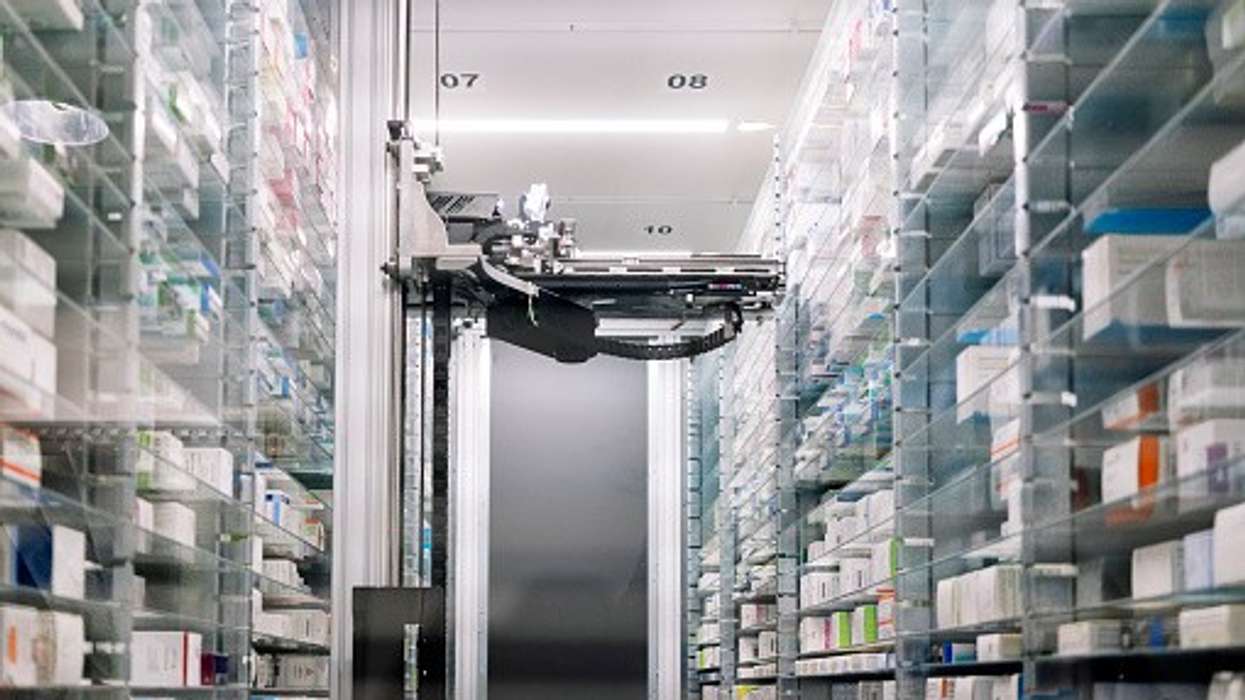
As community pharmacies face rising workloads, workforce pressures and tighter reimbursement, many are turning to automation and robotics to improve efficiency and release capacity for clinical services. Dispensing robots promise faster throughput, more accurate picking and a potential reduction in staffing costs. However, the true level of efficiency achieved often depends less on the robot itself, and more on how well it is integrated with the pharmacy management system (PMR).
But while the benefits of automated systems are well documented, they are not a cure-all for pharmacy’s challenges, and their potential drawbacks must also be considered.
The challenges: where robotics can go wrong
Robotics as a bolt-on
Without clear goals and a defined strategy, new technology risks adding complexity rather than removing it. In many cases, robotic functionality has been added to existing PMRs as a bolt‑on or an afterthought, which can introduce new friction points. Common issues include: inconsistent product mapping, limited stock visibility at the point of dispensing, and workflows that still mirror paper-based processes, rather than exploiting what automation can do. This can introduce and propagate errors, reduce the quality of service delivered, and lead to poorer outcomes for both pharmacies and patients.
Identifying and mapping stock
A key issue is how medicines are identified and mapped within the robot. Systems relying on PIP codes – where different brands of the same medicine each have a unique PIP code – can struggle with branded generics, leading to dispensing errors, stock discrepancies and time spent fixing mappings or locating items manually. Using NHS Dictionary of Medicines and Devices (DM+D) codes – where a specific medicine, across different manufacturers, has the same code – can instead eliminate these problems, providing a consistent way to identify medicines across brands. This improves mapping accuracy, stock visibility and control over automated dispensing.
The opportunities: making the systems speak the same language
PMR and robotic integration
The combined impact of robotic automation and a fully digital pharmacy management system offers greater accuracy, agility and capacity, while giving staff more time to focus on patients rather than processes. A modern PMR provides the digital foundation for efficient workflows across all parts of the dispensary. When paired with a robotic system, it enables fully automated picking, labelling, and stock rotation.
Improving workflow design
Rather than treating each prescription form separately, some systems now consolidate all items for a patient into a single electronic order. This allows a pre-check of stock availability across every line before dispensing begins. If all items are available, the order can be dispensed with confidence. If not, the system can flag issues early, avoiding unnecessary interruptions to the dispensing process.
Intelligent stock control
Intelligent stock control and ordering built into a PMR can further enhance the benefits of robotics. Key capabilities include:
- Identifying items required for outstanding prescriptions, but not in stock
- Avoiding duplicate orders for medicines already on the way
- Automatically reordering fast-moving products, while reordering slow-moving and high-cost items on an ‘as needed’ basis.
This combination of accurate stock data, tighter control of expensive items and better ordering logic can reduce overall stockholding and free up cash.
A fully digital pharmacy?
The opportunity for community pharmacy is clear. When implemented well, automated systems can release capacity, improve safety, reduce waste and create the headroom needed to deliver more meaningful patient care.
But that value is not a given. The question for community pharmacy is, therefore, not if automation will transform the sector, but how robotics and PMR systems can work together.
(Jessica Somauroo is the cofounder of CXO)