







Key Summary
- The UKHSA said that following risk assessment by the local health protection team, antibiotics and vaccination may also be made available to additional year groups.
- It said that early laboratory analysis indicate that the vaccine being currently offered to students should protect against the strain of meningitis behind the outbreak.
- Kent County Council’s director of public health Dr Anjan Ghosh said meningitis is not as contagious as Covid or measles.
The number of meningitis cases in Kent has risen to 29 from 27, while the UK Health Security Agency (UKHSA) is expanding the offer of preventative antibiotic treatment and vaccination to control the outbreak.
The UKHSA said in a statement: "18 laboratory cases are confirmed and 11 notifications remain under investigation, bringing the total to 29."
Preventative antibiotic treatment and vaccination will now be offered to sixth form students (years 12 and 13) in schools and colleges in Kent with confirmed or probable cases.
The agency also said that following risk assessment by the local health protection team, antibiotics and vaccination may also be made available to additional year groups.
Students can, and should, continue to attend schools and colleges as normal, it added.
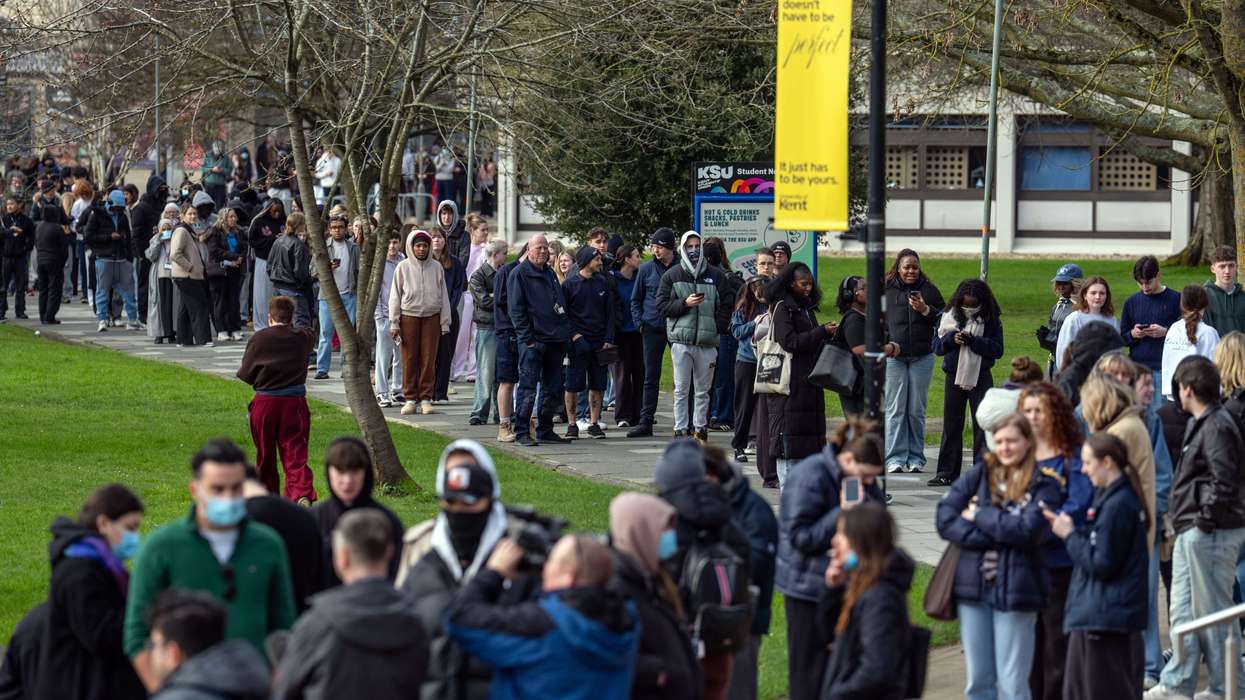
The University of Kent has rolled out a targeted vaccination programme for the deadly bacterial strain for some 5,000 students, with hundreds of students queuing on campus daily to get the jab.
Kent County Council’s director of public health, Dr Anjan Ghosh, told a media briefing that three scenarios were being looked at over the next four weeks.
He said the first scenario is that the outbreak remains contained in Kent.
“Second scenario is that there are people who’ve left, they’ve gone off campus, and many of them don’t stay in Kent, they go and stay elsewhere,” Dr Ghosh said.
“They were incubating when they left, and then they became cases, and there are small household, sporadic clusters outside of Kent.” He stressed these cases would be “containable”.
The third scenario, described by Dr Ghosh as the “worst-case scenario”, would result in another cluster outside of Kent.
He said the second scenario was most likely to happen.
Dr Ghosh stressed that meningitis is not as contagious as Covid. He said, “Meningitis is not spread the same way that Covid is spread, or measles is spread.
“This requires protracted close contact for it to be spread, and that usually is in a household context or in a dormitory context."
'Vaccine effective'
The UKHSA has said that early laboratory analysis had shown the vaccine being offered to students should protect against the strain of meningitis behind the current outbreak.
It said the strain belonged to a group of meningococci known as ST-41/44, which had been circulating in the country in recent years.
The confirmation that the Bexsero vaccine covers the strain had given "important reassurance," the agency said, while further analysis would continue.
UKHSA said 2,360 people had now received vaccinations and about 9,840 courses of antibiotics had been administered as part of the response.
Authorities expanded vaccination clinics on Thursday after health officials warned they were not yet able to say the outbreak had been contained.
The outbreak has driven high demand for the MenB vaccine nationally.
The government has decided to release 20,000 doses of MennB vaccine from NHS supply to support continuity of private provision, enabling up to 2,000 pharmacies to receive the vaccines.
Father's plea
The father of one of the two young people who died - 18-year-old Juliette Kenny - called for "urgent action" on vaccinating young people against meningitis B.
The outbreak, which came to light at the weekend, has been centred on Kent University in southeastern Canterbury and a nightclub popular with students.
The other young person who died was a 21-year-old student, according to authorities.
Michael Kenny called for "urgent action" on vaccinating young people against meningitis B.