






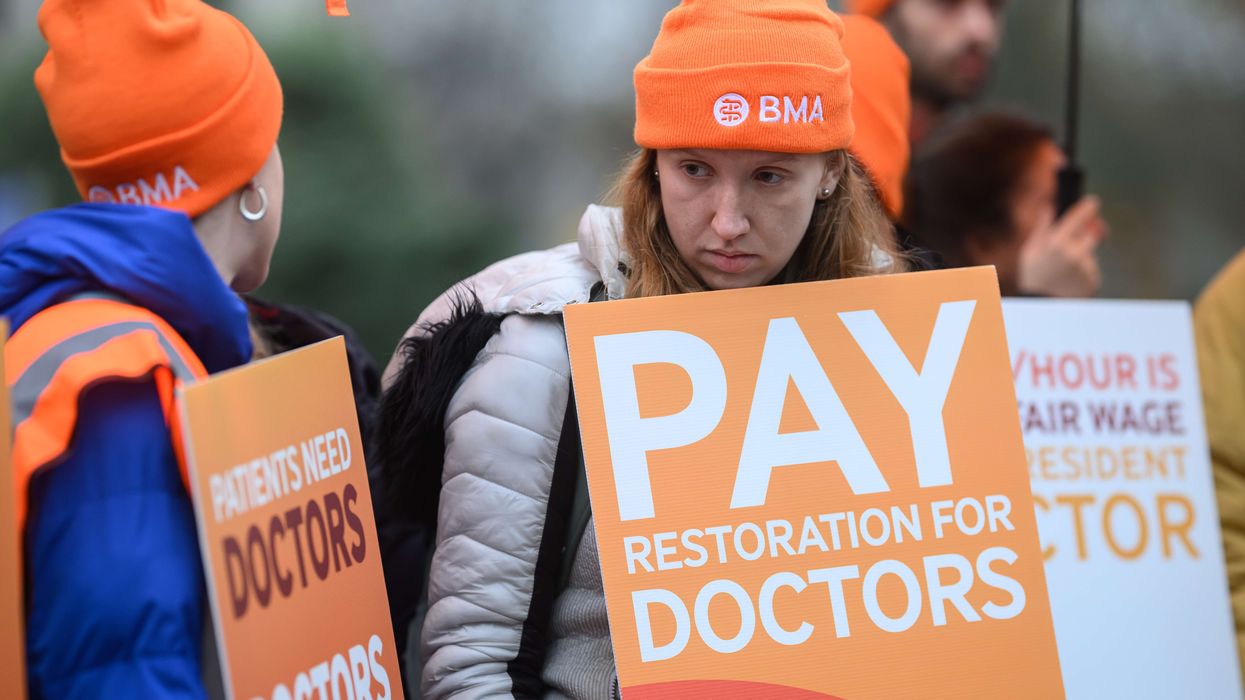

Resident doctors in England would go ahead with the five-day strike planned for this week, after they voted to reject the latest offer from the government on working conditions, the British Medical Association union has said.
The doctors' union - which represents resident doctors who make up nearly half of the medical workforce - will stage a walkout from Wednesday as part of a series of strike actions that have taken place earlier this year over pay and working conditions.
"Strikes will go ahead from 17-22 December, after resident doctors in England voted overwhelmingly to reject the latest offer from [the government]," the BMA said on X.
BMA chair Jack Fletcher said in a statement, "Tens of thousands of frontline doctors have come together to say ‘no’ to what is clearly too little, too late."
He said the union was still willing to work to find a solution.
Health secretary Wes Streeting has urged resident doctors to work this week to help deal with the impact of a wave of super flu, despite their union's decision to go-ahead with a five-day strike.
"I am appealing to ordinary resident doctors to go to work this week," Streeting said in a statement on Monday (15), adding that proceeding with the strike showed a "shocking disregard for patient safety".
Prime minister Sir Keir Starmer said he was "gutted" by the result, describing it as "irresponsible" given the rising pressure from flu.
Surge in super flu
The strike will add to pressure on an already stretched healthcare service after NHS England warned last week that hospitals were facing a "worst-case scenario" from a surge in cases of a virulent strain of flu.
Streeting told Sky News that the government was open to the doctors' union rescheduling the strikes to minimise the risk to patients caused by the flu wave.
Flu hospitalisations in England surged by more than 50 percent in early December, reaching an average of 2,660 patients a day - the highest level for this period.
Health leaders have stated that there is still no sign of a peak in sight.
Pay dispute
The BMA said 83 percent of resident doctors, previously known as junior doctors, rejected the government's offer in an online survey with a 65 percent turnout of its more than 50,000 members.
The offer made by the government last Wednesday did not include new pay terms, something the BMA has been campaigning for even before the Labour Party won last year's election.
Shortly after coming to power, Streeting struck a deal with the doctors, offering them a 22 percent pay rise - 7 percentage points below the 29 percent sought by the BMA.
The union has also been pushing for a better pay offer from the 5.4 percent pay increase announced earlier this year, saying resident doctors were still suffering from years of pay erosion.