




Key Summary
- A major study by Google, the National Health Service, and Imperial College London found AI can detect more breast cancer cases than human readers and reduce scan-reading time.
- Analysing 175,000 mammograms, AI improved cancer detection, reduced false positives, and performed as well as humans when resolving disagreements between doctors.
- Experts say AI could ease pressure on radiologists, but it should still work alongside doctors rather than replace them.
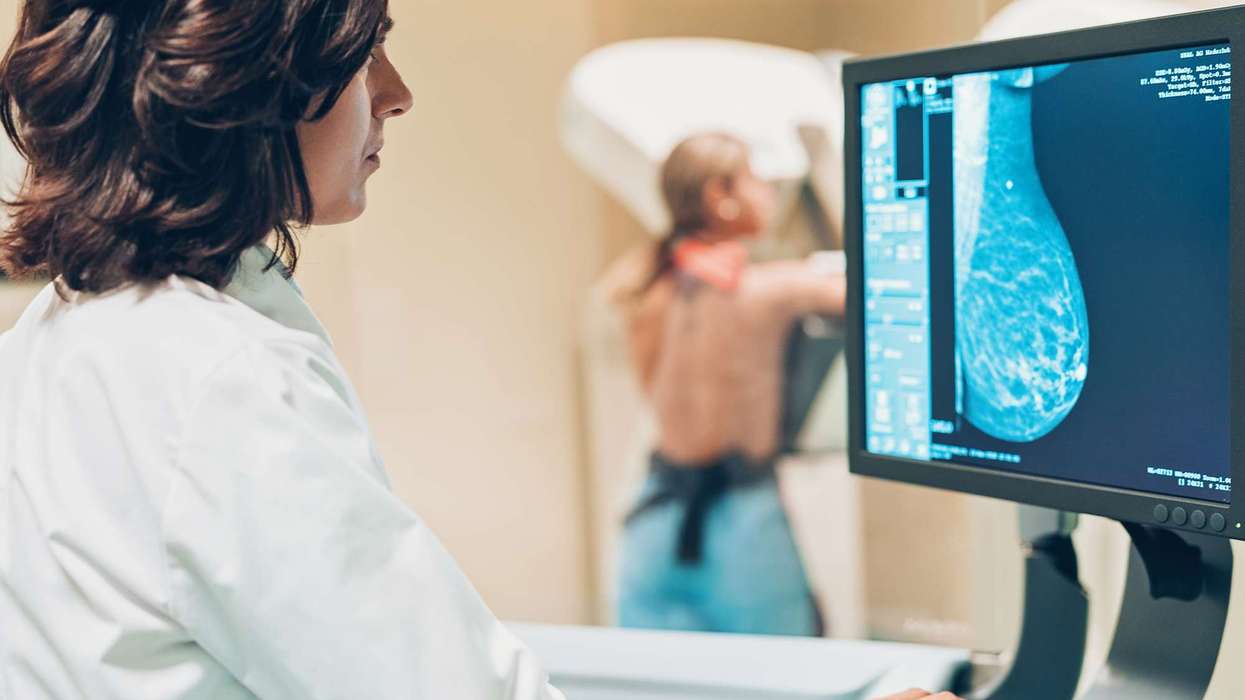
The recent study conducted by Google, the NHS and Imperial College London proves artificial intelligence can identify more breast cancer cases than doctors.
In the UK, breast cancer scans are assessed by two radiologists. Each reads the scan separately, with the second reader either knowing or not knowing the first reader’s decision.
This research looked at how two human readers compared to one human reader plus one AI reader, using AI software developed by Google. The findings were published in Nature Cancer.
The study considered 175,000 breast cancer scans and the AI detected more cases of invasive cancer, more cases overall, had fewer false positives, and recalled fewer women having their first scan than humans did. It also reduced the time spent reading scans by almost a third.
AI as the second reader achieved better results than the first human reader, with a higher cancer detection rate. It also identified more invasive cancers, significantly reduced false positives, and detected 25 per cent of interval cancers (cancers detected between healthy scans).
This study has three parts where the first part observes 125,000 women between 50 and 70 years from five NHS screening services, who were screened with a 39-month follow up period.
The final analysis also included 115, 973 breast cancer scans, where the AI results overshadowed the human readings.
The second part of the study looked at 9,266 current cases at two screening services at 12 sites in London. The AI had a higher recall rate than the humans.
The third part of the study looked at the use of AI in arbitration, when first and second readers don’t agree, in 50,000 women.
During arbitration, a third reader analyses the scan and makes a final decision. It was found that AI fared comparably to the humans.
Professor Deborah Cunningham, a consultant radiologist at Imperial College Healthcare NHS Trust and one of the authors, said, “This study provides good evidence for the potential use of AI in the real world of screening mammography where staffing is particularly difficult.”
Breast Cancer is a common type of cancer found in the UK with a woman diagnosed every ten minutes.
Unfortunately, there is still a 29 per cent shortfall of clinical radiologists which is expected to be 39 per cent by 2029, highlighting the workload underwent by existing professionals.
However, some experts told Sky News that AI must be used alongside a radiologist’s or doctor’s guidance for the best results, as it tended to flag more cases that didn't have cancer.