







Though born in Britain, Babatunde Sokoya’s life took a decisive turn at the age of ten. His mother decided to move the family to Nigeria, a transition he recalls was “much against my wishes.”
At the time, he struggled to understand why she would uproot her children from the UK, yet years later, he recognises it as one of the wisest decisions of his life. His mother, who passed away last June, wanted her children to understand their ancestry and grow up grounded in their roots. Today, Sokoya credits that move with forging both his character and his career.
In hindsight, he believes that had he remained in the UK, university might never have been an option. Reflecting on his childhood peers in Britain, he notes the starkly different paths they took: one developed a heroin addiction, another was imprisoned three times by the age of 18, and a third pursued a career in boxing.
“Even though I resented my mother for taking us to Nigeria at the time,” he says, “I now see it was the best thing she could have done. I connected with my grandparents and extended family, experiencing life through a completely different lens.”
Rather than settling in a major city, his mother enrolled him in a good school, an experience Sokoya views as the foundation of his success. Without that rigorous education, he maintains he would never have secured a place at Obafemi Awolowo University.
His ties to these formative institutions remain strong. He returns to his former school annually to provide scholarships for young girls, a commitment he finds deeply rewarding. “I am grateful to give back,” he says, noting that the cost of sponsoring a child’s education for a full year can be as little as £18. While an easily overlooked sum in the UK, it is life-changing in Nigeria, and Sokoya views this philanthropy as part of his mother’s enduring legacy.
Sokoya initially entered university to study agriculture during his preliminary year, a common first-year science pathway in Nigeria. However, as his studies progressed, he realised his aptitude lay in chemistry and mathematics. Noticing that pharmacy students consistently achieved the highest academic marks, he shifted his focus to join their ranks. While he sought a career dedicated to helping others, he was certain that medicine was not his calling.
‘Divine intervention’
Sokoya describes his pivot to pharmacy as something akin to “divine intervention.” He admits that before university, he knew very little about the profession. He later discovered that his great-grandfather had been a village herbalist, sought out by the community for advice and remedies. “Perhaps there was a trace of that in me,” he reflects.
After graduating, Sokoya returned to the UK, where his father still lived. He joined Lloyds Pharmacy and spent a decade in the multiples sector. While he values that experience, he eventually found the corporate environment restrictive. “Those ten years provided a broad understanding of the industry,” he says, “but I realised I didn't want to be an employee forever.”
The leap to independence
This drive led him to establish Easter Pharmacy, which he has now steered for 20 years. He describes the move as the best decision of his professional life. “I have not looked back,” he says. Ownership granted him the autonomy to innovate, invest, and practise pharmacy in alignment with his personal values.
Reflecting on a career spanning nearly 30 years, Sokoya observes that the profession has transformed. His longevity, he believes, stems from a willingness to anticipate industry shifts rather than merely reacting to them.
Upskilling for the future
Early on, he recognised that pharmacy had to move beyond simple dispensing. Committed to a clinical future, he completed a clinical pharmacy diploma 15 years ago and qualified as an independent prescriber a decade ago, long before prescribing became a central pillar of community pharmacy.
“At the time, people thought these changes were years away,” he says. “But now, I am running these services directly from my pharmacy as part of the independent prescribing partner pilot.” This foresight has positioned him at the forefront of the sector as pharmacists take on broader clinical remits.
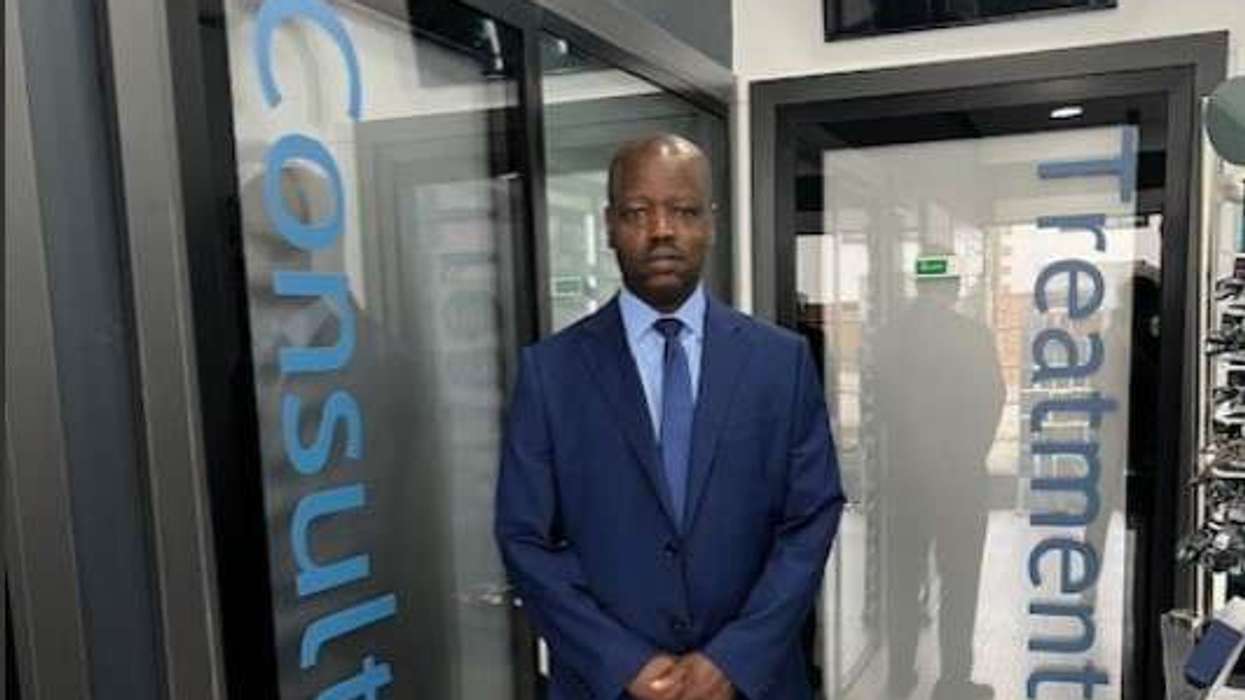
Technology is the other cornerstone of his strategy. A staunch advocate for automation, Sokoya has invested heavily in digital innovation. His pharmacy now houses four consultation rooms, with plans for three more. When he first took over the premises, there was only one. Even his bank manager questioned the need for extra space. “But I knew where the industry was heading,” he says.
That intuition proved vital when Easter Pharmacy launched its weight management programme. The service has been remarkably successful, treating around 40 patients a month and generating £120,000 in additional turnover last year alone. “Without those consultation rooms, the service simply wouldn’t exist,” he explains.
With the expansion of prescribing rights, Sokoya is preparing for what he expects will be another rapid NHS rollout. “When these changes arrive, they happen fast,” he says, citing the swift implementation of Pharmacy First. “Only those who are prepared can capitalise on the opportunity.”
Embracing automation
One of his most significant capital investments was a dispensing robot. Many, including his bank, initially viewed the decision as unnecessary for his prescription volume.
For Sokoya, however, the robot was a matter of efficiency and clinical safety. He explains that automation has effectively halved dispensing costs, from £10 to £5 per item, by reclaiming time and eliminating manual errors. “We cannot continue with the same old methods and expect the same level of pay,” he argues.
Equally important is the professional peace of mind. Before the installation, Sokoya recalls the perennial worry over dispensing errors. Now, he can take leave without such anxieties. The robot’s barcode system and audit trail ensure precision, reducing stress for the entire team.
Easter Pharmacy has also integrated artificial intelligence. Sokoya uses iDescribe during consultations, allowing him to focus entirely on the patient rather than note-taking. Post-consultation, the system generates a summary for review and storage. “It saves time and significantly improves the quality of patient interaction,” he says.
For Pharmacy First services, his trainees use pre-appointment questionnaires to gather clinical data. This ensures consultations are lean and focused. “When the patient arrives, we already have the background,” Sokoya says. “We simply take observations like blood pressure and heart rate.” His message is clear: “The technology exists; we just need to use it.”
Finding opportunity
Despite the prevailing gloom regarding funding and closures, Sokoya remains a cautious optimist. He acknowledges that government funding is inadequate, yet insists opportunities remain for those who adapt.
Patients at Easter Pharmacy are willing to pay £100 for an initial consultation and up to £300 a month for ongoing care, valuing the structured, personalised service they receive. This high-standard model has earned the trust of local GPs, who now refer patients directly to him, a move Sokoya considers the ultimate validation.
He also conducts popular asthma and hypertension reviews, noting that pharmacies offer the accessibility and flexibility the modern NHS requires. In his view, pharmacists are the engine room of NHS’s 10-year plan.
Operational pressures, including rising wages and business rates, remain a constant challenge. Sokoya counters this by regularly reviewing staffing models and service offerings, believing that adaptability is the only route to survival.
He is also monitoring the structural shifts within the NHS, such as the transition from Hertfordshire West Essex Integrated Care Board to Greater Essex ICB. As an Essex LPC member, he remains central to discussions regarding the future of community pharmacy in the region.
A seismic shift
Looking ahead, Sokoya is energised by the "seismic shift" in the profession, particularly with 20,000 independent prescribers set to qualify by September. While some will enter primary care networks, he believes community pharmacy must be ready to absorb this skilled workforce.
He is also tackling antimicrobial resistance (AMR) as part of the East of England AMR group. While antibiotics are necessary, he champions rational prescribing—an area where he believes community pharmacists can make a profound impact.
For the next generation, Sokoya’s advice is both practical and bold. He encourages graduates to learn the ropes within large chains but to aim for ownership within four years. Running a pharmacy, he says, offers the autonomy and creativity to make a tangible difference.
He predicts a future where pharmacy technicians manage the dispensary while pharmacists provide clinical care in consultation rooms. Although he admits that recruiting technicians is currently a challenge, his vision for the future is unwavering: those who prepare will thrive, while those who resist change will be left behind.