







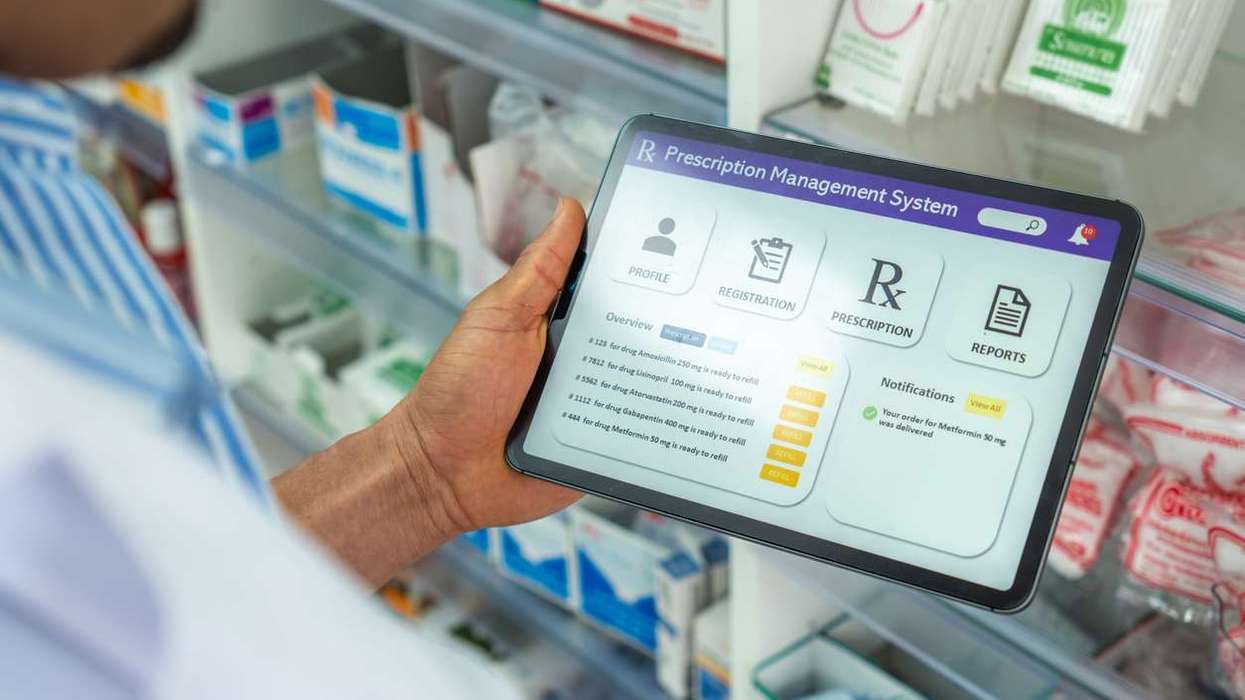

Pharmacy operations have grown considerably more complex over the past decade as prescription volumes rise, insurance adjudication rules tighten, and patient expectations around digital convenience continue to climb. In response, independent pharmacies, regional chains, and enterprise pharmacy networks are investing in custom software designed to automate prescription management, streamline e prescribing workflows, tighten inventory control, and improve patient engagement, while many forward looking operators explore services that align technology architecture with regulatory and reimbursement realities. These systems are no longer optional infrastructure but operational necessities in an increasingly regulated and competitive market, which is why pharmacy leaders increasingly explore services focused on scalable integration, data security, and long term performance optimization.
Yet the investment decision is rarely straightforward. Many pharmacy decision-makers enter the process with incomplete cost estimates, often anchored to initial development quotes that exclude substantial ongoing and hidden expenses. Understanding what custom healthcare software for pharmacies actually costs across the full development lifecycle and beyond deployment is essential to making financially sound decisions and avoiding budget overruns that can derail even well-planned digital transformation initiatives.
Core Cost Categories in Custom Pharmacy Software Development
Custom pharmacy software development is not a single-line expense. It encompasses a series of distinct cost categories, each contributing meaningfully to the total investment.
Discovery and Business Analysis
Before a single line of code is written, a credible development team will conduct detailed discovery: mapping existing workflows, identifying integration requirements, documenting compliance obligations, and defining system architecture. This phase typically runs between $10,000 and $30,000 depending on system complexity. Skipping or compressing it is one of the most common and costly mistakes pharmacy organizations make, since requirements discovered mid-development inflate costs significantly.
UI/UX Design
Pharmacy staff interact with software under real pressure: processing high prescription volumes, responding to patient queries, and managing claim exceptions in real time. Poor interface design directly affects error rates and throughput. Professional UI/UX design for pharmacy systems typically adds $15,000 to $40,000 to the project budget, depending on the number of user roles and interface complexity.
EHR and E-Prescribing Integration
Integration with Electronic Health Record systems and e-prescribing networks such as Surescripts is a non-negotiable requirement for most modern pharmacy platforms. These integrations are technically demanding and often involve licensing fees, data format standardization, and ongoing maintenance. Integration development alone can add $20,000 to $80,000 to a project, depending on the number and complexity of connected systems.
Compliance Implementation
HIPAA compliance is a baseline requirement, but pharmacy software must also address state-specific regulations, DEA controlled substance protocols, and payer-specific adjudication rules. Compliance engineering, which includes audit logging, access controls, encryption, and consent management, typically accounts for 15 to 25 percent of total development costs. This is an area where underinvestment creates serious financial and legal exposure.
Quality Assurance, Deployment, and Infrastructure
Comprehensive QA testing in a healthcare environment requires simulated workflow testing, security vulnerability assessments, and user acceptance testing across staff roles. Paired with cloud infrastructure setup, deployment pipelines, and initial configuration, these phases commonly add another $20,000 to $60,000 to the project total.
Hidden and Long-Term Costs: Understanding Total Cost of Ownership
The development invoice represents only a portion of the true financial commitment. Pharmacy executives and CFOs need to account for a range of ongoing and often underestimated expenses when calculating total cost of ownership.
Third-party API licensing for drug databases, e-prescribing networks, insurance clearinghouses, and identity verification services can add $15,000 to $50,000 annually. These costs scale with transaction volume and often increase as the platform grows.
Data migration from legacy systems is routinely underestimated. Moving years of prescription records, patient profiles, and inventory data into a new system while maintaining data integrity and regulatory continuity can cost between $10,000 and $40,000 depending on data volume and source system architecture.
Staff training directly affects how quickly the organization realizes value from the investment. A poorly trained team will underuse the platform and reintroduce manual processes the software was designed to eliminate. Budget $5,000 to $20,000 for structured training programs, documentation, and transition support.
Cybersecurity audits and ongoing security maintenance are recurring expenses that pharmacy organizations cannot responsibly defer. Annual penetration testing, vulnerability assessments, and security patch management represent a realistic annual cost of $10,000 to $30,000 for systems handling protected health information.
Regulatory updates are inevitable. Drug scheduling changes, payer policy revisions, and evolving state pharmacy regulations require periodic software modifications that must be planned into the annual operational budget.
Cloud hosting and infrastructure scaling costs typically range from $2,000 to $15,000 per month for mid-size pharmacy platforms, depending on transaction volumes, redundancy requirements, and geographic distribution.
Custom vs. Off-the-Shelf Pharmacy Systems: A Balanced View
The decision between custom development and commercially available pharmacy management systems is not purely a technology question. It is a strategic and financial one.
Off-the-shelf solutions offer meaningful advantages: lower upfront cost, faster deployment timelines, and established vendor support structures. For independent pharmacies with standard workflows and limited integration requirements, a commercial system may deliver adequate functionality at significantly lower total cost, typically $5,000 to $30,000 in setup fees plus ongoing licensing of $500 to $3,000 per month.
However, off-the-shelf systems carry structural constraints. Customization options are limited, integration with non-standard payer systems or internal enterprise platforms can be difficult, and long-term licensing costs accumulate. Organizations that outgrow the system face costly re-implementations. Vendor dependency also introduces risk, since pricing changes, discontinuation events, or support degradation can disrupt operations with little recourse.
Custom pharmacy software development eliminates these constraints. The platform is built to the organization's specific workflows, can be scaled and modified as business needs evolve, and eliminates ongoing per-user licensing fees. For organizations with complex multi-location operations, proprietary workflows, or long-term growth plans, custom development typically delivers superior ROI over a five to ten year horizon despite higher initial investment.
Factors That Drive Cost Variability
Pharmacy software development costs are not fixed. They vary considerably based on several key factors that decision-makers should evaluate carefully during scoping.
Scope complexity is the primary driver. A platform handling basic prescription dispensing has fundamentally different requirements than one managing compounding workflows, specialty pharmacy protocols, or multi-location synchronization.
Integration volume has a compounding effect on cost. Each additional integration, whether to a PBM, EHR, insurance clearinghouse, or state prescription monitoring program, requires development work, testing, and ongoing maintenance. Organizations with five or more required integrations should anticipate a substantial premium over baseline estimates.
Regulatory jurisdictions matter significantly for multi-state pharmacy operators. Each state maintains distinct controlled substance reporting requirements, pharmacist licensing rules, and telepharmacy regulations. Supporting multiple jurisdictions requires additional compliance engineering that grows with geographic scope.
Automation and analytics requirements also influence cost. Basic reporting adds modest cost, while advanced analytics dashboards, predictive inventory models, and automated prior authorization workflows represent substantial additional development investment.
Smart Ways to Save Without Sacrificing Quality
Cost optimization in pharmacy software development is achievable without compromising compliance, performance, or scalability. It does, however, require disciplined planning and informed decision-making from the outset.
Conduct a Thorough Process Audit Before Development Begins
Organizations that invest in a detailed operational audit before engaging a development team consistently achieve better outcomes at lower cost. Understanding which processes are genuinely inefficient prevents over-engineering and ensures development resources are directed toward the highest-value improvements.
Launch with a Focused MVP
A minimum viable product approach concentrates the initial development budget on core workflows: prescription processing, basic inventory management, and compliance infrastructure. Secondary features such as advanced analytics, patient engagement portals, and multi-channel communication tools can be added in subsequent phases once the core system is validated in production. This approach typically reduces initial development cost by 30 to 50 percent while delivering usable value faster.
Choose Modular Architecture
Modular system design allows the platform to grow incrementally. Rather than building all functionality at once, modular architecture lets organizations add capabilities as budget and operational readiness allow. It also simplifies future integrations and reduces technical debt over time.
Leverage Interoperable Standards
Building on established healthcare interoperability standards such as HL7 FHIR and NCPDP SCRIPT reduces the cost and complexity of integrations significantly. Standard-compliant systems connect more efficiently to EHRs, payer networks, and state reporting systems than proprietary architectures, lowering both development costs and long-term maintenance burden.
Plan a Phased Rollout
Deploying across all locations or all user groups simultaneously amplifies risk and cost. A phased rollout, beginning with a pilot location or department, allows the organization to identify workflow issues, refine training, and validate performance before committing to full-scale deployment. This reduces the cost of remediation and improves adoption rates considerably.
Define ROI Metrics Before Development Begins
Organizations that establish measurable success metrics before signing a development contract are better positioned to control scope, prioritize features, and evaluate vendor performance. Metrics such as prescription processing time, claim rejection rate reduction, and inventory shrinkage provide clear benchmarks against which development decisions can be evaluated throughout the project.
Financial ROI: How the Investment Pays Back
Custom healthcare software for pharmacies generates financial return across multiple dimensions, and understanding these return areas is essential for building an accurate business case.
Reduced manual labor is often the most immediate return. Automating prescription entry, insurance verification, and refill processing can eliminate several hours of daily staff time per dispensing station, translating directly to labor cost reduction or redeployment toward higher-value patient care activities.
Faster prescription processing improves throughput and patient satisfaction at the same time. Pharmacies that reduce average dispensing time typically see measurable improvement in prescription volume capacity without proportional increases in staffing.
Lower claim rejection rates deliver direct revenue impact. Automated eligibility verification and prior authorization workflows reduce the manual intervention required on rejected claims and decrease the volume of prescriptions that go unfilled due to adjudication delays.
Improved inventory accuracy reduces carrying costs and waste, particularly for specialty medications and controlled substances that carry significant per-unit cost. Automated reordering logic tied to dispensing patterns can reduce excess inventory by 15 to 25 percent in well-implemented systems.
Reduced compliance risk is a return that is difficult to quantify precisely but carries enormous potential financial significance. A single HIPAA violation finding can result in penalties ranging from $100 to $50,000 per violation, with annual caps exceeding $1.9 million for repeated violations. A properly engineered compliance infrastructure is not simply a regulatory requirement. It is financial risk management.
Common Cost Mistakes That Erode ROI
Several patterns of decision-making consistently produce cost overruns and disappointing outcomes in pharmacy software development projects.
Underestimating integration complexity is the most common. Organizations that scope a project based on the number of integrations rather than their individual complexity frequently discover mid-development that connecting to legacy payer systems, state monitoring programs, or established EHR platforms requires substantially more engineering time than originally anticipated.
Ignoring long-term maintenance costs produces unrealistic TCO projections. A system that costs $200,000 to build but requires $60,000 per year in maintenance, licensing, and compliance updates has a five-year total cost of ownership of $500,000. That figure changes the ROI calculus significantly compared to the initial development quote.
Overbuilding at the outset is a consistent pattern, particularly among organizations that have experienced the limitations of off-the-shelf systems and are eager to build comprehensive functionality immediately. Investing heavily in advanced features before core workflows are validated frequently results in wasted development spend as requirements shift once the system enters real-world use.
Selecting vendors on price alone without evaluating healthcare domain expertise is a costly error. Pharmacy software operates within a highly regulated environment with specific technical standards. Development teams without direct experience in healthcare compliance, HIPAA engineering, and pharmacy workflow design produce systems that require expensive remediation before they can pass compliance review or perform reliably under production load.
Delaying compliance planning until late in development reliably increases cost. Compliance requirements that are engineered into system architecture from the beginning are significantly cheaper to implement than those retrofitted into a system that was designed without them in mind.
Conclusion
Custom healthcare software for pharmacies represents a substantial investment, one that encompasses considerably more than the initial development estimate. Business analysis, integration engineering, compliance infrastructure, QA, training, and ongoing maintenance all contribute to a total cost of ownership that decision-makers must evaluate honestly against the operational and financial returns the system is designed to deliver.
This article is paid content. It has been reviewed and edited by the Eastern Eye editorial team to meet our content standards.