





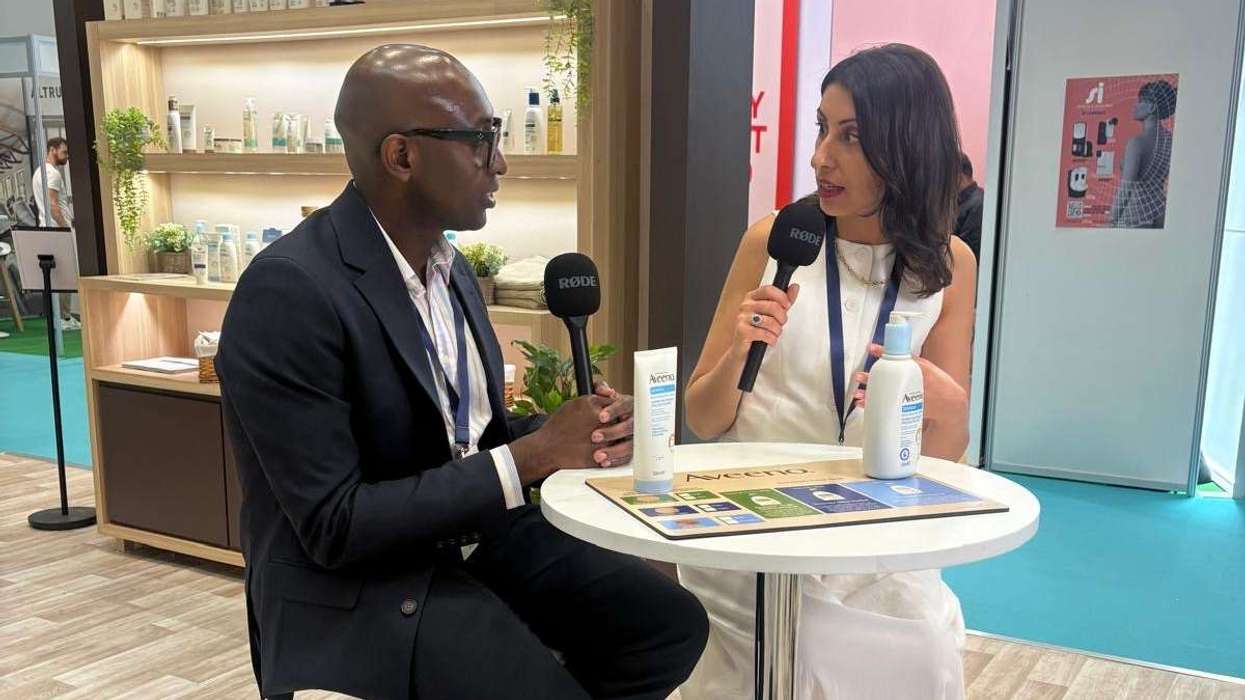

Aveeno presented comprehensive educational materials at the British Association of Dermatologists (BAD) Annual Conference 2026, reinforcing its commitment to supporting healthcare professionals in identifying and managing compromised skin conditions across diverse patient populations.
Understanding compromised skin: from dry skin to eczema
Healthy skin is characterised by a balanced microbiome and an intact skin barrier1 – smooth, soft and free of cracks.2 When the skin becomes dry, however, this barrier can become compromised, allowing bacteria and allergens to permeate the skin and trigger inflammation. 2 Dry skin frequently presents with a more alkaline pH, further destabilising the skin’s microbiome3 and accelerating barrier deterioration.2
Atopic eczema represents one of the most prevalent manifestations of a compromised skin barrier. The condition – characterised by itchy, dry, cracked, and inflamed skin – affects approximately 10-30% of children and 2-10% of adults in the UK, with 70-90% of cases presenting before the age of five.4,5 Notably, atopic eczema exhibits a strong hereditary link, with approximately 70% of those affected having a family history of atopic disease.5
Dry skin across specific patient populations
Aveeno’s educational presentation highlights that dry skin is not confined to eczema-diagnosed patients. Pharmacy professionals are encouraged to recognise its prevalence across three key patient groups:
• Oncology patients: Certain cancer treatments can cause significant skin dryness and change. Macmillan Cancer Support recommends emollients or moisturising creams containing oatmeal or 10% urea for patients experiencing very dry and itchy skin.6
• Menopausal women: Dry and itchy skin are recognised symptoms of menopause and perimenopause, driven by hormonal changes affecting the skin barrier.7
• Older adults: Dry skin is a widespread concern among elderly patients. Regular moisturisation helps to maintain hydration and prevent discomfort.8
The psychosocial burden of skin conditions
A survey conducted by the UK All-Party Parliamentary Group on Skin (APPGS) in 2020 found that 98% of respondents reported that their skin condition affected their emotional and psychological wellbeing.
The presentation underlined the established link between chronic skin conditions and heightened risk of depression and anxiety, and notes that psychosocial factors such as prolonged stress and depressed mood can in turn exacerbate skin symptoms.9
Pharmacy professionals are well-placed to recognise and sensitively address this bidirectional relationship.
Emollients: the cornerstone of eczema management
Despite being the mainstay of eczema treatment, emollients remain chronically under-prescribed and under-used.12 Key prescribing guidance highlighted in the presentation included:
• Targeting 250–500g of emollient per week, with application every 2–3 hours for very dry skin.11
• Emollient quantity should exceed concurrent corticosteroid use by a factor of at least 10.11
• Application to moist skin following bathing, smoothing in the direction of hair growth.11
• Lighter formulations (creams/lotions) recommended for daytime use; richer ointments for night-time.11
• The Primary Care Dermatology Society (PCDS) advises avoiding: sodium lauryl sulphate (SLS), fragrances, preservatives, and antibacterial/antiseptic emollients as leave-on products.10
Dr Zena Willsmore, Consultant Dermatologist at St John's Institute of Dermatology, Guy's and St Thomas' NHS Foundation Trust in London, said: “Emollients are chronically underused in eczema management, and patients deserve better education and support. Aveeno’s Dermexa range – built on decades of oat science – gives pharmacy professionals a credible, evidence-based option to recommend with confidence across a wide range of patient needs.”
The science behind Aveeno’s Triple Oat™ Complex
Central to Aveeno’s Dermexa range is its proprietary Triple Oat™ Complex, combining three active oat-derived components, each with distinct and clinically supported mechanisms of action:
• Soothing Oat Extract: Reduces discomfort from irritated dry skin. Oat extract’s avenanthramides have demonstrated anti-inflammatory and anti-itch activity, reducing cytokine expression in human keratinocytes.14,15
• Barrier-Strengthening Oat Oil: Rich in skin-like lipids, oat oil induces ceramide formation in skin cells, providing occlusive and humectant properties to prevent water loss and strengthen the skin barrier.13
• Nourishing Oat Flour: Soothes skin, balances pH, and acts as a prebiotic to support the growth of commensal microorganisms, helping to restore a balanced skin microbiome.186,17
The formulation is further enhanced with Ceramide-3. Ceramides make up approximately 50% of the skin’s lipid composition and are critical to maintaining barrier integrity.18,19 Dermexa both adds ceramides directly to the skin and – via oat oil – encourages endogenous ceramide production.13,20
The Aveeno® Dermexa Range for pharmacy
Aveeno’s Dermexa range has been designed to address the full skin-care routine for patients with very dry, itchy, or eczema-prone skin. Products available for adult patients include:
• Dermexa Daily Emollient Cream: Clinically proven to soothe and protect very dry, itchy skin. Unscented, pH-rebalancing, and vegan formula. Suitable for use alongside topical steroids.
• Dermexa Night-time Relief Balm: Clinically proven to immediately soothe itchy skin. Targeted itch-relief formulation for overnight use.
• Dermexa Daily Emollient Body Wash: Clinically proven to cleanse without drying. Soap-free, vegan, and high tolerance formula.
• Aveeno Soothing Bath Soak: Fragrance-free and hypoallergenic, formulated with 100% Natural Colloidal Oat to relieve and soothe very dry, itchy, irritable skin.
For younger patients, the Aveeno® Baby Dermexa range – clinically proven to reduce itchiness due to dryness by 64%* – includes a Moisturising Wash, Emollient Cream, and Good Night Emollient Balm. All products are unscented and suitable for babies and infants who may be prone to eczema.
* Clinical study, 28 participants, 2023
Key references
1. Suri H, et al. Current perspectives on the human skin microbiome: functional insights and strategies for therapeutic modulation. Biomedicine & Pharmacotherapy. 2025;193:118655.
2. Del Rosso J, et al. Understanding the epidermal barrier in healthy and compromised skin: clinically relevant information for the dermatology practitioner. J Clin Aesthet Dermatol. 2016;9(4 Suppl 1):S2–S8.
3. Smythe P, Wilkinson HN. The skin microbiome: current landscape and future opportunities. Int J Mol Sci. 2023;24:3960.
4. NHS. Atopic eczema. Page reviewed 06 September 202. Available at: www.nhs.uk.Last accessed 26 March 2026.
5. NICE CKS. Eczema – atopic: Background information: Prevalence.. Available at: cks.nice.org.uk Last accessed 26 March 2026
6. Macmillan Cancer Support. Skin and nail changes from cancer treatment. Available at: macmillan.org.uk. Last accessed 9 April 2026.
7. NHS. Menopause – Symptoms.. Available at: www.nhs.uk. Last accessed 9 April 2026
8. Care Home Support Service. Clinical Resources – Skin care. Available at: www.oxfordhealth.nhs.uk. Last accessed 9 April 2026.
9. Penzer-Hick R, Haddad M. Assessing and managing mental health issues in people with chronic skin conditions. Nursing Standard. 2021. doi:10.7748/ns.2021.e11744. Last accessed 7 April 2026.
10. Primary Care Dermatology Society (PCDS). Emollients are the mainstay of treatment for the majority of skin disease. Last accessed 8 April 2026. Available at: pcds.org.uk.
11. NICE CKS. Eczema – atopic: Emollients prescribing information. Available at: cks.nice.org.uk. Last accessed 8 April 2026.
12. NICE. Atopic eczema in under 12s: diagnosis and management (NG57). Available at: nice.org.uk. Last accessed 8 April 2026
13. Chon SH, et al. Keratinocyte differentiation and upregulation of ceramide synthesis induced by an oat lipid extract via the activation of PPAR pathways. Exp Dermatol. 2015;24(4):290–295.