




Key Summary
- A box of 28 Atenolol 50mg tablets, used to treat high blood pressure, is being sold for a mere 3p.
- Brian Chambers, managing director at AAH Pharmaceuticals, says this is “not a win. It’s a warning”.
- He says supply-chain resilience is being destroyed by low prices, and in such a scenario, nobody wins.
The generic medicines sector is facing significant turbulence, with sustained pricing pressures driving the cost of many products to unsustainably low levels.
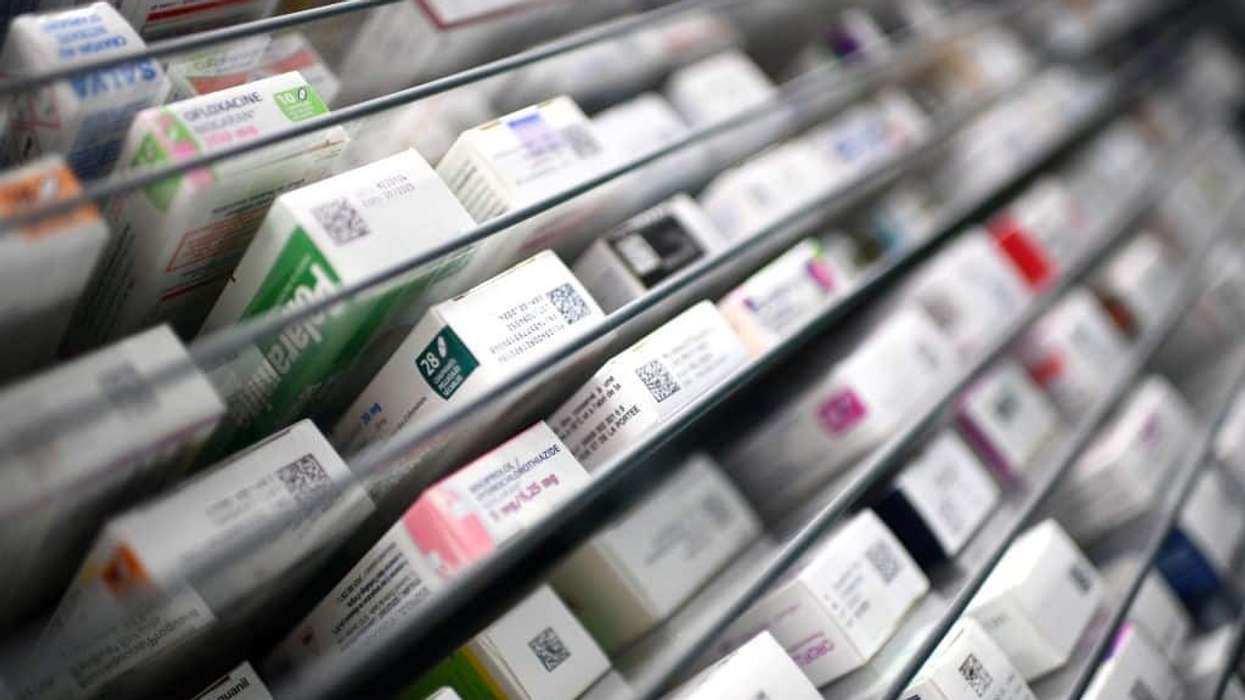
In a recent report, research firm iEthico revealed that a box of 28 Atenolol 50mg tablets - an off-patent beta-blocker used for high blood pressure, angina, and irregular heart rhythms - is being sold for a mere 3p, which is “less than the cost of a paperclip and less than the cost of the blister packaging that holds the tablets”.
Brian Chambers, managing director at AAH Pharmaceuticals, noted that Atenolol selling for 3p is “not a win. It’s a warning”. He said it is not a triumph of market forces, but a signal that the “entire supply chain is breaking down”.
Chambers said pharmacies are chasing the cheapest price every day on price-comparison portals; wholesalers are undercutting each other to hold on to volume, regardless of margin; and manufacturers are being forced to supply below cost to stay in the game.“
The consequences are devastating. “Entire national volumes are ping-ponging from wholesaler A to B to C based on a 1p difference.“
"Forecasting is shattered. Stock ends up in the wrong place. Orders spike and collapse with no logic. Planning becomes impossible.”
He said supply-chain resilience is being destroyed by a race to the bottom, and in such a scenario, nobody wins.
“Pharmacies aren’t making more money. Their margin is capped. Wholesalers can’t cover the cost to serve. Manufacturers are absorbing losses just to keep volumes moving.
“This is not efficiency. This is system failure. Value is not being created. It’s being stripped out.”
The iEthico report author, Debra Ainge, said, “At these prices, it is simply not possible to manufacture drugs.”
Ainge observed that when a new drug enters the UK market, the price is set by NICE, “but when it goes generic, prices hit rock bottom”.
She fears this policy is very short-sighted, as many players would exit the UK market and it could lead to artificial shortages.
The government needs to devise a sustainable pricing system that is beneficial to generic drug makers and pharmacies, she observed.
Chambers too warns about artificial shortages. “We are not seeing mass shortages yet. But we are already seeing volatility, stock imbalances, service erosion, and inconsistent availability.“
When manufacturers eventually exit - and at these prices, they will - we will lose products for good.”
He said the situation is not sustainable. “And the longer we ignore it, the worse it gets.”
Chambers said it’s not hard to understand why pharmacies are behaving this way.
“Pharmacies are fighting for survival. The contract is broken. Inflation has soared. Funding has flatlined.“
They are using the tools available to them to protect their business. Nobody can blame them for that. This is survival mode.
“But this behaviour is now hurting the very system they rely on. It is accelerating the collapse of the generics model. And that is a risk to all of us.”
He observed that this isn’t how it used to work. “There used to be strategic partnerships. Shared planning. Predictable volumes. Loyalty. That has been lost.
“What exists now is a fragmented, reactive system, and a false sense of savings.
“Buying cheaper each day feels like a win - until the day the product is gone or reimbursement collapses.”
Regarding solutions to break the impasse, he said procurement technology cannot be scrapped. “The portals are here to stay. But we have to find a better way to use them. We need to reintroduce some commitment, some consistency, some partnership.
“Wholesalers and pharmacies need each other. The wider system needs to evolve, because right now, it’s failing all of us.
“Fund pharmacy properly. Reform the tariff. Rebuild the model - before this breaks down completely.”
Medicines UK chief executive Mark Samuels said generic medicine prices are at historic lows, placing strain across the entire supply chain.
Samuels also welcomed the government’s pledge to boost medicines spending but argued that the commitment must extend to all medicines, not just patented products.
He pointed out that generic medicines are important not just for the manufacturing sector, but also for community pharmacy and, “most importantly, for patients”.
“Around 85 percent of NHS prescriptions are for generic medicines, and it's important that the generic medicine supply chain is resilient,” he said.
Samuels observed that he was also aware of the pressures faced by community pharmacy, as the sustainability of generic medicines and the sector is a shared concern.
Government response
When asked about his recent meeting with health minister Dr Zubir Ahmed, Mark Samuels said the discussions were very constructive and that the minister is open to improving the situation.
The critical issue is the government’s industrial strategy and life sciences sector plan. Both were announced in July, but the government has yet to take action.
“I discussed that with the minister, and he was keen to set up an action group to tackle the issue. “We need the government to deliver on the policy promises it made.”
When queried about medicine shortages, he said, “We know that shortages are relatively high in historical terms.” Samuels said that a year ago, it was over 100 products, and now it is around 78.
“That’s still a tiny minority of products, but if it’s your medicine, it matters.
“So, we do need to make sure that the generic medicine market is sustainable.”
He said the government should focus on the resilience of the supply chain for generic medicines - and indeed all medicines - for the UK.
Samuels once again reiterated the importance of making the pharmacy contract financially sustainable.
“A reduction in the financial pressures on community pharmacy would certainly be one thing that would help and improve the supply of medicines across the country, along with a commitment from the government to deliver on what it has promised in the industrial strategy.”
Samuels said biosimilars help increase patient access and that Medicines UK is working closely with the NHS.
The patents for 10 very costly biological therapies are due to expire, and NHS England is keen to utilise the situation to significantly reduce its drugs bill, he added.
“We’ve been working closely with NHS England on this. They fully understand the opportunity, and they have a programme to encourage the NHS to make full use of biosimilars once the patents expire.”
Samuels is concerned that when NHS England becomes part of the Department of Health and Social Care, it could give rise to uncertainty, but he is hopeful that it will continue to pursue the opportunity that biosimilars offer.