



Key Summary
- The minister said he is determined to support the wholesalers for their brilliant work
- He recalled the untiring efforts of wholesalers in maintaining medicine supplies during the Covid-19 pandemic.
- Ahmed said the recent trade agreement with India, a key producer of pharmaceuticals, aligns fully with the UK’s industrial strategy
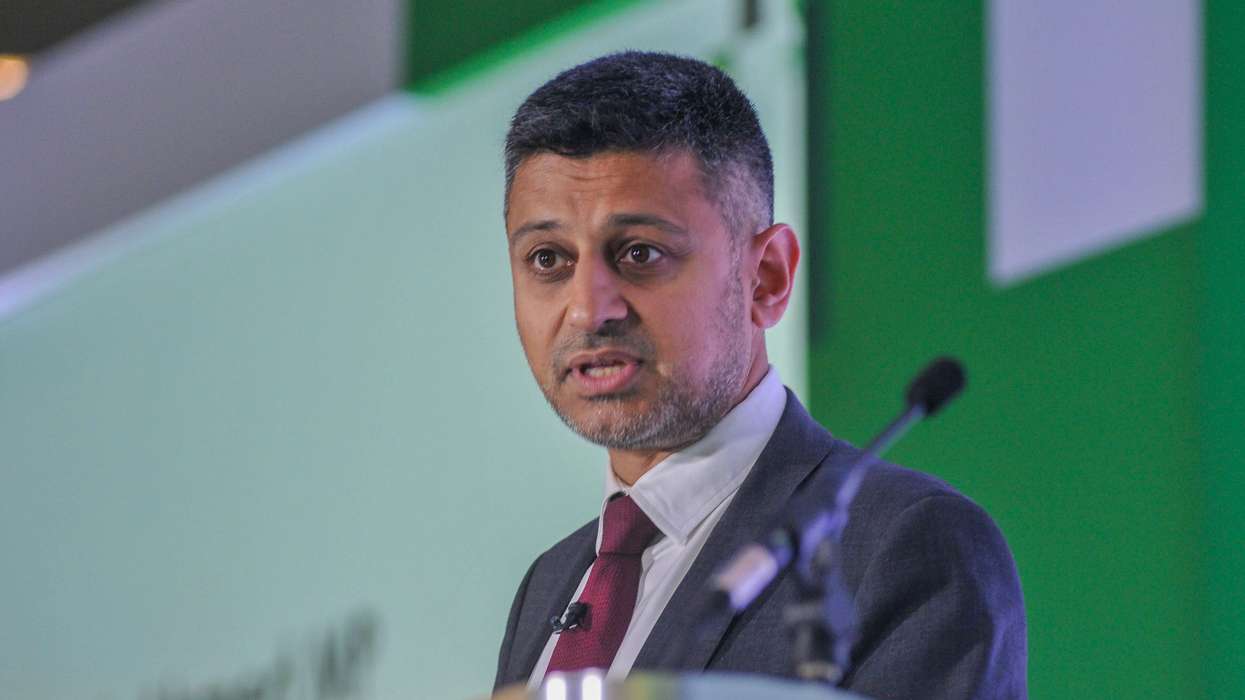
Health minister Dr Zubir Ahmed praised the country’s pharmaceutical wholesale network, stating that they were as much a part of the “NHS as the doctor, the nurse and the healthcare assistant”.
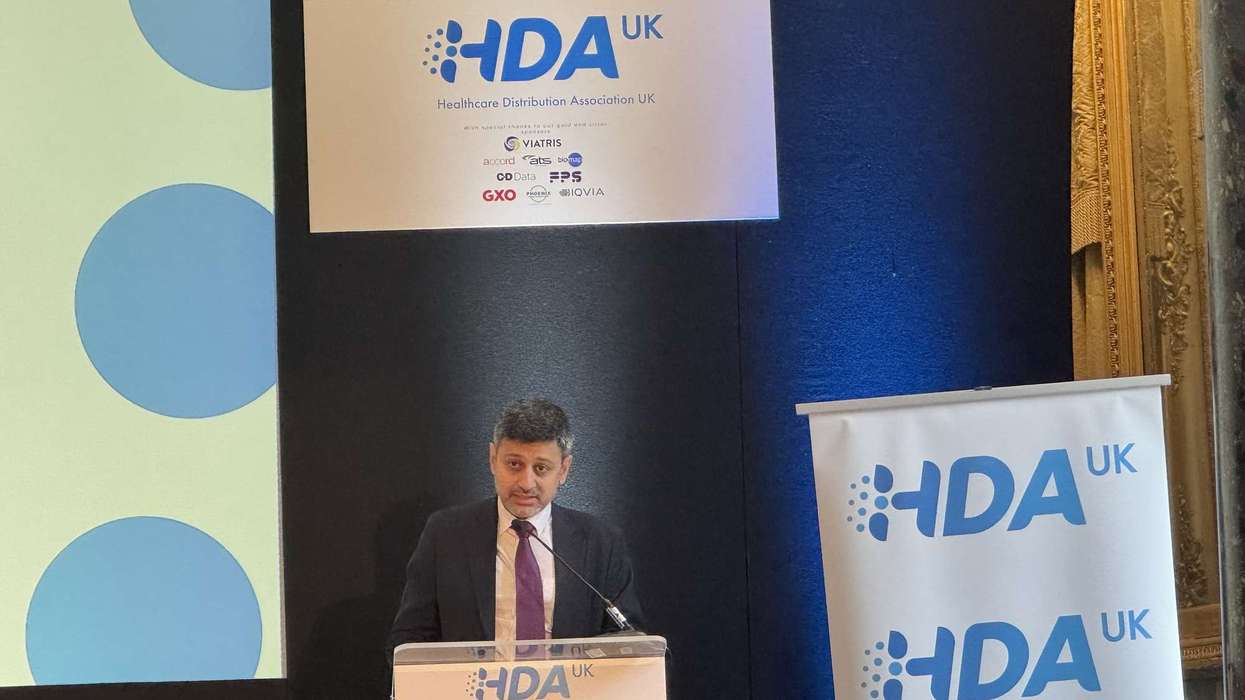
Speaking at the annual Healthcare Distribution Association (HDA) conference in Pall Mall, London, on Thursday, January 22, Dr Ahmed, who still practises as a surgeon in Glasgow, said HDA members kept the medicine supply chain ticking but do not often get the credit they deserve.
Recalling his days as a surgeon, the minister said, “I certainly rely on your produce, medicines, dressings and bandages that have travelled through the complex supply chain that sometimes stretches from the other side of the world to my own operating table.
“Nothing I do could be done without you, and over the coming months and years, I want to prove to you that I am genuinely serious about building a resilient and innovative relationship, so that together we can go on a journey for economic growth in this country.”
Ahmed also recalled the untiring efforts of wholesalers in maintaining medicine supplies during the Covid-19 pandemic.
“I remember working in Glasgow in early 2020 as an on-call surgeon when a little rolling virus was about to rip through the hearts and minds of our country like never before.
“I recall the anxiety as we stood on the precipice of a global health emergency, a pandemic that pushed and stretched our systems like never before.
“Those were the conditions in which many of you in this room stepped up. Wholesalers continued to supply my colleagues across the NHS, enabling us to be safer on the front line than we would have been without you.
“I also remember vividly the supply constraints in the winter a couple of years ago and the impact on pharmacies across our country, particularly for parents trying to get antibiotics for their children.”
Ahmed said, “As a minister, because of that lived experience, I am determined to support the brilliant work that wholesalers up and down the country do to keep shelves stocked and keep our community pharmacies thriving in the most demanding of circumstances.“
Community pharmacies, hospitals and healthcare organisations depend on you for more than 90 per cent of their medicines.
“Behind that statistic are, of course, millions of patients who live and flourish thanks to that invisible arterial network up and down the country.”
Against all odds
He praised medicine wholesalers for safeguarding the resilience and efficiency of supply chains despite many odds.
“You operate, I know, increasingly on tight margins. You quietly absorb costs and still strive to innovate and adapt to major transitions such as the shift to electric.
“And despite all those pressures, you, as I have seen first hand, maintain exceptional service standards.”
Government support
He said his government has taken steps to strengthen supply chains through partnership.
“We have conducted exercises with you to test our resilience in response to cyber-attacks on medical wholesalers.
“I worked closely with you and others to publish our plan for managing a robust and resilient supply of medicines, setting out how we are strengthening supply management with a clear focus on tackling the root causes of supply chain disruption,” he added.
However, he said much more needs to be done and called for “relentless focus on mass innovation and digital transformation”.
“As the minister responsible for distribution, supply and digital, I am determined to involve you, wholesalers, at every level of that conversation.“
"Since I was appointed by the prime minister, I have been telling Whitehall that innovation in general, in our health service and life sciences sector, is no longer a side project. It cannot continue to be if we are serious about growing our economy through life sciences.”
“It has now become, in my eyes and the eyes of the secretary of state for health, the secretary of state for science, the secretary of state for trade and the chancellor, the core of NHS reform.”He lamented that previous governments “failed to get a handle on that innovation”.
“It is frankly a little embarrassing that this will be the government that finally drags the digital innovation pathway into the 21st century, 25 years into the 21st century.
”He said the 10-year health plan sets out a new approach, driven by data, enhanced by technology and a determination to replace outdated systems “that are holding you, the suppliers, and us, the clinicians, back”.
Ahmed said the recent trade agreement with India, a key producer of pharmaceuticals, aligns fully with the UK’s industrial strategy and will create new opportunities in the life sciences sector.
The minister said supply chains and health security are absolutely key to his government’s vision.
“So we will be using this year and this decade to forge new partnerships between government and industry. I want you to know I do not just see my job as representing this government to you but, in many cases, as representing this community in the wider corridors of Whitehall.”
Sector under strain: Sawer
Earlier, while welcoming Ahmed, HDA executive director Martin Sawer thanked the minister for the regular engagement of health department officials and the MHRA with distributors.
“We value these relationships. We were very proud to be classified as key workers back in 2020 and we would like to build on this partnership going forward.”
Sawer urged the minister and the government to help strengthen supply chain resilience in order to protect the current model.He noted that in some countries this service is subsidised.
However, he said the HDA is not asking for money but wants the government to create conditions that ensure their businesses can manage risk and invest for the future.
“Be it through a shift to digital, which we wholeheartedly support, supporting the NHS net zero agenda, or having adaptive and proportionate regulation, about which we are talking to the MHRA at the moment.”
He pointed out that the recent increase in business and employer national insurance has hampered the sector’s ability to modernise and remain competitive.
Sawer said the sector was facing unprecedented economic pressure.
“You just have to look at the huge community pharmacy debt burden and NHS hospital debt burden that we are carrying to see this.
“So my plea today is: can you listen to our sector’s voice in order to maintain the resilient and cost-effective patient-centric supply chain we have?”
He urged the health minister to highlight their case with other government departments.
Sawer pointed out that the EU has recognised the medicine supply chain as critical infrastructure and urged the UK to follow suit.
He also welcomed his successor, Alex Williams, who takes charge in March.
Sawer steps down after a hugely successful tenure at the helm spanning more than two decades.
‘Pharmacies hit by bad debts’
Day Lewis executive director Sam Patel highlighted the challenges faced by the pharmacy sector by narrating the story of a pharmacy professional turned entrepreneur.
His protagonist, ‘Claire’, goes through the twists and turns that a pharmacy entrepreneur faces daily, where incomes remain flat and expenses keep rising, with unforeseen challenges such as shoplifting thrown in.
Patel concluded by pointing out that an independent economic analysis showed that £5 billion in funding was required for a sustainable sector, against the current £3.1 billion.
He cited the latest Community Pharmacy England Pharmacy Pressure Survey findings to show that 45 per cent of contractors are supporting their businesses with personal savings, and 37 per cent could not pay their wholesaler bills on time.
He said instances of multi-million-pound bad debts in the pharmacy sector have now become the norm and “some of the members in this room are taking huge hits”.
Patel observed that adoption of technology and innovative measures such as hub and spoke may make pharmacies more efficient, but it will not bridge the £2 billion gap.
He said he was speaking from his own experience at Day Lewis.“The question I want everyone to think about, from a financial, commercial and economic perspective, is: if automation was so brilliant on a hub-and-spoke basis, why didn’t the early adopters among the largest chains with hub and spoke automation supercharge their business models and buy up the rest of the market?
"And why is the converse true? Why have the largest businesses reduced the size of their estate and, in the case of Lloyds, disappeared altogether?”‘
'UK market not attractive’
Jeremy Meader, chief wholesale officer of Bestway Healthcare, thanked Sam Patel for describing the situation.
He said the £2 billion funding gap has knock-on consequences for the supply chain.
Pharmacists face a tough choice: whether to lose money on a product or stop dispensing it.“That is a really tough decision. I think everyone can understand how that becomes very difficult for an independent pharmacy.”
He also pointed out that the UK market is not attractive from a global perspective because of low prices.
“If you are a manufacturer deciding whether to sell stock, the fact that we have very low prices really does not help the UK’s case,” he said.