



Samson Akere claims he got into pharmacy “by accident”. The owner of Charlton-based Totti Pharmacy said it happens to many of us when we are young.
“We find ourselves at the bottom of career ladders without fully knowing where they will take us,” he reflected.
Akere initially wanted to study medicine, but his grades were not high enough to secure a place in medical school. His teachers suggested alternatives, such as pursuing biomedical science and then aiming to get into medicine as a postgraduate.
His friend Morgan suggested that he consider pharmacy. “I did not even know what pharmacy really was. All I associated it with was Boots and chemists. I did not understand that it was something you could study at university.”
Akere did some research on the subject and found it interesting. Barely a week before the Universities and Colleges Admissions Service (UCAS) deadline, he changed his entire personal statement from biomedical science to pharmacy and rearranged his university choices.
He admitted that he had not fully grasped what he was getting into and only understood the full implications of pharmacy as a career option somewhere midway through his pharmacy course.
“I would not say I always dreamed of becoming a pharmacist. I fell into it and then made it work,” he admits in an understated manner. But the key to his success was his curiosity, adaptability, and willingness to learn.
Practical experience
Early on, Akere realised that practical experience was crucial.
“University teaches theory, but real understanding comes from working in the field.”
Akere went to university in Brighton, and every summer he used to come to London to be with his family. During his first summer vacation, he went from pharmacy to pharmacy in London to gain some work experience.
“Many places declined because businesses prefer stability and do not want disruption.”
He eventually approached Clockwork, a community pharmacy in East London, where he met the owner, Prashant Patel, who offered him the opportunity to work, but without a salary.
Since Akere was already doing a part-time job elsewhere, he agreed as he was looking for experience.
He worked there throughout the summer, and the company later paid for his transport costs. During subsequent summer breaks, Akere returned to work with Clockwork.
After graduating, he did not have to look elsewhere for pre-registration training, as Clockwork offered him a position because they knew he was well-versed with their working style.
Even before he qualified, the Clockwork superintendent had hinted that they had plans for him.
“I completed my training there, qualified, and was offered a managerial role. I managed a pharmacy with them for two years and learned a great deal about both the clinical and business sides of pharmacy,” he said.
Later, a friend introduced him to Anish Patel, who owned Bees Pharmacy Group and was expanding his business. Akere joined Bees and worked for about three years, including during the COVID-19 pandemic, which he says provided him with significant experience.
Entrepreneurship
Patel saw entrepreneurship potential in Akere and encouraged him to set up a pharmacy of his own. Akere said he had a good working relationship with Patel, and they continue to be friends.
“I appreciated his honesty and spoke to my father for advice.”
His father described this as the next stage of development in Akere’s life and encouraged him to "take the leap".
Akere then began scouting for a pharmacy to buy and eventually zeroed in on Totty Pharmacy in Charlton, which he took over in 2023.
He entered into the business when pharmacies across the UK were struggling to keep their doors open, as many years of neglect and underfunding by previous governments was taking a heavy toll.
Akere feels sorry for those pharmacies that had to close down, but he personally appears unfazed by the bleak scenario, and Totti Pharmacy has so far survived the storm.
“I believe adaptability is key. When I first started working in pharmacy, most profits came from dispensing. Over time, funding shifted towards services. I entered ownership during this transition, so I had to adapt to the new model.”
He believes pharmacy funding now emphasises services rather than purely dispensing.
“If you resist change, it becomes difficult. Many pharmacists who worked for decades under one model understandably struggle when the system changes. I believe that being adaptable is essential. When industries change, opportunities exist within that change,” he observed.
He said that amid the chaos of change and market upheavals, one can come across clues and spot new opportunities.
Some of the services rendered by Totti Pharmacy include providing travel vaccinations such as yellow fever, antimalarial medication, and hepatitis A and B vaccines. They have also partnered with a company for weight management services.
Akere admits his pharmacy has only one consultation room due to limited space, “but we focus on maximising our impact despite being a small pharmacy.”
As for the expansion of services, he said it depends on patient needs. “It is important to understand your community and offer relevant services. I remain open to change and new opportunities.”
Strong team
To deliver these services, Akere believes a strong team is essential.
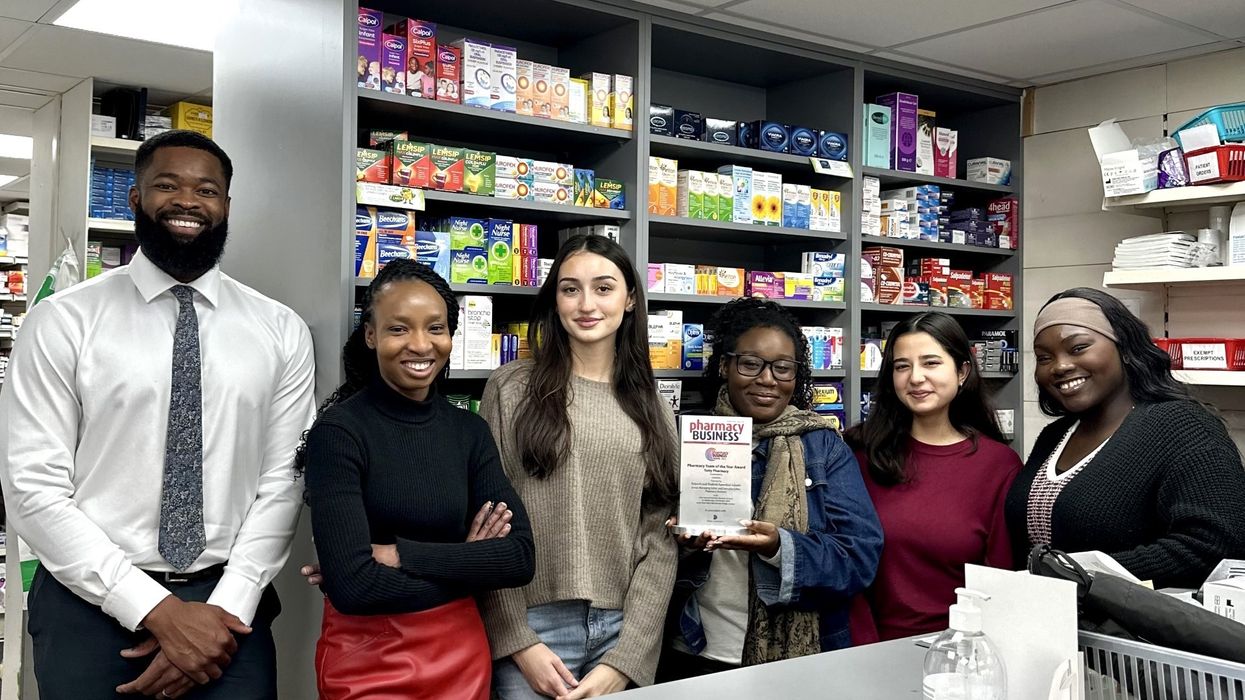
“You must train and upskill them properly. The core team at my pharmacy is quite young, mostly teenagers and people in their early twenties. I am 33 and one of the oldest there.”
He said the younger generation values a positive working environment, which is key to retaining them.
“If they are unhappy, they will leave. It is important to communicate well, show appreciation, and use positive reinforcement. If you correct them when they make mistakes, you must also praise them when they do well,” he said.
At Totti Pharmacy, they conduct regular training sessions and organise team outings. “When we win awards, we celebrate together. Team bonding activities help create a positive atmosphere. A happy team leads to happy customers,” he said.
Akere believes that keeping the team happy also leads to happy customers. He pointed out that many businesses skip focusing on the team and go straight to the customer.
He feels that if you keep the team happy, they will naturally strive to make customers happy.
Community outreach
To raise health awareness among local communities, Totti Pharmacy has partnered with organisations such as PureGym and other local institutions.
“We aim to engage with the community beyond the pharmacy walls. Prevention is better than cure. Many people do not understand common conditions like hypertension, so we educate them.
“We participate in campaigns such as Men’s Health Week, Black History Month health initiatives, and British Heart Foundation charity events. We conduct blood pressure checks and provide educational materials. The goal is to create a ripple effect, where one informed person shares knowledge with others,” he said.
When asked about the increased costs caused by the proposed rise in business rates and minimum wages, Akere described them as “disheartening” but said he is hopeful of tiding over the crisis.
“Once decisions are made at the policy level, you must respond practically. If overheads rise, you must increase income. That means being creative, offering more value, scaling services, and reaching wider audiences.”
He feels that sometimes such adverse circumstances lead to solutions and growth. “Instead of complaining, you ask how to make it work. If others in the industry can adapt successfully, then it is possible. The key is creativity, resilience, and focusing on solutions rather than problems.”
Digital presence
Akere thinks that adapting to technology is crucial to remain relevant, and at Totti Pharmacy they have been using AI tools to assist in understanding clinical information and referencing guidelines such as NICE and NHS resources.
However, they have put plans for a dispensing robot on hold, as their current premises lack space.
He also believes that maintaining a digital footprint is very important. “Many patients now search for services on Instagram before visiting. We maintain an Instagram page to showcase our community work and services. If you are not visible digitally, you are not part of the conversation.”