



Community pharmacy leaders lamented that they are facing a funding squeeze and the government needs to do more to make the sector sustainable.
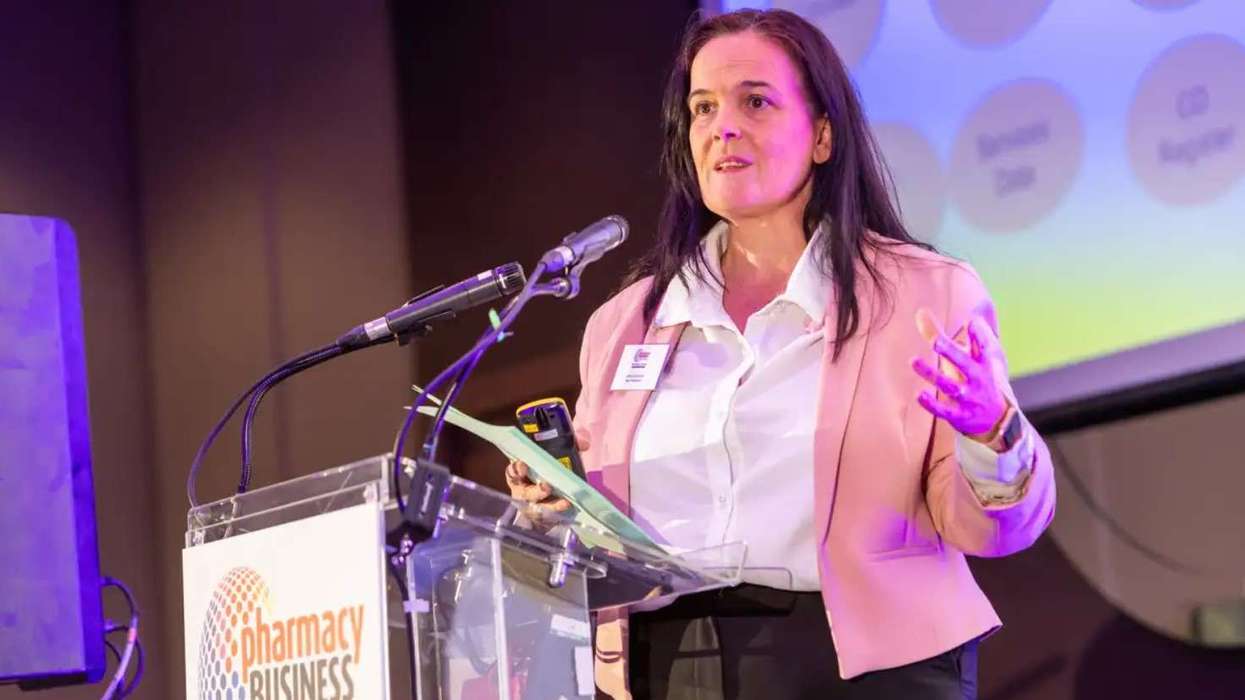
At the Pharmacy Business podcast 'The Final Dose of 2025', moderator Shilpa Shah, chief executive officer at North East London LPC, set the tone of the discussion by saying that community pharmacies rolled out many new services, but "we don't really celebrate and talk about that enough".
She wanted the panel, comprising Baba Akomolafe, Christchurch Health Centre director; Olivier Picard, chair National Pharmacy Association; Harry McQuillan, chairman of Numark; and Amandeep Doll, director of England at RPS, to dwell upon the potential opportunities in 2026, and the "real pinch points".
Baba Akomolafe said that as a community pharmacist, he looks at what he can control. "I divide funding into funding deserved and then funding maximised."
He said that though the government claims they have increased the income, "but what they've actually done is they put it in a pot that we can't reach."
"They put it in the pot that's GP dependent. They've made the service inaccessible via the NHS app."
"How do I get my pay rights when you put it in a place beyond me. So for me, that's my pinch point."
"You want us to make clinical services make it accessible. Help us be able to earn. Pharmacy doesn't want to beg for money.
"We want to earn the money. So it's very challenging."
Harry McQuillan said that the funding increase was a positive development, but they have all been "soaked up" in the national living wage increase and national insurance contributions.
"So it seemed to give with one hand and maybe take away with the other."
As for next year, he said he would like to look at the access that Baba has very eloquently asked for.
Olivier Picard said the pain points in 2025 have been that the pharmacists have had to wait for an announcement on funding.
"And then to be told that the independent economic analysis identified what looked like a £2.6 billion gap between where we should be and where we are."
Though the government made a step in the right direction, we still lost 1,400 pharmacies in the last 10 years.
There is a lot of churn in the pharmacy market with large players, larger groups divesting and new buyers coming into the market."
Access to funding is essential, and the next step that the government takes will be equally important.
"Because if we are being slapped with what will likely be much less increase, actually, the gap between where we are and what the independent economic analysis has identified will just continue growing. And pharmacies will continue closing.
"And as Baba and Harry have said, we need to not be dependent on other primary care providers to deliver our contract."
When queried about what the upcoming Royal College of Pharmacy can play in supporting community pharmacy, Amandeep Doll said it is to ensure that "we're highlighting the value that community pharmacy brings."
She observed, "When you read the 10-year plan, that community pharmacy is the answer to neighbourhood teams."
But she emphasised that sustained funding was crucial in delivering these new services.
Doll called for clearer pathways on "who can see which patients, and those parts of the system are funded adequately, and the resources are sustainable."
"So our role as the future Royal College is to be the voice for community pharmacy in those rooms where we have access."
Technology
When it comes to adopting technology, Baba said there is no "grandparent clause" for not embracing tech. "That's just the way life is now."
He said technology is meant to enable, and it frees a lot of staff to do other things. He pointed out that NPA, IPA, NIMA, are trying to bring more clinical services.
"But we are saying we're not free. We don't have the time. Why? Because we're not using tech to enable us."
Picard has been active on social media and is not moving from written posts to TikTok videos, and his daughters are helping him in his transition.
He pointed out that the government wants to spend £300 million on IT, but a huge amount will go on the NHS app.
"But in pharmacy, we still have to pay for everything, from our computer system to access to the point of care delivery."
He said if they are really keen to support pharmacies, the NHS England should help pharmacies get on the digital journey.
McQuillan confessed that he comes from an age where TikTok is the noise that a clock makes.
He said social media certainly gets messages out, and video platforms help make those messages more personal.
According to him, technology stands for two things: technology and technicians.
"And I think they both have a role in where that fits within, particularly within community pharmacy practice.
He agreed that digitisation would make pharmacies more efficient.
He observed that as a member of the older generation, technology will 'pass me by', but for the young generation of pharmacists, it will be a real differential.
Amandeep said, as a Royal College, we want to make sure that the profession is digitally ready and has the skills to be able to respond to all these advances.
Private services
McQuillan said there has been a huge growth in private services.
"I might even say in weight management over the last 10 months has been huge huge in that respect and I think it's just opened up community pharmacies' eyes to the potential of what a private service could be."
He cautioned that it needs to be "appropriate" clinically and needs to be well governed.
He felt that in 2026, the private services would witness a huge growth.
Baba concurred with the view and reminded them of his recent series on the Pharmacy Business website and social media about how pharmacists can learn from dentists.
"Our negotiating power is limited when we're saying to the government, give us everything."
He claimed that as pharmacists, we need to look beyond ourselves.
"How about hosting a GP, an osteopath, because you have invested in consultation rooms and I'm not getting enough commissioning to use the consultation rooms."
He claimed there is an exodus of GPs from GP practices, and they're looking for a place to carry out private practice, and pharmacies can provide that space.
Picard said there is too much internal dispute among pharmacists when compared with the GPs or doctors.
However, he also said that of late he is pleased to see that pharmacists are able to have some agreement and convey a unified message.
He expressed happiness about the recent roundtable the members from the CCA, IPA and NPA had with care minister Stephen Kinnock.