






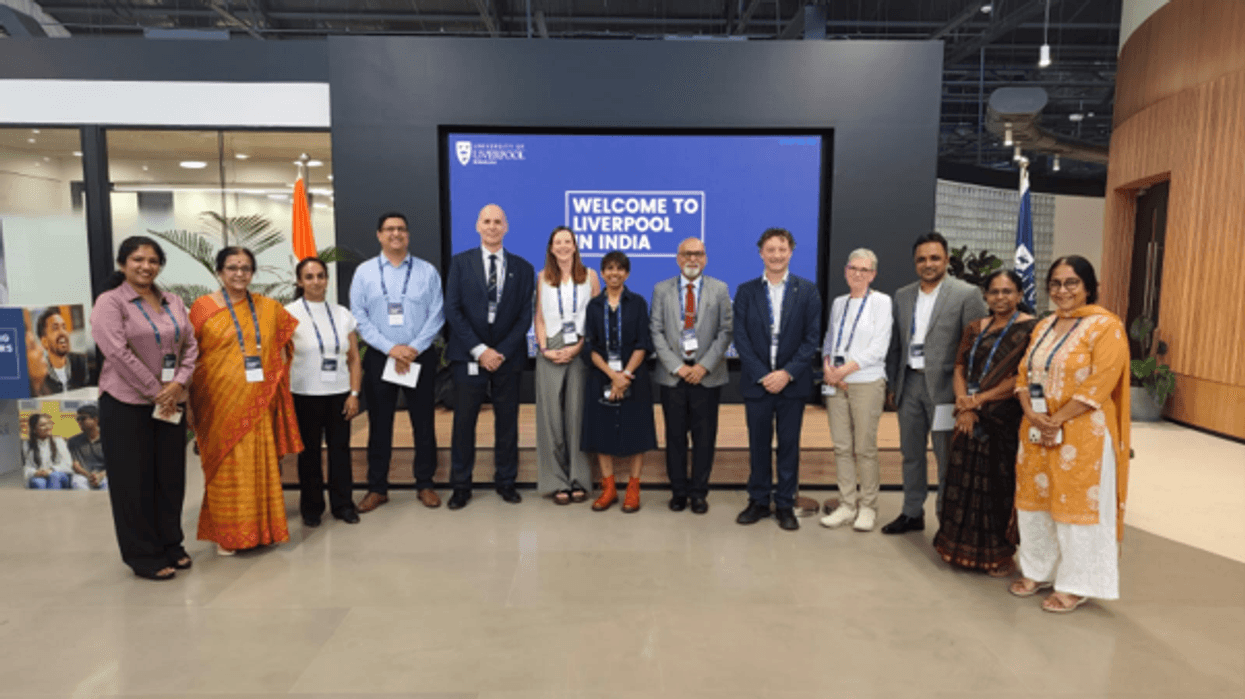

The University of Liverpool and Biocon Academy are exploring opportunities to strengthen collaboration between the UK and India in pharmaceutical research, healthcare innovation and life sciences education, following a roundtable in Bengaluru.
The meeting, jointly organised by the University of Liverpool Bengaluru and Biocon Academy on 25 November, brought together senior representatives from academia, biotechnology, pharmaceuticals, healthcare and clinical research to discuss potential areas of cooperation.
Participants included representatives from the All India Co-ordinating Committee, the Royal College of Obstetricians and Gynaecologists, SRM Institutions and the University of Liverpool.
The discussions focused on combining the university's expertise in drug discovery, women's health, artificial intelligence and clinical trials with India's strengths in biotechnology and pharmaceutical manufacturing.
The organisations explored how closer links between academic institutions, industry and healthcare providers could strengthen research capabilities, support innovation and develop skilled professionals for the life sciences sector.
The roundtable was chaired by Professor Shakila Thangaratinam, dean of ILCAMS and University Strategic Adviser for Global Engagement and Partnership. It was hosted by Professor Richard Grose, provost of the University of Liverpool Bengaluru Campus.
The programme also included keynote contributions from Professor Peter McCormick, the university's Associate Pro-Vice-Chancellor for Postgraduate Affairs and International Partnerships, and Bindu Ajit, head of Biocon Academy.
What opportunities are being explored?
The discussions covered potential collaboration in biomedical sciences education, clinical research training, AI applications in life sciences, healthcare professional development and innovation-led entrepreneurship.
Professor Thangaratinam said international and cross-sector partnerships would be important in shaping future healthcare innovation.
“The future of healthcare innovation will be shaped by partnerships that transcend traditional boundaries between disciplines, sectors and countries,” she said.
She added that the discussions highlighted the potential to develop a globally connected life sciences ecosystem benefiting patients, researchers, students and industry.
The roundtable was preceded by a strategic leadership meeting between Kiran Mazumdar-Shaw, executive chairperson of Biocon Group, and the University of Liverpool team.
Professor McCormick said the UK's and India's complementary expertise could support scientific discovery and create opportunities for students, researchers and industry partners.
He said the university was committed to developing long-term international collaborations that could contribute to a more connected global life sciences sector.
How will the discussions involve students?
The meeting was followed by a networking session involving more than 60 students from the inaugural BSc Biomedical Sciences cohort at the University of Liverpool Bengaluru Campus.
The session gave students an opportunity to meet representatives from academia, healthcare and industry, and learn about career pathways, research opportunities and developments in life sciences.
Professor Grose said the campus aimed to provide students in India with access to internationally recognised education while ensuring its programmes remained connected to industry needs.
Bindu Ajit said collaboration between academia and industry was important for developing talent equipped to work across disciplines, technologies and international markets.
The discussions concluded with a shared commitment to exploring collaborative initiatives across education, research and innovation. However, the announcement did not specify any formal agreements, investment commitments or timelines for individual projects.
The University of Liverpool Bengaluru welcomed its first students in September 2026. Its initial programme portfolio includes biomedical sciences, computer science, game design, business management, and accounting and finance.