



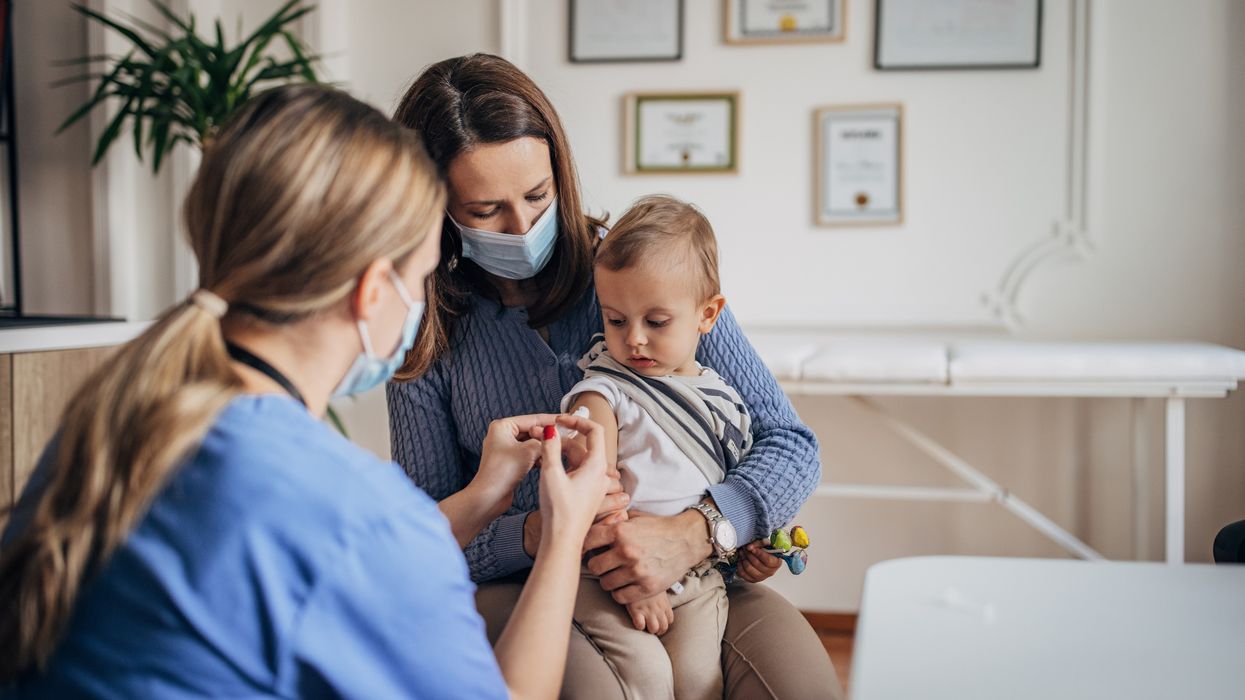

The UK Health Security Agency (UKHSA) has urged parents to get their children vaccinated during the festive season against serious diseases, including measles, meningitis, polio, whooping cough, and cancers caused by human papillomavirus (HPV).
It has expressed concern over recent figures showing a decline in vaccination rates.
The annual uptake data show that almost one in five children starting primary school are not fully protected against serious illnesses like measles and polio.
Among teenagers, far too many leave school without protection against several types of cancer, affecting boys and girls, caused by HPV.
The UKHSA has urged parents to check their child’s vaccination record and book any missed doses during this festive season.
The vaccines are offered free on the NHS, starting from 8 weeks old, with boosters and additional doses throughout childhood and adolescence.
The UKHSA said that for missed vaccines, catch-up appointments are available through GPs and school programmes.
Pregnant women are also offered vaccination against pertussis, with the immunity passing from mother to baby to provide vital protection from the early days of life.
From 1 January, the NHS will be adding the chickenpox vaccine to its childhood immunisation programme.
The combined MMRV vaccination would, for the first time in the UK, protect thousands of children against chickenpox.
Just two doses of this vaccine will provide long-lasting protection against four serious diseases: measles, mumps, rubella, and chicken pox (also known as varicella).
UKHSA deputy director of immunisation Dr Gayatri Amirthalingam said, "Starting school without the right vaccinations leaves children vulnerable to diseases like measles and whooping cough, conditions that have caused major outbreaks in recent years, leaving many children with serious health complications.
"Vaccination will help prevent your child from having to endure the misery and devastation these diseases can cause and save countless lives every year.
"We’re so pleased the NHS will be offering the new MMRV vaccine from January, meaning children will be even better protected. The programme will have a really positive impact on the health of young children and lead to fewer missed nursery and school days."