






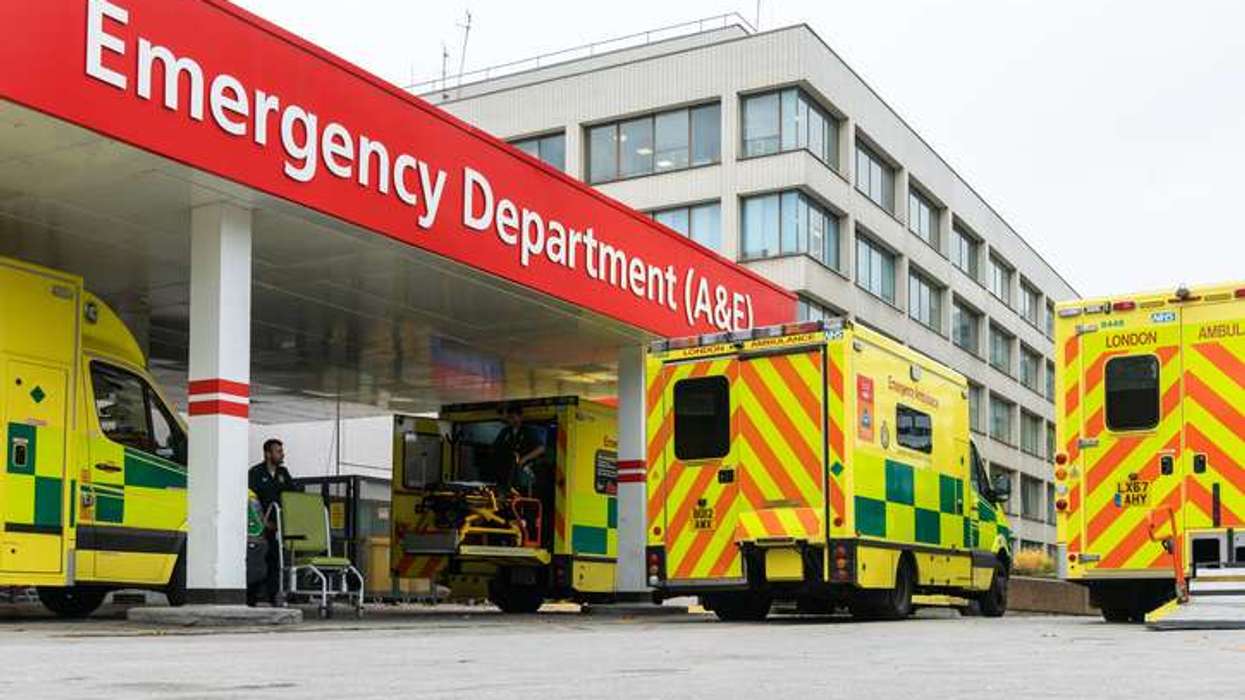

Additional funding to support the delivery of care this winter by the NHS in yesterday’s Budget has been welcomed by the pharmacy sector, but calls have been made for Government to better support community pharmacy as an essential part of the healthcare system.
A further £190 million in 2026‑27 for the NHS in England was announced yesterday by Chancellor John Healey.
The Royal College of Pharmacy said in a statement that it recognised the challenges across the NHS during the next few months and emphasised the important contribution of community pharmacy in managing this challenge.
“We welcome the Government's commitment of £190 million to support winter pressures, recognising the challenges facing health services during the coming months. Community pharmacies are the most accessible part of the healthcare system and play a critical role in helping patients access timely advice, treatment and support, while easing pressure on other parts of the NHS.”
“With continued pressures on public finances, it is crucial that the Government and NHS make the most of pharmacy’s potential to support prevention, including expanding vaccination services, supporting earlier detection and treatment of health conditions, and tackling polypharmacy to reduce avoidable hospital admissions," the College said.
From other areas of the healthcare system, David Williams, deputy director of policy at the NHS Alliance, said the extra £190m is welcome, but “short-term cash injections like this cannot fix the fundamentals”. Chair of BMA Council, Dr Tom Dolphin, said that the funding fell short and that the NHS faces such pressures all year round.
Protecting high street businesses: IPCN
The Independent Pharmacy Contractors Network (IPCN) welcomed the extension of business rates support for qualifying high street premises announced in the Budget, but also said there should be greater recognition of the “unique position” of community pharmacies as both high street businesses and essential providers of NHS healthcare.
The increase in the National Living Wage from April 2027 will put further strain on the sector, for example, it said.
Mitesh Patel, representing the IPCN, said: "The Government talks about supporting high streets, strengthening local businesses and moving more healthcare into the community. We support those ambitions, but we must also recognise that independent community pharmacies are expected to deliver all three."
“We are not against increasing wages. Our teams work incredibly hard and deserve to be paid fairly. But every increase in employment costs has to be funded from somewhere, and unlike other businesses, we cannot simply increase the price of an NHS prescription or service to cover those additional costs.
“We also need to question why independent pharmacies, delivering essential NHS healthcare, continue to face business rates pressures when other parts of primary care benefit from different arrangements. If the Government genuinely recognises community pharmacy as part of the NHS healthcare infrastructure, that recognition needs to extend to how our businesses are treated financially.
IPCN called on the Government to “ensure that future community pharmacy funding and contractual reform properly reflect the increasing costs and responsibilities faced by independent contractors”.
The next stage of contractual reform must address the fundamental economics of running an independent pharmacy, including fair reimbursement, recognition of the actual workload and complexity of dispensing, said IPCN.
Review for AI in healthcare
RCPharm also commented on the government’s announcement of a review of NHS productivity and AI, commissioned by Healey and Health Secretary Yvette Cooper.
The College called for the review to have “a clear focus on patient safety” and for any future implementation to align with professional standards.
“The Government's review of the role of artificial intelligence (AI) in healthcare is a positive step. AI has the potential to improve efficiency and support patient care, but it must align with professional standards and have a clear focus on patient safety. AI should support, not replace, professional judgement. Accountability for decisions should be reinforced with meaningful human oversight,” the College said.
An independent review of NHS productivity and AI will be led by Mark Bailie, a non-executive director of NHS England who chairs its Digital, Data and Technology Committee, to look at “the practical opportunities presented by AI and technology to transform services for patients,” and raising NHS productivity. It will report in early 2027.
The Chancellor said the aim was to help staff “spend their time with patients and not on admin.”
A total of £700m was announced in the Budget to enhance AI development. There will be an “AI challenge prize”, a National AI Biosecurity Initiative, and a commitment to storing NHS data “on British soil”. An investment of £140m will be available for British businesses working in AI development.
“When the NHS uses AI to treat patients, we want that data here,” the Chancellor said.