






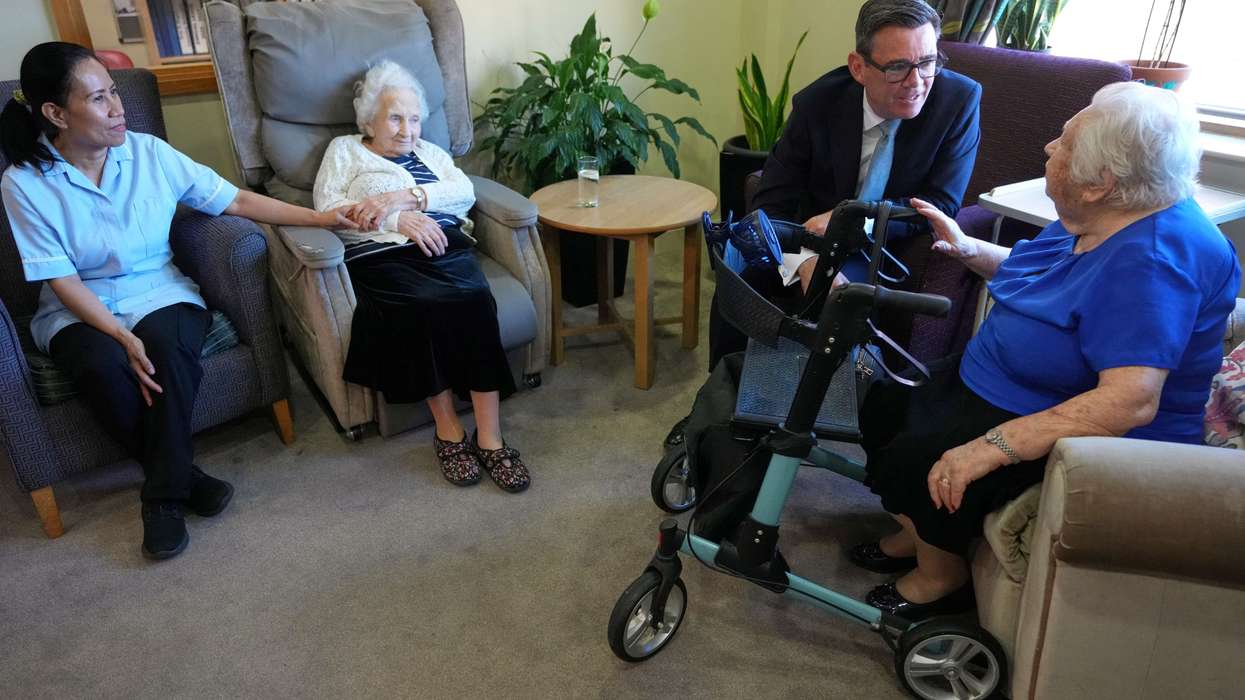

Prime Minister Andy Burnham vowed to end decades of 'political drift' and take difficult decisions to overhaul England's adult social care system.
During a visit to a care home in north London on Wednesday (29), Burnham said he wanted to work with other parties to end unfair high costs for users.
“I just don’t accept that this problem is too big to solve. What we need is a new way of doing politics where we come together, face the challenge head on and build an integrated system that gives people security and dignity.
“That’s the commitment I am making to people across this country, and I will give it my all in trying.”
Successive governments have failed to reform adult social care, for which families have to pay hundreds of thousands of pounds, after previous proposals were defeated by opposition parties who dubbed them a "dementia tax" or "death tax".
The Prime Minister set out that social care reform was essential not only for those actively needing support, but also for the long-term future of the NHS.
A failure to tackle the broken social care system has piled pressure on NHS services with thousands of people stuck in hospital beds despite being medically fit to leave, some of which are due to a lack of capacity of adult social care services.
This in turn has led to heightened pressure on hospital capacity, leading to too many people experiencing corridor care because of discharge delays.
Tax hike likely
Burnham did not rule out tax rises to fund a new scheme and said that "scare stories" from newspaper headlines would not deter him from tackling a situation that will only get worse as the population ages.
"It's a major dereliction of public duty that parliament has not faced up to this," he said.
Asked if he could transform social care without raising taxes, he said that more was possible within existing resources, but some of the plans "will require difficult decisions."
"We will be honest with people about those," he said, adding that he would stick to a manifesto commitment not to raise certain personal taxes.
Health Secretary Yvette Cooper said: “Too many older and disabled people are being let down by a broken system, while millions of unpaid carers shoulder an enormous burden every day. When social care fails, it affects people’s independence, families’ lives and communities across the country.
“More than 50 years ago, Barbara Castle recognised that health and social care must work hand in hand. Today, with demand for care rising and more people relying on support to live independently, that vision has never been more important.
“For decades, governments have struggled to solve this challenge. This government is determined to change that, working across political divides to deliver the lasting reform social care needs and build a system that gives people the dignity, support and security they deserve.”
Casey Commission
The Prime Minister also confirmed that he would bring forward the date for Baroness Casey’s commission to report back with a plan on how to deliver the National Care Service, accelerating this from 2028 to next summer.
The Commission’s findings will set out a plan to implement solutions with the public’s backing and cross-party consensus, to ensure that proposals are deliverable, realistic and designed in the interests of those they are there to serve.
The Prime Minister also set out the core principles behind the National Care Service that government will build:
- The system must allow people to move seamlessly between hospitals, home care and community services.
- This service must be fully and sustainably funded.
- The service must start with prevention, supporting people to live independently for longer.
- Citizens’ needs must be at the heart of plans, removing budget battle lines between organisations and making sure local social, primary and community care works together effectively.
To ensure momentum continues on this work, the Prime Minister and Health and Social Care Secretary will meet regularly with Baroness Casey and her team, to track progress on these core questions as the national conversation and cross-party talks continue.
Vulnerable worst hit
Burnham cited his father's experience of Alzheimer's as one reason why he was determined to fix the system and correct the "shameful" political record on care.
"I think social care in England is as unfair as American healthcare," he said. "The vulnerable pay with everything and it can completely leave them with nothing."
To tackle the issue, he said he would expedite a review into the sector, develop a care workforce plan and engage with the opposition Conservative and Liberal Democrat parties to discuss the issue in the hope of reaching a national consensus.
Burnham said he was willing to stake political capital to overhaul the care system. He first tried, and failed, to reform social care funding as health minister in 2010, and said he had learned lessons from that episode.
Unlike the National Health Service, which is free at the point of use, care homes are run by a range of providers, from large chains owned by international private equity groups to smaller family-owned businesses, charities and local government.