





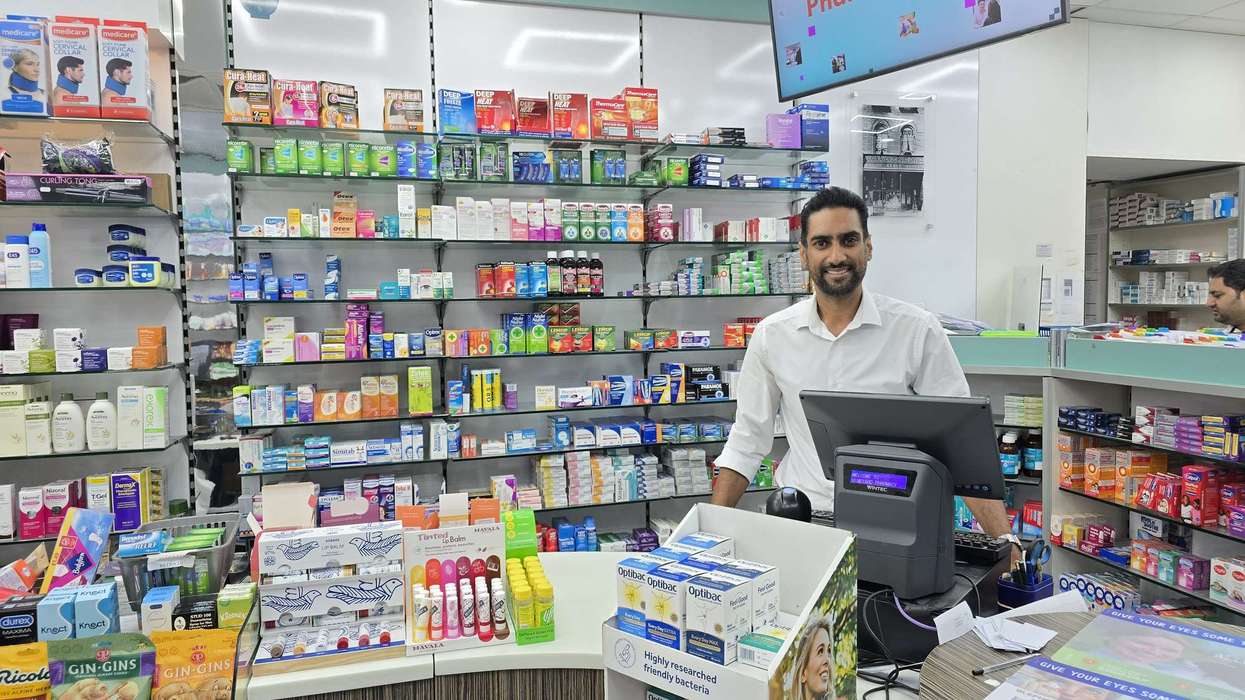

For Anish Patel, pharmacy was never a distant ambition – it was the family shop down the road.
His father ran a newsagent. His uncle owned a pharmacy. And from the age of 10 or 12, Patel spent his summer weekends behind the counter, watching, helping, absorbing how the business worked long before he understood what a dispensing margin was.
"Growing up, I kind of knew what the business was about," he says.
That grounding still shapes how he runs his group of 10 pharmacies today – and one that helped earn him the title of Pharmacy Business Aspiring Pharmacy Leader of the Year 2025, sponsored by Aspire Pharma.
An accidental first choice, a deliberate second
Patel's path into the profession wasn't quite as tidy as it looks in hindsight. As a teenager, he was torn between dentistry and pharmacy, and it was pharmacy that came calling first – partly, he admits, because the grades for dentistry didn't.
"Looking back, I'm quite happy with where I ended up," he says. "This profession suited me much better than dentistry. I actually enjoy delivering pharmacy."
He qualified in the mid-2000s, but rather than settling into his uncle's shop, Patel spent five years locuming – deliberately, and widely.
"The only way I knew of working was my uncle's shop," he explains. "I thought maybe if I got experience learning how other people work, I'd understand the business better." It meant he built his own pharmacy company from nothing inherited – "I was the first one," he says - rather than stepping into a ready-made business.
From one shop to 10
Patel opened his first pharmacy and, for years, ran it almost single-handedly – six days a week. As the second, third and fourth branches followed, he kept absorbing the extra workload personally: procurement, HR, payroll, clinical duties, mentoring.
Later, he says the hardest period wasn't reaching 10 branches – it was around three to five.
"When I had three shops, it was probably harder than it is now," he says. It was only once the group passed five pharmacies that Patel began building a proper management layer, starting with an area manager who split her time between dispensing and operations.
"As time has gone on, it's become a little bit easier because I've grown the team and found some good people," he says. Crucially, he didn't choose to step back from the floor. "I like to be hands-on still, because when I started, I was doing everything myself, so I know exactly how the operation works."
Spotting talent early
His instinct for people has defined much of Patel's growth – nowhere more visibly than in his mentorship of Samson Akere, who now runs his own pharmacy business and has publicly credited Patel with encouraging him to take the leap into ownership.
Akere joined Patel as a young full-time manager at his second branch and quickly stood out - not just as a capable pharmacist, but as someone who understood the business side as well.
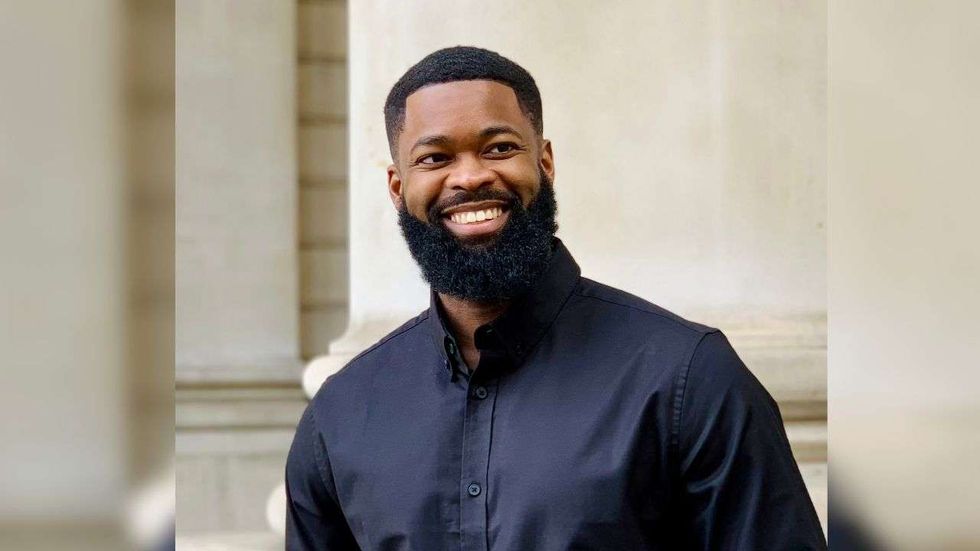 Samson Akere, owner and pharmacist at Totty Pharmacy won the Community Award, in association with Sigma, during the 2025 Pharmacy Business awards Samson Akere
"Normally you don't find people like this," Patel says. "They're either very good pharmacists or very good business people. This guy was both." When Akere later considered leaving for another employer, Patel pushed him somewhere else entirely.
"I said, 'I think you've got the acumen to run your own business.' I'm so happy he did it in the end – he's doing very well."
Rethinking the back office
With margins on dispensing under sustained pressure, Patel has been rethinking how his group operates behind the scenes. Rather than a full hub-and-spoke model – which he considers "a little bit beyond me at the moment" – he's taken a narrower, more targeted step: centralising dossette and multi-compartment tray preparation through a hub pharmacy fitted with an automated packing machine.
The branches themselves – six clustered in Hackney, two in West London and two in Surrey – are geographically suited to the model, with dedicated drivers running deliveries between them.
"The idea is to take dossettes away from each branch, so nobody will be doing them in-house anymore," he says. "That frees up staff to do clinical services."
He's clear about his motivation. "This wasn't about cutting staff. It was purely to free up enough time for the team to start delivering more services or a wider range of services" – the revenue he says is now essential to offsetting rising costs and thinning drug margins.
Becoming a prescriber himself
Patel is also preparing to qualify as an independent prescriber – not because his business needs it operationally, but because he believes it will make him a better mentor to pharmacists coming up behind him.
"If I'm trying to mentor an independent prescriber and I'm not one myself, it's sometimes difficult to get the message across," he says.
He points to a recent pre-registration pharmacist who has since qualified as an IP and now manages one of his busiest Hackney branches. What she needed, he says, wasn't more qualification – it was confidence, built through hands-on coaching and sitting in on consultations together.
"They've got the qualification. They just need confidence," he says. "I think future services are going to be based around independent prescribers anyway."
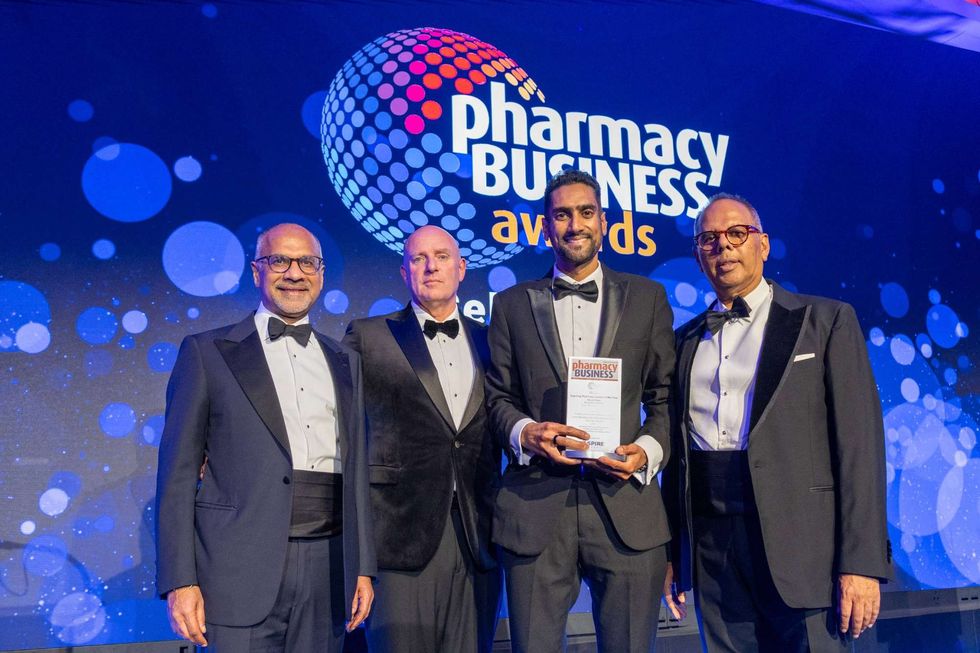 Anish Patel, winner of the 2025 Pharmacy Business Aspiring Pharmacy Leader of the Year award. Pharmacy Business
Staying grounded on costs, crime and community
Patel is measured about political promises on business rates and funding. "If you have an expectation, that's when you get disappointed - that's my principle in life," he says, noting that last year's fee uplift only just offset new costs rather than allowing for growth.
On shoplifting, which he says has "always been there" rather than getting worse, his instruction to staff is simple: don't intervene. "The safety is more important than the goods."
And on the philosophy underpinning all of it, Patel returns to relationships, with staff and patients.
"I try not to have a corporate model. It's mutual respect," he says of his approach to his team. Of patients: "Without the patient, we are not here… whatever I get paid for whatever service I'm delivering, I'm helping somebody. That's what I like about the business."