







Key Summary
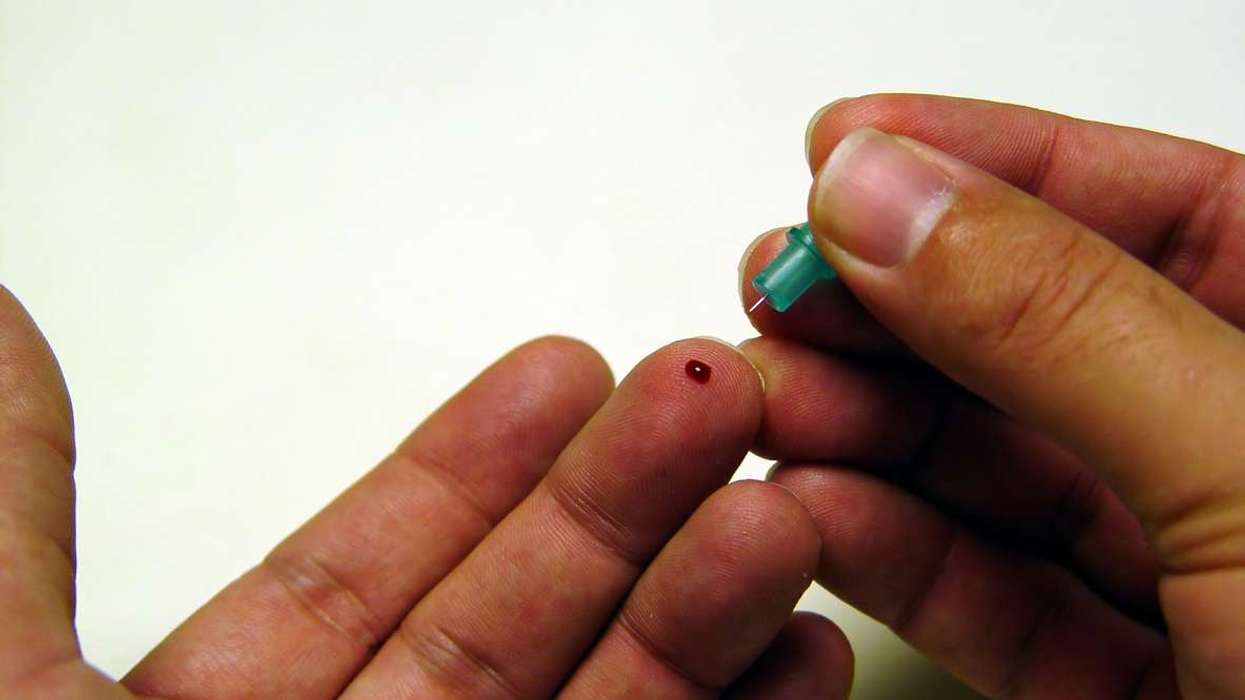
- A finger-prick blood test could help identify people with dementia risk.
- The study, which highlights the potential for accessible, remote testing, was funded by NIHR.
- Researchers found a clear relationship between specific proteins in the blood and performance on cognitive tests.
A finger-prick blood test, along with online cognitive brain tests could help detect people at risk of dementia, according to a new study.
Funded by the National Institute for Health and Care Research (NIHR), the study makes way to recognise a more accessible remote test which could change the detection and treatment of dementia.
The research was led by the University of Exeter and was published in Nature Communications.
For the study, 174 participants above the age of 40 were sent at‑home blood testing kits, which were posted back to researchers for analysis.
They also completed online cognitive tests, assessing memory, attention, and decision‑making skills.
Upon analysis of the data, researchers found a link between specific proteins in the blood and performance on cognitive tests.
The two main biomarkers are p‑tau217, associated with Alzheimer’s disease and Gfap, linked to broader brain health decline.
Higher levels of these proteins meant less level of good performance in cognitive assessments.
Dementia remains one of the UK’s most significant health challenges. Early diagnosis is normally difficult as patients are identified only after symptoms emerge.
Professor Marian Knight, Scientific Director for NIHR Infrastructure, said that these tests hold promise.
“Not only could it reduce the burden on the NHS by screening people in their own homes rather than in hospitals or clinics, but it also might mean we can identify people with dementia earlier, tailor treatments more effectively, and improve outcomes for patients,” she added.