








Community pharmacy in England is entering a new era. From autumn 2026, independent prescribing forms part of the Community Pharmacy Contractual Framework (CPCF). At the same time, the first generation of pharmacists are qualifying as independent prescribers at the point of registration in England.
For community pharmacy contractors, this presents a major opportunity. Prescribing pharmacists can play an increasingly important role in delivering clinical services, improving access to care and supporting the shift towards more clinically focused, person-centred pharmacy practice.
However, this new cohort of pharmacists has entered the profession via a very different route to previous generations of prescribing pharmacists. Understanding their training and development needs will be important for employers looking to utilise their prescribing skills in practice.
England’s first pharmacists to qualify as prescribers at registration
Traditionally, pharmacists completed independent prescribing as a postgraduate qualification, often several years after registration and usually linked to a defined clinical scope of practice.
From 2026, most newly qualified pharmacists in England will join the General Pharmaceutical Council (GPhC) as independent prescribers. This reflects the 2021 GPhC Initial Education and Training Standards, which integrate prescribing development throughout the MPharm degree and foundation training year.
These pharmacists differ from both established prescribing pharmacists and early-career pharmacists who still need to complete independent prescribing training. While already qualified to prescribe, they are still developing confidence, professional judgement and autonomy in practice. Rather than initial prescribing training, they therefore need structured support to apply and further develop their prescribing skills in real-world settings.
Building confidence, capability and autonomy
Some newly qualified pharmacists will move directly into prescribing roles and begin building confidence through day-to-day prescribing practice. In community pharmacy, roles and services are still evolving, and opportunities to prescribe may vary considerably between organisations and local systems.
As a result, newly qualified prescribing pharmacists may have very different opportunities to apply and develop their prescribing skills in practice.
Registration as an independent prescriber is only the beginning. Like all healthcare professionals transitioning into practice, newly qualified prescribing pharmacists require support, experience and structured development to build confidence, professional judgement and autonomy.
Recognising this need, the Pharmacist Enhanced Practice Pathway pilot (Enhanced pathway) has been developed collaboratively by NHS England, the Centre for Pharmacy Postgraduate Education (CPPE) and the Royal College of Pharmacy to support newly qualified pharmacist prescribers as they transition into practice. There are no fees for pharmacists or employers to participate in the pathway, with NHS England funding the pilot.
 CPPE
CPPE
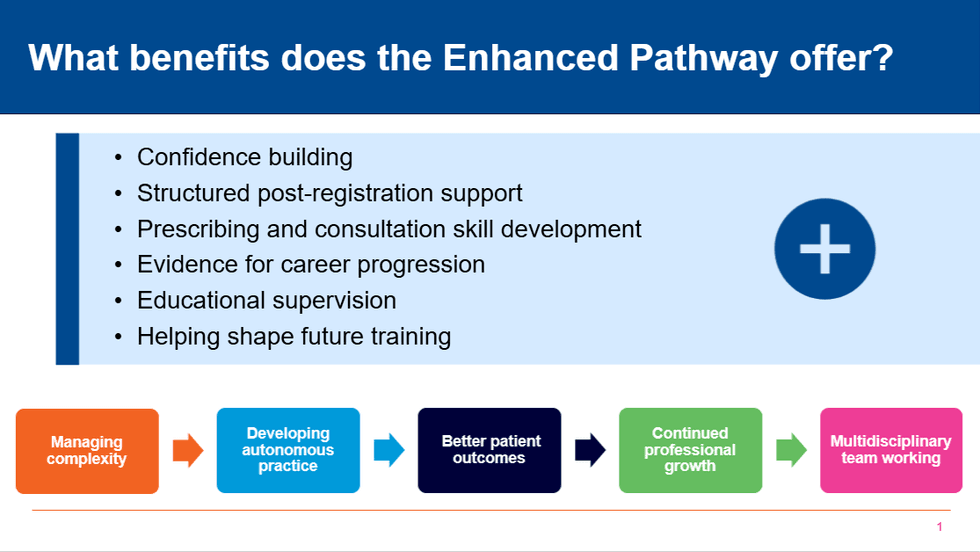
The Enhanced pathway addresses a gap that has not previously existed in the profession. Newly qualified pharmacists now start their careers as both pharmacists and prescribers simultaneously. The pathway supports this transition by helping them build confidence and autonomy as they apply and further develop the prescribing knowledge, skills and behaviours gained during their initial education and training in increasingly complex real-world situations.
A key message throughout the pathway is that prescribing is more than issuing a prescription. Effective prescribing requires pharmacists to gather and interpret information, undertake person-centred consultations, apply evidence appropriately, assess and manage risk, navigate uncertainty and make shared decisions with the people they support. As pharmacists gain experience, they must also learn to manage increasing clinical complexity, recognise the limits of their competence and know when referral or escalation is required.
Through educational supervision, workplace learning and reflection, the pathway supports pharmacists to translate their prescribing qualification into confident, safe and increasingly autonomous practice.
What does the Pharmacist Enhanced Practice Pathway involve?
The 12-month pathway uses a blended learning approach that combines self-directed learning, authentic case studies, one online workshop, educational supervision, workplace learning and portfolio development.
Modules
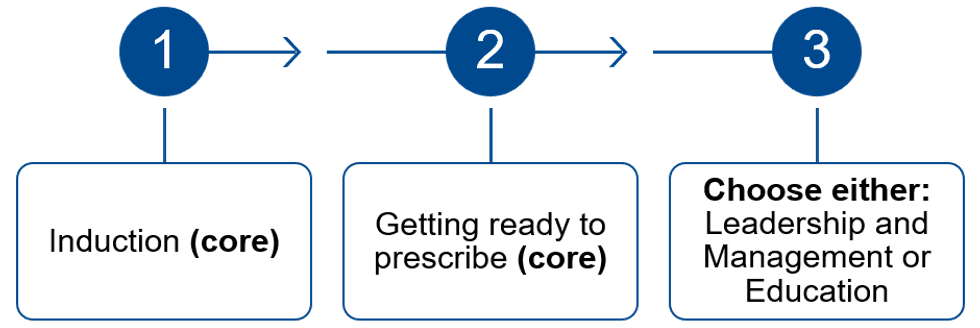
All learners begin with an induction module that introduces the pathway, reflective practice, educational supervision and a learning needs analysis to help identify individual development priorities. This is followed by the core Getting ready to prescribe module, which focuses on prescribing consultations, clinical reasoning, decision making, risk assessment and managing complexity and uncertainty in practice.
Following the core modules, pharmacists choose either a Leadership and management module or an Education module. These optional modules recognise that pharmacists contribute to healthcare not only through clinical practice but also through leadership, service improvement, education and workforce development
 CPPE
CPPE
Importantly, pharmacists do not need to be prescribing regularly to benefit. Those working in community pharmacy can continue developing prescribing-related skills through NHS Pharmacy First consultations, the NHS Pharmacy Contraception Service, clinical assessment, medicines optimisation, referral decisions, recommendations to prescribers, case discussions and reflective practice. This helps them build confidence and professional judgement while preparing for prescribing opportunities as community pharmacy services evolve.
Educational supervision: supporting development, not assessing prescribing
A central feature of the pathway is educational supervision. For some employers, the term supervision can raise concerns, particularly in workplaces where there are few experienced prescribing pharmacists available. However, educational supervision is distinct from clinical supervision.
Educational supervisors do not need to be prescribers and are not expected to provide specialist prescribing advice, assess prescribing decisions or sign off clinical competence. Instead, they act as facilitators, guides and critical friends, helping learners reflect on experiences, identify development needs, set goals, interpret feedback and make connections between pathway learning and workplace practice.
For community pharmacy employers, this means educational supervision can often be provided by individuals who are well placed to support professional development, even if they are not independent prescribers.
Where employers are unable to provide an educational supervisor, CPPE can provide funded educational supervision for learners participating in the pilot. This helps remove a potential barrier to participation and enables pharmacists to access the support needed to engage fully with the pathway.
Why is this important for community pharmacy contractors?
Supporting confident prescribers
As prescribing services expand in community pharmacy in England, employers need pharmacists who can apply prescribing knowledge, consultation skills and clinical reasoning confidently and safely in practice.
Newly qualified prescribing pharmacists have already developed these capabilities through their MPharm degree and foundation training year. The challenge now is building on that foundation as they transition into practice, developing confidence and professional judgement, managing increasing complexity and uncertainty, and becoming progressively more autonomous in their prescribing decisions. The Pharmacist Enhanced Practice Pathway is designed to support that next stage of development, helping pharmacists translate qualification into confident prescribing practice.
Supporting business and service development
As community pharmacy services continue to evolve, contractors will need pharmacists who can deliver prescribing services safely, effectively and in line with service requirements. Encouraging newly qualified prescribing pharmacists to join the pathway can help prepare them for the increasing range of clinical services being delivered through community pharmacy. It can also support them to develop the confidence, competence and professional judgement needed to meet the assurance requirements associated with these services.
Developing future leaders and educators
Community pharmacists increasingly work as part of multidisciplinary teams and are expected to contribute to the development of others. Through the Education and Leadership and management modules, learners can develop skills in mentoring, coaching, supervision, leadership, influencing and supporting change. These capabilities are valuable not only for individual career progression but also for developing future supervisors, educators and leaders in the pharmacy workforce.
The pathway supports the development of newly qualified prescribing pharmacists beyond prescribing capability alone. It helps them build confidence and professional judgement in practice, contribute to clinical services, support continuous improvement and play a wider role in strengthening the future community pharmacy workforce.
Quote from an employer: supporting career progression
“Supporting our newly qualified independent prescriber through the Pharmacist Enhanced Practice Pathway is a clear win-win that strengthens what we do as a community pharmacy every day.
“For the pharmacist, it means continuing to build clinical skills, knowledge, and confidence in a supportive environment, with expert external reassurance and a wealth of resources at their fingertips. Working with CPPE, an experienced, reputable, trusted training organisation, accelerates their career progression from the very start.
“For our business, it creates a capable, autonomous practitioner who can manage complex cases within their scope, reducing bottlenecks and freeing us to expand both NHS and private services. It's an investment that directly grows our capacity to attract contracts, improve patient outcomes, and strengthen our clinical reputation.
“Crucially, it opens the door to deeper NHS integration. We work alongside local general practices and build services that provide patients with immediate walk-in, face-to-face access (as well as remote contact) while easing pressure on stretched NHS resources. Our doors are open to everyone – working parents, people with mobility challenges – delivering truly accessible care right at the heart of our community.”
Jose Rodriguez, Pharmacist Manager, Goldchem Pharmacy
Developing community pharmacy's future workforce
The introduction of independent prescribing into the Community Pharmacy Contractual Framework and the arrival of pharmacists qualifying as prescribers at registration together represent one of the most significant developments in English pharmacy practice for many years.
Community pharmacy now has an opportunity to develop a workforce equipped to deliver increasingly clinical services and meet evolving population needs.
However, qualification is only the starting point. Newly qualified prescribing pharmacists need support to translate qualification into confident, autonomous practice.
The Enhanced pathway provides a structured development journey that combines workplace learning, educational supervision and professional development. For community pharmacy contractors, supporting pharmacists through that journey helps develop not only the individual pharmacist, but also the future clinical capability of community pharmacy in England.
Encourage newly qualified prescribing pharmacists to visit the CPPE website for more information on the Pharmacist Enhanced Practice Pathway and details of how to apply.