





Community Pharmacy England (CPE) has announced that since the Community Pharmacy Contractual Framework (CPCF) negotiations are not expected to conclude by the start of the financial year on 1 April, the status quo will continue.
The negotiations are still in progress between CPE, the Department of Health and Social Care (DHSC), and NHS England.
As has always been the case, the contractual framework rolls forward until the conclusion of negotiations and any changes to funding and services are introduced.
In the meantime, DHSC has applied a margin uplift to the April Drug Tariff. Once the outcome of negotiations is determined, further fine-tuning of the Drug Tariff may be required.
Community Pharmacy England’s negotiating team (NT) leads the in-depth negotiations and includes committee members who are independent pharmacy owners, representatives of the Company Chemists’ Association (CCA) and non-CCA multiples as well as members of CPE’s leadership team.
The team reports back to the full committee on a regular basis throughout the process.
The Committee's top priority is negotiating a more sustainable CPCF – including improved margin delivery, fees, reimbursement – and making the case for a multi-year roadmap with DHSC and NHS England to give pharmacies long-term certainty.
It is not yet clear when the negotiations will conclude.
Government requirements dictate that negotiations must remain confidential, but we will update pharmacy owners on these important outcomes as early as possible, the CPE said.
CPE chief executive Janet Morrison said, “Whilst 2026/27 CPCF discussions are now expected to continue into the new financial year, I want to reassure you that Community Pharmacy England’s focus remains firmly on securing the best possible outcome for pharmacy owners’ interests.
"Our Negotiating Team continues to work intensively on your behalf, analysing complex proposals and putting forward detailed options informed by priorities agreed with the full Committee.
“It is hard to predict when negotiations and cross-Government clearance will be complete but, in the meantime, current funding and arrangements will roll forward into the next financial year.
“We know pharmacy owners are concerned about the impending financial cliff edge that April represents, with increases in business rates and the National Living Wage coming into effect. This is at the forefront of our minds at every step and has been factored into our proposals, and we continue to warn the Government about the urgent need to close the sector’s funding gap. We are fully committed to achieving progress and will update you at the earliest opportunity.”
'Inexcusable' delay: NPA
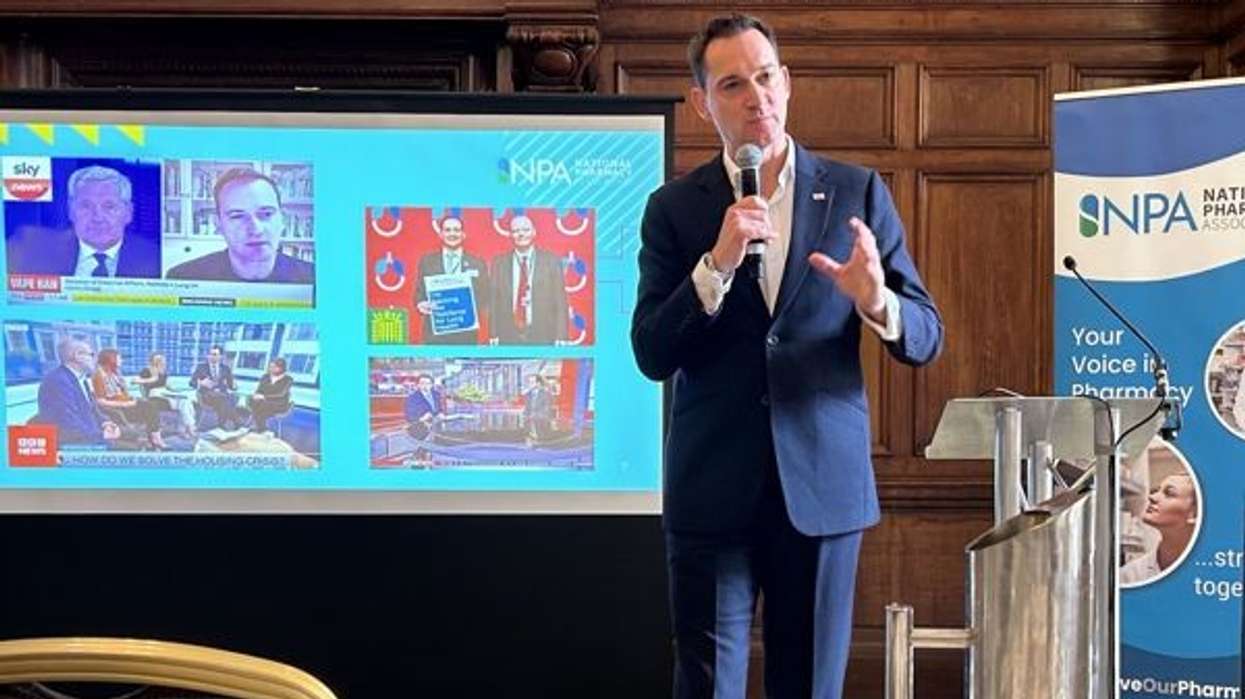
Commenting on the announcement that a government funding settlement for pharmacies for 2026/27 will not be ready by the start of the financial year, Henry Gregg, Chief Executive of the National Pharmacy Association, said: "It is deeply disappointing that pharmacies will have no certainty going into an incredibly challenging new financial year, with eye-watering new bills to pay.
"The government must stop treating hard working pharmacies as second class citizens. If financial arrangements can be put in place for GP colleagues with ample time before April, there is no excuse as to why the same courtesy can't be afforded to pharmacies.
"Given this inexcusable delay, the government should provide pharmacies with an urgent stabilisation payment so they can meet increased business rates and living wage costs hitting them in just a matter of days.
"Without stabilisation, pharmacies will have no choice but to cut back services that patients depend on.
"This is not only a question of money, it is also about showing due respect to hardworking and long-suffering members of the NHS team, who should not be made to wait for progress on bridging their funding gap."
Cannot afford rushed, inadequate deal: IPCN
The Independent Pharmacy Contractors Network (IPCN) said the delay in CPCF agreement underlines what it has consistently stated: "2026/27 is a critical and defining year for community pharmacy."
Reiterating its full support for CPE Representatives and their negotiating position, the IPCN urged all stakeholders to recognise that:- The sector cannot afford a rushed or inadequate settlement
- Contractors require a deal that addresses long-standing structural underfunding
- Short-term compromise must not override long-term sustainability
"Independent contractors across our network stand firmly behind CPE in taking the necessary time to secure the right outcome.
"We are clear: there must be no pressure, political or otherwise, to accelerate negotiations at the expense of quality, sustainability, or sector viability."
IPCN said it is aware of emerging discussions regarding the expansion of Independent Prescribing (IP) services, but no new national service should be accepted without appropriate and commensurate funding.
"Any IP service must be funded at a level equivalent to Pathfinder sites, protected learning time must be built into any service specification, and services delivered by Independent Prescribers must be remunerated at IP level.
"Independent Prescribing carries increased clinical responsibility, governance requirements, and risk.
"It is neither acceptable nor sustainable to expand such services without recognising these realities in funding and structure."
IPCN believes that it is the moment to correct course, not continue managed decline; any agreement must reflect the true clinical value of pharmacy teams; and contractors must not be asked to deliver more for less.
It has called for sector unity and said IPCN is ready to "support CPE with real-time contractor insight; engage our network to reflect frontline realities; and mobilise responsibly where required to support a fair and sustainable outcome."