





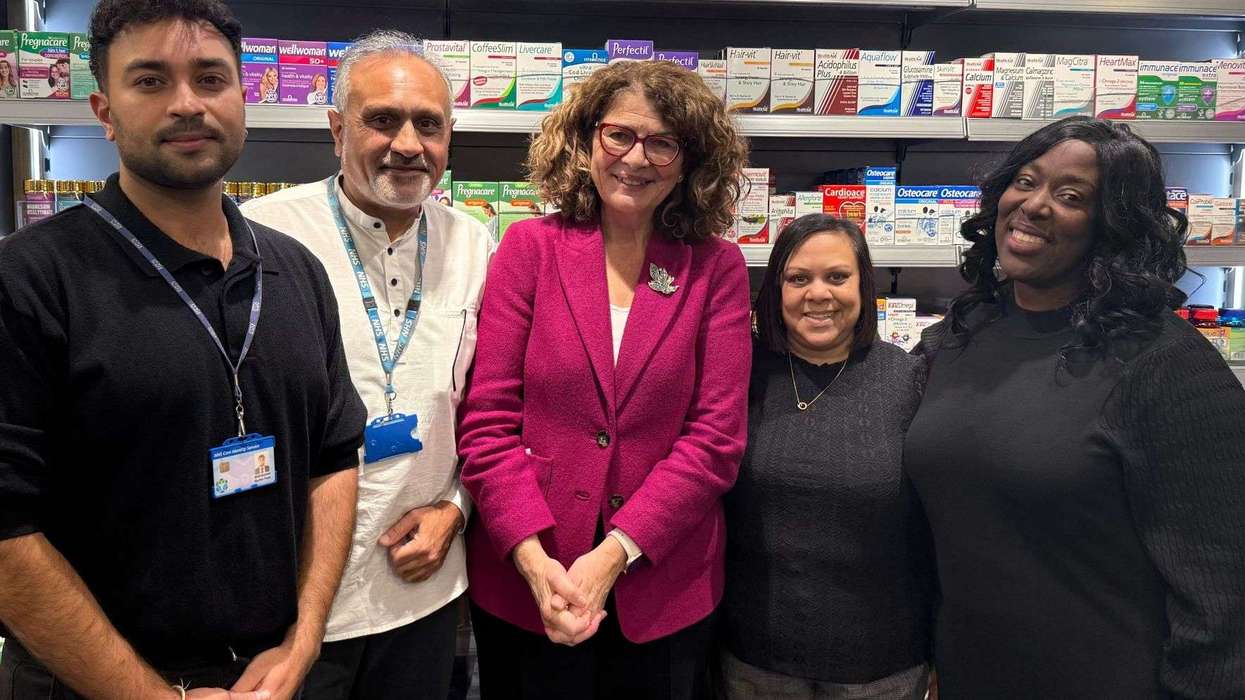

Public health minister Dame Diana Johnson visited Lincoln Pharmacy in east London, on Thursday, 26 November, ahead of the Government's announcement of new medicine substitution rules.
During the visit to the pharmacy and the co-located St Paul's Way Medical Centre, Johnson met with pharmacist Atulkumar Patel and Sachin Patel, and discussed the role of community pharmacies in helping patients access medicines.
London councillors Abdul Mannan and Sabina Akhtar also attended the visit. North East London LPC Chief Executive Officer Shilpa Shah posted about the visit, saying that it was the first for the minister outside of her constituency.
Atul Patel and Sachin Patel were pictured with the public health minister. Atul is a past winner of the Pharmacy Business Awards.
The Government plans to allow pharmacists to supply the same medicine in a different formulation or strengths when the prescribed product is unavailable, governed by safety protocols.
The changes aim to reduce delays for patients, prevent unnecessary repeat journeys to GP practices and pharmacies, and ease administrative pressure on primary care teams.
Currently, pharmacists are generally required to dispense the exact product specified on a prescription, meaning patients may need to contact their GP for a replacement prescription if the medicine is unavailable.
Speaking about the changes, Dame Diana said the new flexibility would allow pharmacists to use their professional expertise to help patients obtain treatment with less inconvenience and delay.
Shah posted that the visit to east London prompted conversation around the importance of neighbourhood working, with the medical centre and co-located pharmacy discussing efforts to tackle health inequalities, develop the local workforce and work with schools.
She also raised the financial pressures facing community pharmacies with the minister, including rising rents, business rates and staffing costs, and the gap between the prices pharmacies pay for medicines and the reimbursement they receive.
The visit comes as the Government prepares to introduce amendments to the Human Medicines Regulations 2012 to implement the changes. The reforms will apply across the UK, subject to the necessary parliamentary processes.