






Key Summary
- European consortium validated a new pharmaceutical manufacturing model.
- The PIPAC consortium comprises De Dietrich, Alysophil, Bruker, and Novalix.
- The technology offers a faster, more flexible pathway from drug development to commercial supply.
A European consortium has successfully validated a new pharmaceutical manufacturing model.
It is designed to modernise traditional supply chains, reduce dependence on centralised production, and accelerate the industrialisation of critical medicines.
The PIPAC consortium - comprising De Dietrich, Alysophil, Bruker, and Novalix-announced the successful completion of a pilot programme demonstrating a continuous manufacturing platform for active pharmaceutical ingredients (APIs).
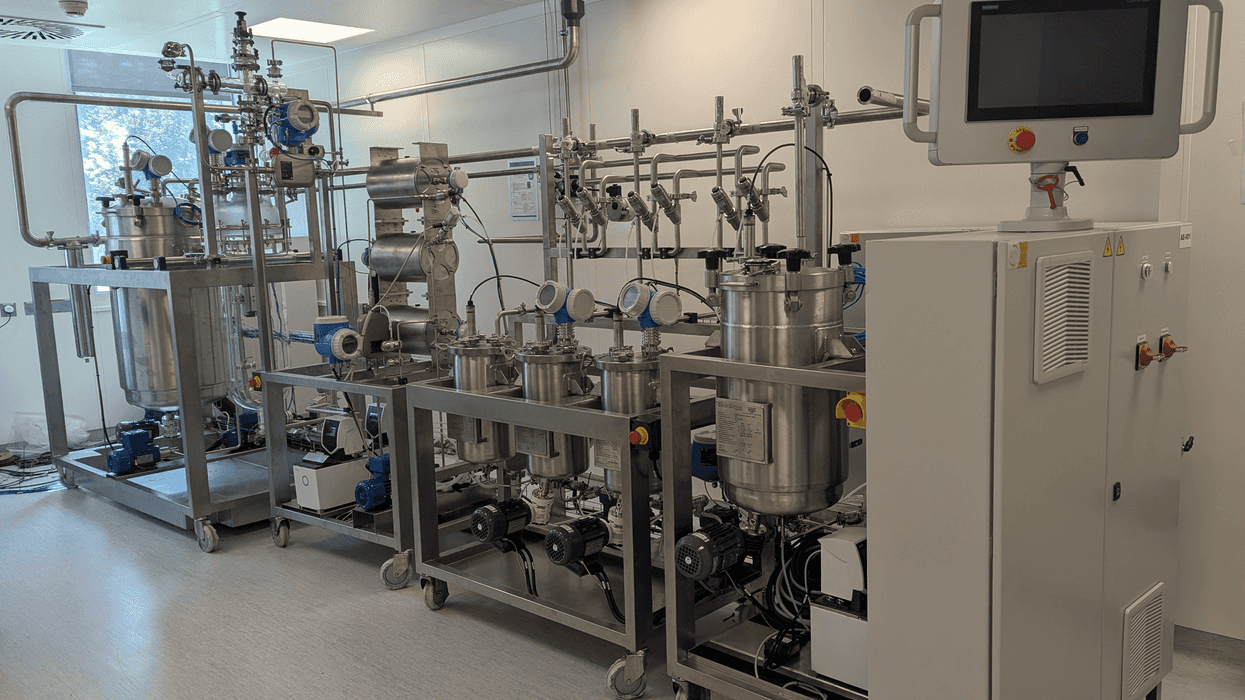
The platform combines continuous-flow synthesis, real-time analytical monitoring, and AI-driven automated process control.
It enables pharmaceutical compounds to be produced and optimised continuously rather than through traditional batch manufacturing.
The project demonstrated the platform’s capacity to operate under demanding manufacturing conditions by validating the continuous production of fentanyl, providing a blueprint for wider API production.
Replacing traditional batch manufacturing
For decades, API production has relied heavily on batch manufacturing, which requires lengthy scale-up phases and substantial capital, time, and raw material commitments before processes can be fully validated.
Unlike batch production, continuous manufacturing allows product quality and process performance to be monitored and adjusted continuously.
This enables earlier intervention, reduces scale-up risks, and lowers resource consumption.
Additionally, the technology opens the possibility of smaller, modular micro-factories that support regional, decentralised manufacturing strategies and enhance supply-chain resilience against geopolitical and logistical disruptions.
The PIPAC project brings together specialised technical expertise from across four major partners:
- Novalix designed and implemented the continuous-flow synthesis route.
- Bruker contributed advanced analytical capabilities for continuous real-time process monitoring.
- Alysophil supplied AlchemDrive, an autonomous AI-driven process-control platform that analyses production data and adjusts manufacturing parameters in real time.
- De Dietrich developed the industrial hardware platform and automation architecture, integrating synthesis, analytics, and process control into a scalable environment.
According to the consortium, the successful demonstrator provides a foundation for future Good Manufacturing Practice (GMP)-compatible continuous systems.
They added that the platform can be expanded to incorporate downstream operations such as filtration, purification, and drying to create fully integrated production lines.
Simply put, by enabling production to scale through extended operating run-times rather than larger batch sizes, the technology offers a faster, more flexible pathway from drug development to commercial supply.
Frédéric Guichard, Group Executive Director at De Dietrich, said: “For decades, pharmaceutical manufacturing has relied on production models that were designed for a different era. Today, the industry faces new challenges: supply-chain resilience, production sovereignty, faster industrialisation, and greater flexibility.
“PIPAC demonstrates that it is possible to rethink how pharmaceutical ingredients are manufactured. By combining continuous production, real-time analytics, and intelligent process control, we have created a platform that has the potential to transform how critical medicines are produced in the future.”