








Female Pharmacy Leadership Network (FPLN), which supports women across the pharmacy sector, announced its Community Interest Company (CIC) status on Monday (13).
The new status provides a clear structure for FPLN, which ensures full utilisation of its earnings for community work, with strict accountability as per the law.
FPLN co-founder Komal George told Pharmacy Business that the new CIC status offers two advantages.
“The first is permanence. Everything FPLN generates, every event ticket, every partnership, every sponsorship is now legally required to go back into the mission. That is not something we can change our minds about, and it is not something a future owner or commercial interest can override.
“The community we have built over five years has a structural home that is designed to outlast us as individuals.”
“The second is credibility. The CIC structure signals to funders, corporate partners, and the wider profession that FPLN is a serious organisation with governance and accountability embedded in law. That opens doors to grants, to institutional partnerships, to conversations with NHS bodies and professional organisations that simply were not available to us as an informal network.
“We have already seen it in the response since the announcement. People take the call differently when there is a legal structure behind the name. For our members, the practical difference is straightforward: the network they have invested time in is built to last.”
As a CIC, FPLN must now follow community interest and the asset lock provisions of the Companies Act 2004, with its Articles of Association committed to leadership development, professional networking, mentorship, advocacy and advancement and representation across pharmacy leadership.
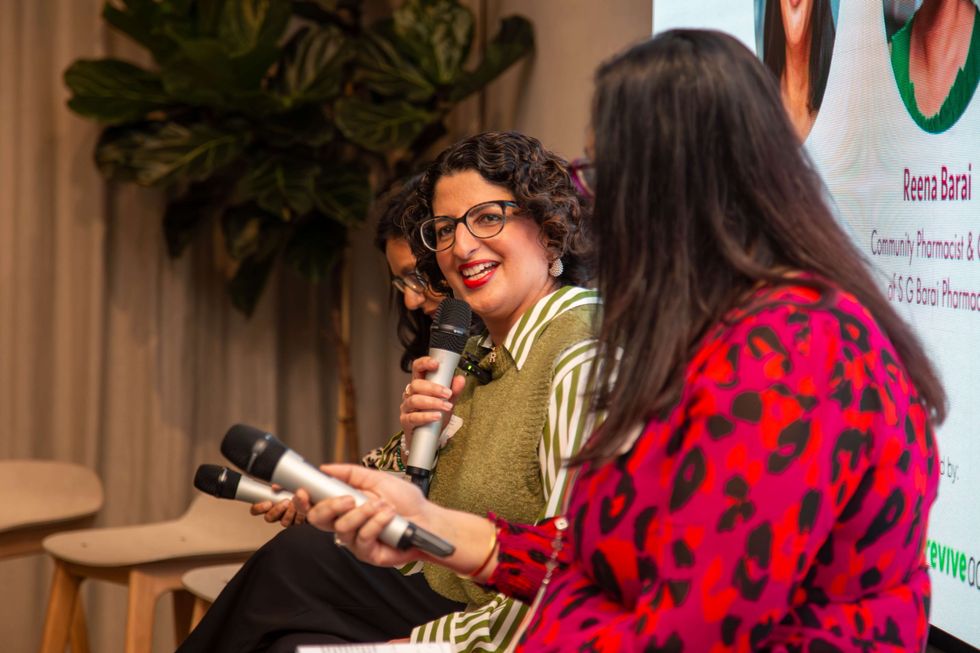 FPLN's co-founder Reena Barai FPLN
Underrepresentation of women
FPLN was founded in 2021 by three senior pharmacists to address various gaps in the pharmacy sector, including underrepresentation of women in leadership positions.
In the UK, women represent 62 percent of the pharmacy workforce, but hold only 36 percent of senior leadership positions, and this disparity is more acute for women of colour.
FPLN has been growing and it currently has over 1,000 members and they hail from the full spectrum of pharmacy sector, such as primary and secondary care, life sciences, academia, digital health and many more.
The membership remains free, and FPLN is seeking mission-aligned sponsors and partners to support its programmes.
Co-founder Reena Barai said, "We started this because we felt the gap ourselves, and we knew we weren't alone. Becoming a CIC is how we make sure that community can keep growing and keep mattering for the long term.”
Along with the CIC registration, it has also appointed Anjna Sharma, an expert in operations, partnerships, and commercial development, as the interim chief operating officer.
She joins the founding team with Komal George and Reena Barai.
Anjna’s appointment reflects the organisation’s commitment to build its operational capacity needed to scale its impact across the UK.
Komal George said, "The pharmacy profession is majority female. Its leadership is not. That gap does not close by itself, it closes because organisations like ours exist, and because the women in our community refuse to accept it as inevitable.”
“The CIC structure gives us the foundation to do this work at scale, with the credibility and sustainability the mission deserves,” she added.
With the CIC status and the credibility that follows, FPLN will receive tremendous support from funders, corporate partners, and the wider profession in the form of grants, institutional partnerships, to conversations with NHS bodies and professional organisations.
Beyond London
Reena said, “Expanding beyond London is not just a growth ambition for us it is a values commitment.”
“We have skewed south for in-person events, and the women in pharmacy in the North, the Midlands, and across the devolved nations have told us clearly that they feel it.
“What has kept the community together across geography is our online meetups. The fact that a pharmacist in Leeds and a pharmacist in Bristol can sit in the same virtual room, hear from the same speakers, and build real connections with each other that has been quietly powerful, and we do not want to lose it.
“But we also know that online connection and in-person connection do different things. The conversations that happen in a room together, over a meal, at the end of a long day focused entirely on your own development are not replicable on a screen.
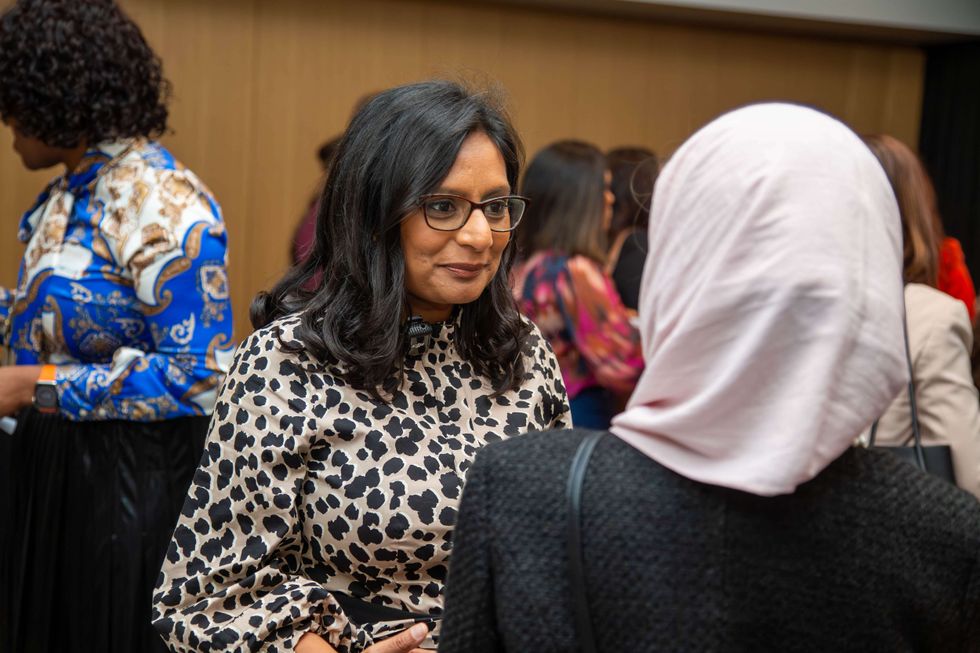 Komal George, FPLN's co-founderFPLN
“So our priority for 2026 to 2027 is actively exploring how we deliver in-person events that come to our community rather than asking our community to come to us. Our Women's Health event in Manchester in early 2027 is a marker of that intent.
“But it is a beginning, not an endpoint. We want FPLN to feel as real and as relevant in Leeds, Birmingham, and Cardiff as it does in London, and we are working through what that looks like practically in terms of format, frequency, and reach.
“Beyond geography, our priorities this year are growing the community to 2,500 members by March 2027, launching our Leadership Journeys content series which puts real member career stories at the centre of what we publish, and building the employer partnerships that will allow us to reach women in pharmacy through their workplaces as well as their personal networks.
“Community pharmacy is close to both our hearts. The women running independent pharmacies, working in PCN roles, building careers outside the hospital setting are exactly the people we exist for, and reaching more of them is central to everything we are trying to do this year.”
FPLN’s strategy includes powerful storytelling on exceptional career stories which will keep community pharmacy and its professionals close to hearts.
Therefore, as a legal and credible organisation that speaks for the voiceless in the pharmacy industry, FPLN is stepping in to make pharmacy a great place for women.
Reena and Komal stated, “The gap between where you are and where you want to be is not evidence that leadership is not for you. It is evidence that the conditions have not been right.”
They said finding people who will help and challenge each other to grow is a necessity, and that is what the FPLN community does.
With such a community, people eventually overcome the age-old systemic obstacles as well.
“FPLN is the place to start figuring out what that looks like for you,” Reena concluded.