






Key Summary
- Two in five online pharmacies said they have seen patients unwittingly buy weight loss medication from unregulated providers.
- In many cases, the illicit provider had copied logos of regulators such as Care Quality Commission and the General Pharmaceutical Council.
- Many pharmacies approached social media companies, but 96 per cent felt they got an insufficient response.
A National Pharmacy Association survey has found that one in 10 online pharmacies has found that their websites and social media presence have been cloned by criminals in order to trick patients into buying counterfeit weight loss medication.
The NPA, which represents 6,000 pharmacies across Britain, has accused social media giants of being 'asleep at the wheel', for not doing enough to prevent the sale of counterfeit medication online.
This comes after two in five online pharmacies said they have seen patients unwittingly buy weight loss medication from unregulated providers in the last year.
The association has written to the government and regulators after it found numerous reports of open sales of unregulated and unregistered drugs pedalled as weight loss or beauty treatments on social media.
Pharmacy leaders have sent evidence to health secretary Wes Streeting, calling for stronger action to keep patients safe online.
Although there are hundreds of regulated, safe online pharmacies in operation in the UK, the NPA warns that several criminals are posing as legitimate pharmacies to trick patients into buying counterfeit weight-loss treatments.
During the survey, the NPA found that a pharmacy discovered its online presence had been cloned only after a patient approached them.
Several pharmacies reported to the NPA that their social media presence was cloned, or their videos offering health advice were stolen by those trying to sell counterfeit weight loss injections.
When pharmacies have reported these to social media companies, 96 per cent felt they had received an insufficient response.
Among those who approached the Medicines Healthcare and Regulatory Agency (MHRA), 92 percent felt the response was inadequate.
In several cases seen by the NPA, the illicit provider had copied regulator logos, including the Care Quality Commission’s and the General Pharmaceutical Council’s (GPhC).
The NPA is calling for the government to put in place stronger safeguards for patients to help them identify a safe and regulated online pharmacy.
This includes the government introducing a new ‘.pharmacy’ domain name, similar to the ‘.gov’ domain for governmental bodies, to clearly identify regulated pharmacy websites.
They are also urging the government to reintroduce pre-Brexit rules that provided a list of all regulated online pharmacies, as well as logos for webpages.
Pharmacies are calling for tougher enforcement action by the medicines regulator, the MHRA, saying current efforts were a ‘drop in the ocean’ compared to the scale of the challenge.
Tougher enforcement needed: Shahid
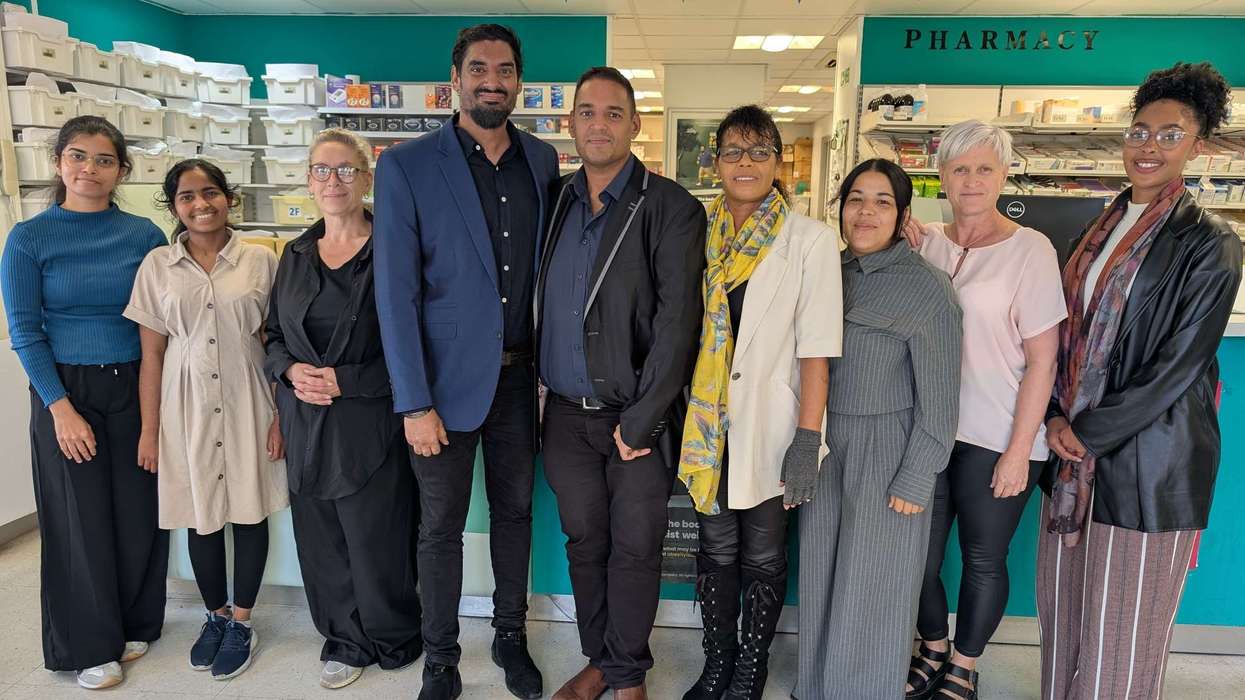
NPA board member Sehar Shahid said, “I know firsthand how distressing it is to see criminals posing as regulated pharmacists to try and trick patients into buying counterfeit medicines.
“Medicines from unregulated providers may be faked, swapped for an alternative medicine, or not meet the strict regulatory standards we have in the UK.
“Patients should be wary of any provider that is offering medicines at a price that is too good to be true and is not offering any consultations before prescribing.
“Social media companies have been asleep at the wheel and have not done enough to prevent a booming market for counterfeit medicines from flourishing on their platforms.
“Although the MHRA works hard, their efforts are a drop in the ocean to tackle what is fast becoming a sophisticated criminal enterprise.
“We need tougher enforcement action, and the government should put stronger safeguards in place to help patients clearly identify regulated providers online.
Avoid 'quick purchase' routes: Seyan
Pharmacy2U chief medical officer Dr Kieran Seyan said, “Weight-loss medications can be highly effective when prescribed safely and appropriately, but the rise in fake providers is a serious patient safety risk. With an increasing number of people seeking weight-loss services online, it is essential that patients know how to spot illegitimate services.
“Specific weight-loss medicines, including GLP-1 treatments, are prescription-only and can only be legally obtained following a consultation with a qualified healthcare professional. They also cannot be advertised to the public, so any social media promotion or ‘quick purchase’ routes should raise immediate concern.
“Legitimate services will always direct patients through a clinical consultation to assess suitability and appropriate treatment options. Any provider offering weight-loss injections without a consultation, or at a fraction of the usual price, is a major red flag.
“For reassurance, patients should check services are properly regulated. Online pharmacies must be registered with the General Pharmaceutical Council (GPhC) and online doctors registered with the CQC.
"Patients can verify registration in a couple of ways – by checking the provider’s registration directly on the regulators’ websites, or by clicking on the regulator logos on the provider’s site, which should link through to their registration page."
What can pharmacies, customers do?
Joseph Rooke, director of Risk Insights at Recorded Future's Insikt Group, a cyber threat intelligence company, said, “Suggestions of a specific domain name, such as ‘pharmacy.uk’ is a logical step forward. Done properly, it would give patients a clearer way to identify legitimate providers. It would need government backing, a regulatory mandate, and public awareness to be effective, but it is a sensible proposal worth serious consideration.”
As for the protection pharmacies can take to protect themselves, he said, "Pharmacies need to treat their digital presence as seriously as their physical premises. That means monitoring for cloned websites and impersonator accounts, securing brand name and domain variants, and having a digital risk protection strategy in place to flag threats early."
Regarding what customers can do to protect themselves, he said, “The tactics criminals use go well beyond copying a pharmacy website. They steal pharmacists' social media accounts, repurpose their educational videos, and fake regulator logos to appear legitimate. Social media platforms are not doing enough. When 96 percent of pharmacies feel their reports to platforms go unanswered, that is a systemic failure that is putting people at risk.
“To avoid scam websites and fake weight-loss medication, consumers should check the GPhC register first, before buying from any online pharmacy. Do not trust logos displayed on a website, as they can be copied. If no consultation is required before prescribing, or the price looks too good to be true, walk away.”
Lastly, he also warned that fake weight-loss drugs are more than an online fraud problem.
“The Northamptonshire raid is a landmark moment. The largest single seizure of trafficked weight-loss drugs ever recorded by a law enforcement agency shows this is no longer just an online fraud problem. There is now a full criminal supply chain, from illicit production facilities through to fake websites and cloned social media accounts designed to look like your local regulated pharmacy.”