





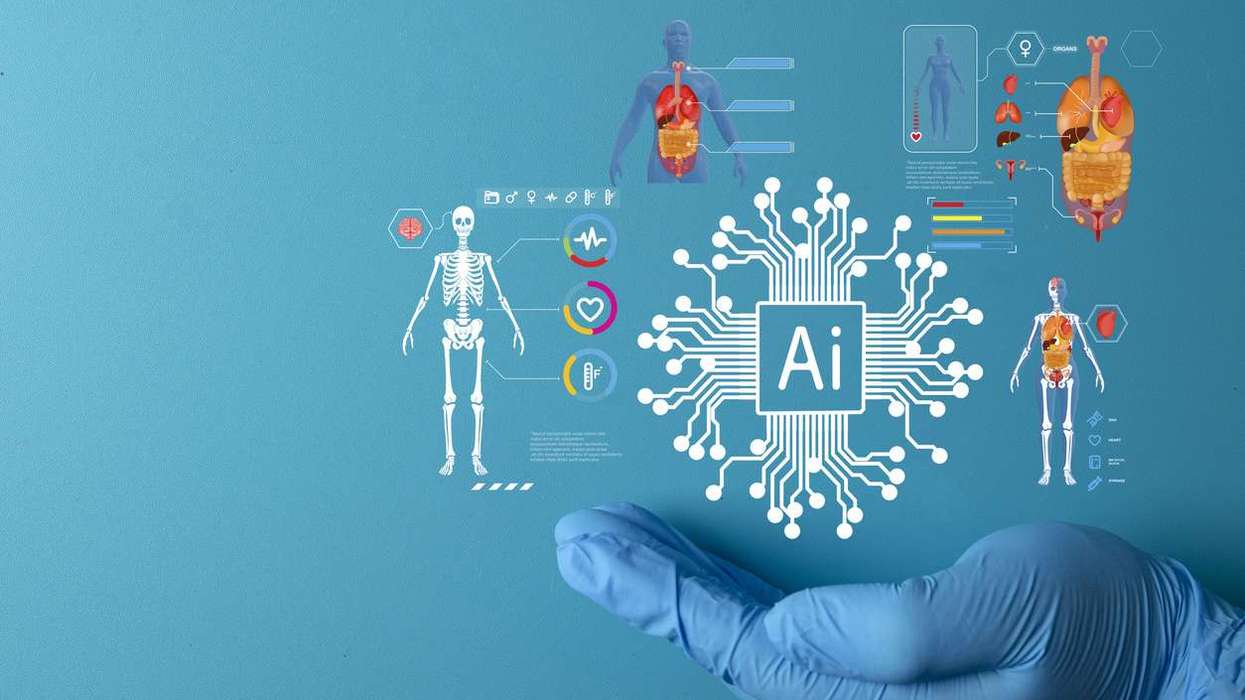

The NHS is trialling an artificial intelligence (AI)-powered telephone assistant to help clinicians monitor patients with long-term conditions, starting with people living with osteoporosis.
The virtual assistant, called Dora Care, is designed to conduct safe and empathetic telephone conversations with patients, potentially helping address staffing pressures in NHS fracture liaison services.
Osteoporosis, a condition that weakens bones and increases the risk of fractures, affects approximately 3.5 million people in the UK, particularly women and those aged over 50.
Fracture liaison services, which support and monitor patients at risk of fractures, have faced staffing shortages across several regions. Meanwhile, fracture treatment is estimated to cost the NHS £4.5 billion annually.
AI designed to demonstrate empathy
The two-year project uses generative AI to hold natural, spoken telephone conversations with patients.
Researchers from Newcastle University analysed how human clinicians demonstrate empathy during consultations to help ensure Dora’s conversations do not sound robotic or unsympathetic.
Dr Adam Brandt, Senior Lecturer in Applied Linguistics at Newcastle University, said: “We explored how expert human clinicians display empathy, and we found it’s not only what they say, but how they say it, and also when in a clinical conversation they do this”.
“The team then examined how these linguistic behaviours could be incorporated into Dora’s conversations,” Brandt added.
Patient safety remains a priority
The trial, which has received medical and ethical approval, is voluntary. AI calls will supplement existing NHS care rather than replace patients’ regular consultations.
Specialists at University of York are developing a safety framework to monitor the technology throughout the trial.
Dr Kate Preston, from the University’s Centre for Assuring Autonomy, highlighted the importance of establishing whether AI can demonstrate empathy when interacting with vulnerable or unwell patients.
She also emphasised the need to ensure the technology provides appropriate information to support trained clinicians in making medical decisions.
Professor Ibrahim Habli, Research Director at University of York for Centre for Assuring Autonomy, said: “Any development and deployment of AI within a healthcare setting must be backed by robust safety evidence and assurance."
Habli added that safety and trust is the key to clinicians feeling confident to deploy this technology and understand it better to aid in their decision making process.
Dr Aisling Higham, the project's chief investigator at Ufonia, said: “ We are pushing the boundaries of how empathetic and safe autonomous clinical AI assistants can be used to support patients and clinicians”.
The project is led by Ufonia, in partnership with Newcastle University and the University of York, with funding from Innovate UK.
If successful, it is proposed that Dora Care could be extended to support patients with other long-term conditions, including diabetes, heart failure and chronic obstructive pulmonary disease (COPD).