





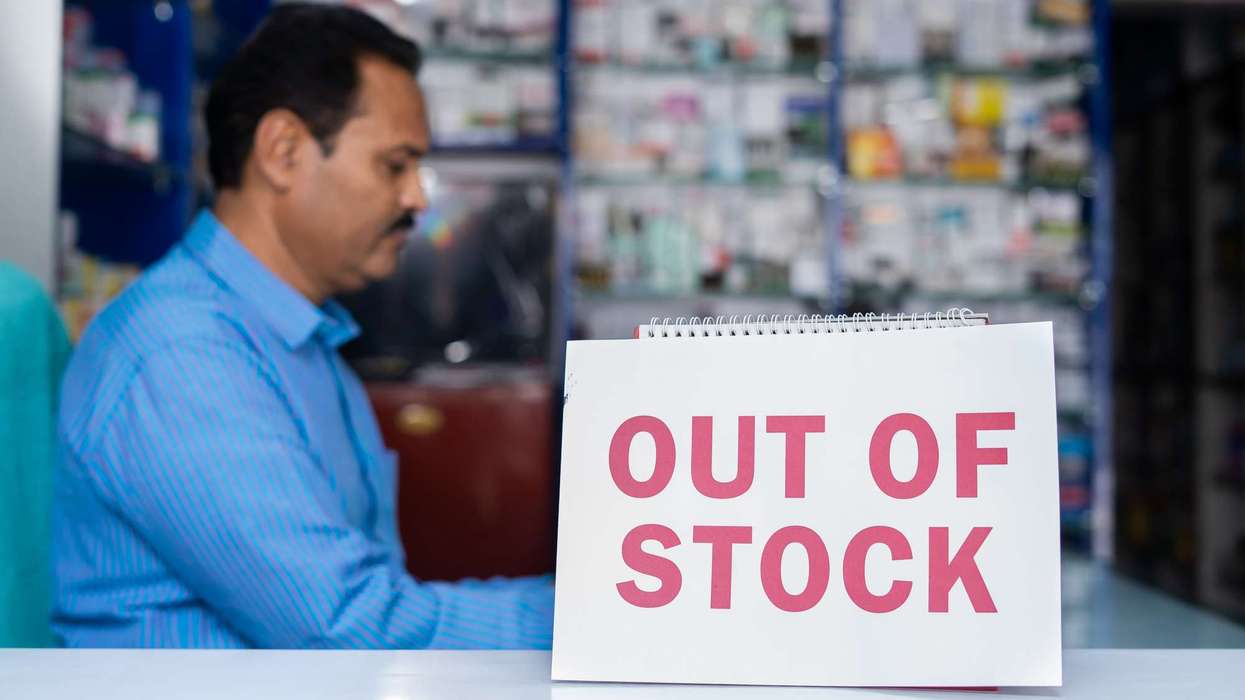

Up to 6.4 million NHS prescription items a month may have been affected by medicine supply issues this year, according to analysis by the National Pharmacy Association (NPA).
The evaluation of 14 Department of Health and Social Care (DHSC) Medicine Supply Notifications (MSNs), issued between January and October 2026, highlights the scale of shortages affecting commonly prescribed medicines.
These include several strengths of blood pressure medicine ramipril, the painkiller co-codamol and estradot, a hormone replacement therapy (HRT) medication.
Shortages raise patient safety concerns
The NPA warned that patients are increasingly visiting multiple pharmacies or travelling significant distances to obtain medicines they depend on.
While supply delays can cause frustration and anxiety, shortages of time-critical medicines can also pose serious risks to patient safety. Recent examples include certain brands of insulin, nabilone, used to manage chemotherapy-related side effects, and Creon, which helps patients with cystic fibrosis and pancreatic cancer digest food.
The association has called on the Government to publish its response to a consultation on allowing pharmacists to make substitutions when prescribed medicines are unavailable.
Currently, pharmacists are restricted from making most changes to prescriptions, including switching between certain formulations, forcing patients to return to their GP for amendments.
Medicine prices add to pharmacy pressures
The NPA also highlighted rising medicine costs, warning that pharmacies are increasingly being forced to dispense NHS prescriptions at a loss.
A record of 245 price concessions were issued in October 2026, compared with 100 in October 2025. Price concessions are issued when the market cost of a medicine rises above its usual reimbursement price.
The cost of levothyroxine, a commonly prescribed thyroid treatment, increased more than 18-fold from 18p to £3.29 between October 2025 and October 2026. Meanwhile, the price of the antibiotic oxytetracycline rose 91-fold, from 57p in January 2024 to £51.89.
NPA Chair Olivier Picard said: “this is shocking data which shows that millions of prescription medicines which patients depend on are being impacted by supply challenges every month”.
“Despite government claims that the situation is improving, this simply does not match the reality that pharmacies and the patients they serve are seeing on the ground”, he added.
Picard urged the Health Secretary to address the problem and remove restrictions preventing pharmacists from making necessary prescription changes when medicines are unavailable.
Responding to the NPA press release and analysis, Dr James Davies, Director of Research and Insights at Community Pharmacy England, said: the medicines supply situation remains troubling, as pharmacy owners and their teams know only too well. They regularly go above and beyond to get hold of medicines for their patients, often at a personal cost and despite a host of other financial and operational pressures they face”.
“Patients and pharmacies deserve better”, he added.
Davies also called for lasting Government action to address some of the economic root causes and shortages in order to strengthen resilience across the medicines supply chain.