






Key Summary
- Dr James Davies discussed about the medicine shortage crisis at the Pharmacy Business Conference 2026.
- He highlighted the rising financial struggles of pharmacy professionals along with the harassment they face.
- According to him, raw material shortages, rising costs, and system vulnerabilities are driving the crisis.
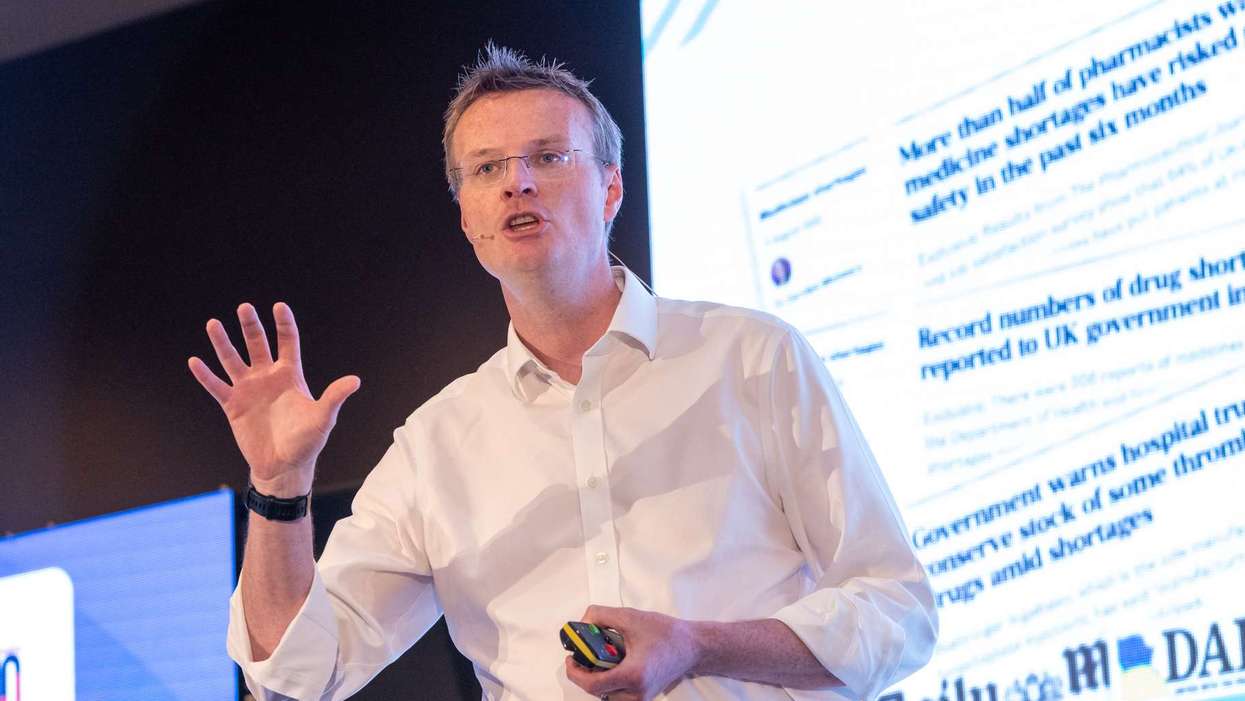
Patients are bearing the brunt of ongoing medicine shortages, often waiting several days to receive essential medicines, according to Dr James Davies, Director of Research and Insights at Community Pharmacy England (CPE).
Speaking at the Pharmacy Business Conference 2026, Davies highlighted the human cost of these delays, citing three cases from coroners’ reports in which patients died after failing to access medicines in time.
Recent Office for National Statistics survey data, conducted monthly on behalf of NHS England and the Department of Health, shows that one in eight patients struggles to obtain essential medicines from pharmacies. While most pharmacies manage to source medicines within three to four days, around 10–15 percent of patients wait up to a week, largely due to acute shortages.
Davies praised pharmacies for their efforts to mitigate the crisis but warned that the impact extends beyond patient care. Shortages are also financially straining community pharmacies and forcing the NHS into costly workarounds, he said.
The pressure is also being felt at the pharmacy counters. According to a recent CPE survey, incidents of abuse and aggression toward pharmacy staff have increased, often driven by frustration over unavailable medicines.
Davies also pointed to concerns raised by the House of Lords regarding price concessions, which are becoming more frequent as medicine costs rise.
Supply chain challenges
Addressing geopolitical factors, Davies noted initial concerns that conflict involving Iran could severely disrupt medicine supply chains, particularly affecting shipments from Israel. However, the long-term impact of shipping delays has been less severe than anticipated.
Air freight has dropped by 79 percent, largely due to biologic medicines requiring cold-chain logistics. While this has had limited impact on primary care, some effects are being felt in secondary care.
The most significant pressure, Davies said, is on raw materials. Liquefied petroleum gas (LPG), widely used in pharmaceutical manufacturing, has become scare - particularly in India, the world’s second-largest LPG importer. Reduced access is already affecting production.
More broadly, Davies highlighted the sector’s dependence on petrochemicals: around 99 percent of pharmaceuticals contain petrochemical components, and roughly 3 percent of global petrochemical output is used in drug manufacturing. Rising prices for active pharmaceutical ingredients (APIs) are expected to drive up medicine costs, even if they do not immediately cause shortages.
Cyberattack disruption
Davies also warned of emerging digital threats. A cyberattack by the hacktivist group Handala targeted Microsoft Intune, a device management system used by medtech company Stryker. In the aftermath, 5,000 employees in Ireland reportedly found their devices wiped, with around 50 terabytes of data lost.
The disruption halted key operations, including invoice processing and stock management, further illustrating the vulnerability of healthcare supply systems.
Advice for pharmacies
With medicine prices rising, price concession negotiations with the Department of Health are now taking place almost daily. Davies urged pharmacy owners to proactively report supply issues to CPE rather than assuming others have done so.
He also recommended using the SBS Supply Tool to track shortages and determine whether issues are local or national, helping pharmacies respond more effectively.