






Key Summary
- Pharmacy teams are spending time comparing prices and splitting orders across wholesalers for marginal gains.
- The Pharmacy First has increased the workload of pharmacies, but average earnings per pharmacy have not improved.
- Despite being able to operate with lower overheads, independent pharmacies are increasingly constrained by high exit costs.
Community Pharmacy England CEO Janet Morrison said the recent Edge Health report indicates that the community pharmacy sector is ‘on a knife-edge.'
She said, “This Edge Health report provides more evidence of the extraordinary pressures that community pharmacies are facing, and it underlines the critical need for the Government to stabilise the supply chain. It backs up what our sector polls tell us about the time pharmacy teams have to spend sourcing medicines, as well as showing the breadth of the problems that volatility in the supply chain and margin are causing.
"We share the report authors’ concerns about the long-term viability of community pharmacies, and their calls for economic reform to address the financial instability in the sector. This report is yet more confirmation that community pharmacy is on a knife-edge: pharmacies urgently need investment and a roadmap for the future.”
The Edge Health report, sponsored by Sandoz, has examined the growing pressures on community pharmacies and the sector's long-term sustainability.
The report says that community pharmacies are facing growing operational and financial pressures.
Pharmacy teams are spending time comparing prices and splitting orders across wholesalers for marginal gains that are later eroded anyway.
"This cycle sustains downward pressure on generic medicine prices to historically low levels, increasing the risk of shortages, price concessions and cash flow pressures – overall damaging the market."
It pointed out that "with only a minority of pharmacy owners now reporting profitability, the mechanism appears increasingly out of step with economic reality."
Pharmacy First
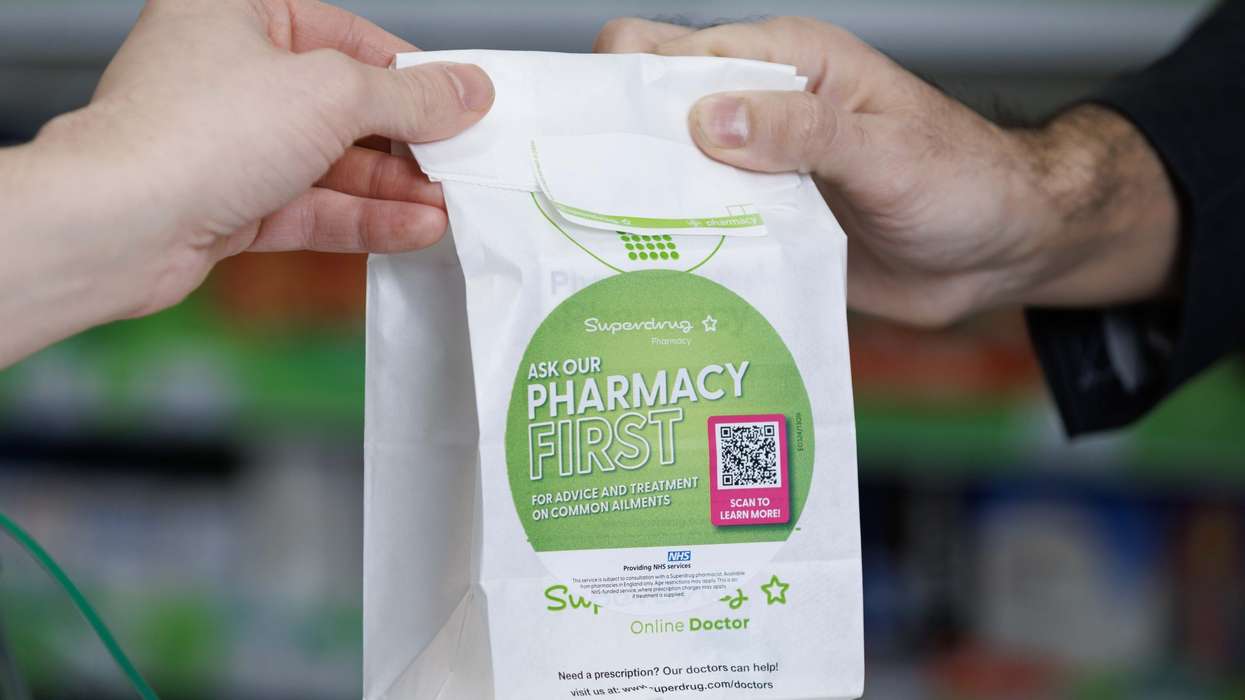
The report assessed the financial impact of Pharmacy First, the NHS initiative to shift demand from general practice and urgent care into community pharmacy.
Though the uptake for this scheme has been strong among pharmacies, it delivers only modest income for most contractors.
Though the workload has increased, average earnings per pharmacy have not, largely because higher thresholds are now required to unlock the fixed monthly payments.
Many pharmacies fall short of these thresholds and receive only the per-consultation fee, missing out on a substantial share of potential funding.
The report said that, in its current form, the service cannot offset declining profitability in core dispensing, and it risks adding an increased workload without providing a suitable, compensatory income stream.
Fragile environment
The report said that rising demand, constrained funding, a zero-sum pricing mechanism, and limited returns from new services all contribute to an increasingly fragile operating environment.
It pointed out that since 2021, England has seen a net loss of 865 pharmacies – an 8 percent reduction – driven largely by closures among the major chains.
"Although small- and medium-sized pharmacies have grown in number, this does not necessarily indicate strong and stable profitability."
The report highlights a particular issue for smaller and independent pharmacies. Despite being better able to operate with lower overheads, independent pharmacies are increasingly constrained by high exit costs (e.g. redundancy, lease commitments, loss of a pension-supporting asset), leading in some cases to the persistence of so-called ‘zombie’ businesses that remain operational despite being economically non-viable.
"This represents an ‘unpriced subsidy’ to the NHS that masks the true cost of maintaining access," the report said.
Meanwhile, demand continues to rise. Prescription volumes have increased by 14 percent since 2015/16, meaning fewer pharmacies are dispensing more items and absorbing additional workload without equivalent increases in funding or staffing.
Though the NHS 10-Year Plan envisages an expanded role for community pharmacies, they would not be in a position to deliver because of the current funding and pricing model.