





Key Summary
- Patients are increasingly turning to pharmacies for minor ailments instead of doctors, benefiting from closer interaction.
- Private services are witnessing rapid growth due to NHS pressures, long waiting times, and limited GP access.
- Weight loss services and travel medicines are proving to be high-growth areas.
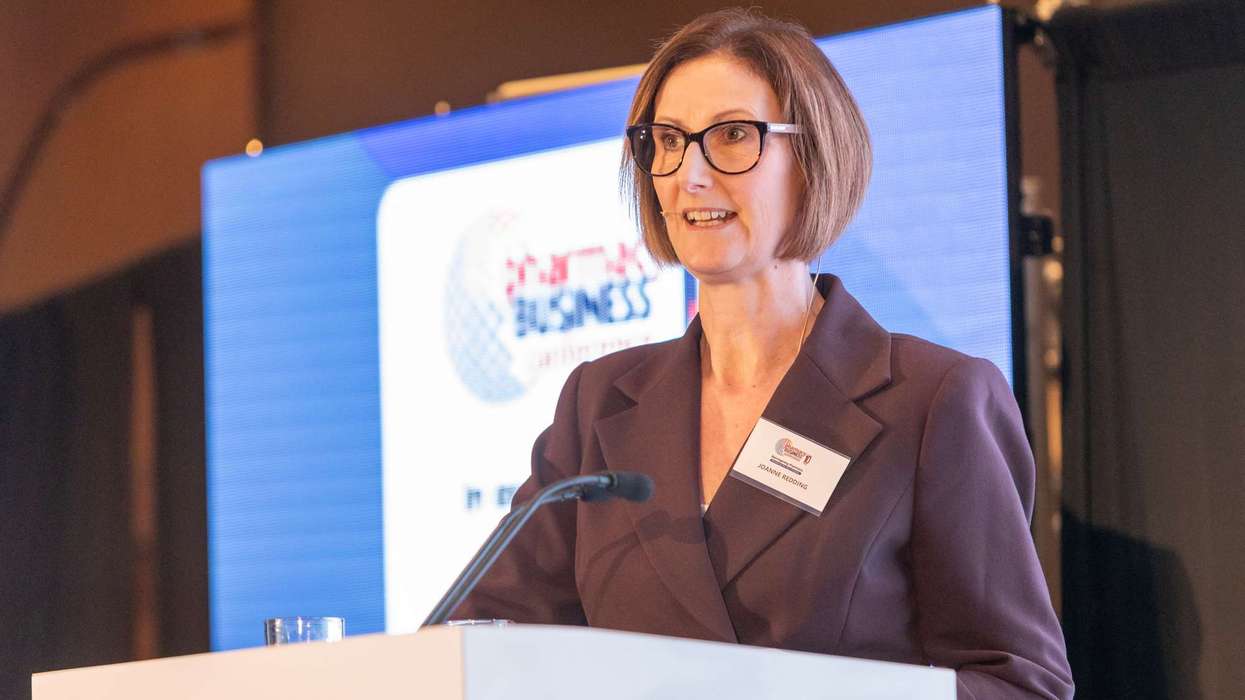
The number of pharmacy contractors in England has dwindled over the past few years, but the number of items being dispensed has risen, and this has increased the workload of pharmacists, according to Joanne Redding, Director of Supplier Relationships, IQVIA UK & Ireland.
While delivering a presentation on the pharmacy landscape at the recently held Pharmacy Business Conference, she said that the number of pharmacies is below 10,000 and there has been a 14 percent increase in the number of items being dispensed since December 2021.
"What that actually means then is that the number of items dispensed per active store has increased by over 22 percent."
Redding claimed everybody is working harder and harder and is expected to do more in the future.
Ownerships
She said there has been a shift in ownership and the national chains (those with more than 200 branches) have lost their dominance.
It has now given way to independents (groups of five) and regional chains (groups of six to 200 stores).
"In the last five years, about 700 pharmacies have declined in the market. In the last 12 months, around 77 pharmacies have changed.
"What we're seeing is that pharmacies are not just moving from national chains to independents, but also to regional chains — so it’s a restructuring market."
"Independents now represent about 47.3 percent."
When it comes to the number of items dispensed by each channel, the national chains have stabilised, and others are stabilising, but independents continue to grow.
Services
Citing NHS data, she said pharmacy services are changing, but progress is gradual. "There are spikes in areas such as vaccines, but overall growth has been steady."
As for specific services, she said the New Medicine Service has been around for a couple of years, and 92 percent of pharmacies are being paid to provide it.
"Pharmacy First shows 91.6 percent participation in terms of payment, though that may differ from actual delivery due to thresholds.
"Blood pressure checks and contraception services are also widely adopted - around 80 percent and 78 percent, respectively. These are relatively strong figures, and we continue to see gradual growth in new services."
She said independent pharmacies tend to underperform in offering services. "However, those that do offer them perform as well as or better than the market."
Redding said that pharmacies offering Pharmacy First also display a similar pattern.
"Independents may offer fewer services overall, but when they do, they perform well. Their accessibility and longer opening hours give them a strong platform."
She said patients are increasingly turning to pharmacies for minor ailments instead of doctors, benefiting from more one-to-one interaction.
"However, only about 7.3 percent of eligible items are currently delivered through Pharmacy First, showing room for growth," she added.
Pharmacies are uniquely positioned to offer holistic care - not just prescribing antibiotics, but guiding patients through a full care pathway.
"Regular interactions also help build trust and long-term relationships within the community," she added.
Private services
Redding said private services are witnessing rapid growth due to NHS pressures, long waiting times, and limited GP access in some areas. There has been a 6.7 percent rise in self-pay items, up from 1.3 percent two years ago.
"Looking at broader healthcare purchasing trends, we’ve seen fluctuations, but demand remains strong."
She pointed out that around two million packs of weight loss medication are still being purchased monthly, representing two million patients accessing that service.
"Independent pharmacies and regional chains are well-positioned to support weight loss services. Unlike online providers, they can offer ongoing, in-person support throughout a patient’s journey," she said.
Travel medicine is another growth area, with travel vaccines growing 27 percent last year, and the demand continues to rise.
All vaccines have shown increases over time, and there’s a strong potential for pharmacies to expand in this area.
Regarding the overall vaccines delivered, independent pharmacies often outperform other segments.
"However, more complex and high-value travel vaccines are still more commonly offered by larger chains - highlighting an opportunity for independents to expand their range," she said.
Redding pointed out that the key takeaway is that the healthcare system is under pressure, and pharmacies are facing multiple challenges.
"The opportunity lies in thinking differently - leveraging both NHS and private services, expanding offerings, and making the most of community relationships."