






Thousands of people at increased risk of oesophageal cancer could benefit from quicker and less invasive testing under new draft recommendations from the National Institute for Health and Care Excellence (NICE).
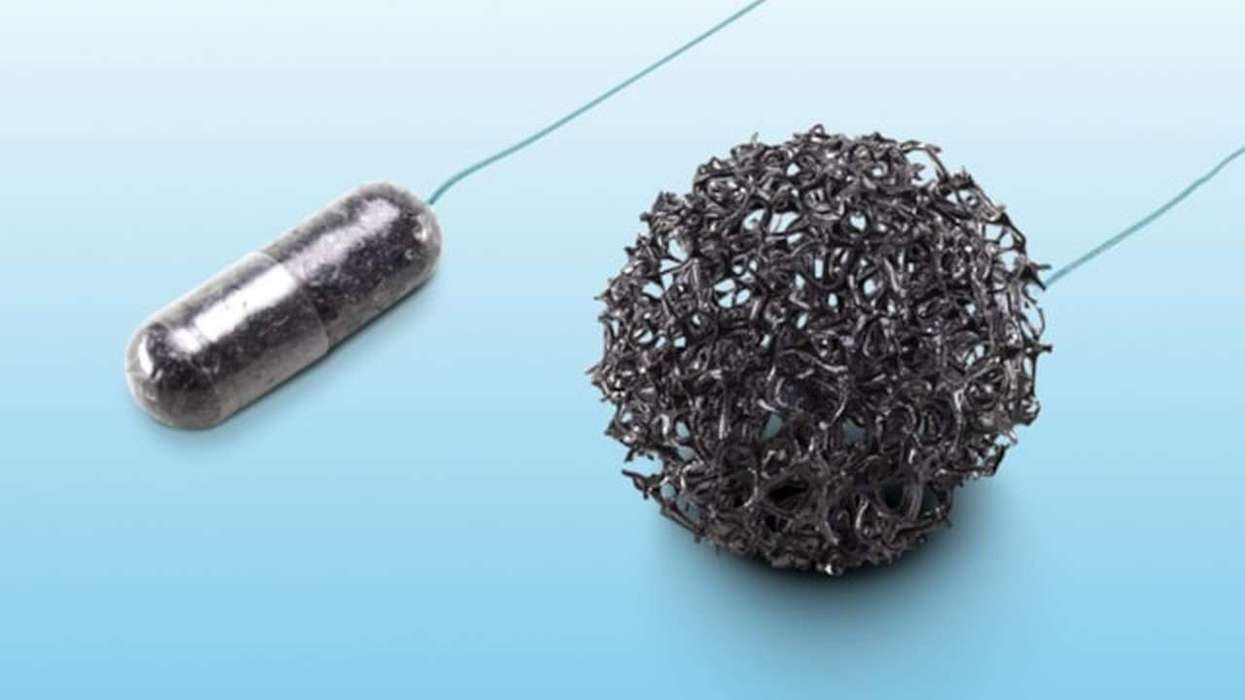
NICE has recommended two capsule sponge tests: Cytosponge and EndoSign, as options for detecting Barrett’s oesophagus and oesophageal cancer in people with persistent gastro-oesophageal reflux disease (GORD), commonly known as acid reflux.
The draft guidance, published on 16 November, could make testing more accessible by allowing the procedures to be carried out in primary care facilities and community diagnostic centres, rather than relying on hospital-based endoscopies.
The recommendations also mark the first assessment under the Government’s new National HealthTech Access Programme, which aims to support the wider adoption of effective medical technologies across the NHS.
Less invasive alternative to endoscopy
- The capsule sponge test involves patients swallowing a small capsule attached to a thread.
- Once it reaches the stomach, the capsule dissolves and releases a sponge, which expands over approximately seven minutes.
- A trained healthcare professional then gently retrieves the sponge using the attached thread.
- As it passes through the oesophagus, it collects cells from the lining, which are sent to a laboratory for analysis.
- Patients whose results indicate possible Barrett’s oesophagus or cancer are referred for an endoscopy to confirm the findings and determine further treatment.
Unlike conventional endoscopy, the capsule sponge procedure does not require sedation and can be administered by one specially trained healthcare professional. An endoscopy typically requires an endoscopist and at least two nurses.
NICE said around 95% of people are able to swallow the capsule successfully after one or more attempts.
Potential to ease NHS pressure
Barrett’s oesophagus occurs when cells lining the lower part of the oesophagus change, often following long-term acid reflux. The condition affects an estimated 1% to 2% of adults and increases the risk of oesophageal cancer, although most people diagnosed with it will not develop cancer.
The BBC also highlighted the test’s potential to detect oesophageal cancer earlier in people experiencing persistent heartburn.
NICE’s independent committee said the tests could help identify concerning cellular changes earlier and provide an additional monitoring option for people already diagnosed with Barrett’s oesophagus.
The committee also highlighted the potential to reduce pressure on NHS endoscopy services, where demand remains high and some patients are not receiving surveillance checks as frequently as recommended.
Benefits and risks of capsule sponge testing
NICE also noted that patients may prefer capsule sponge testing because:
- It is quicker and less invasive than endoscopy, avoiding risks associated with sedation, bleeding and damage to the oesophagus.
- Some patients may experience temporary throat discomfort or irritation after the procedure, while serious side effects are rare.
However, a negative result does not rule out every case, and patients should be advised to seek further help if symptoms persist.
NICE and NHS England: benefits of earlier detection
Professor Jonathan Benger, chief executive of NICE, said: “Capsule sponge tests offer a quick and less invasive way to detect concerning changes associated with oesophageal cancer or Barrett’s oesophagus, helping to identify people who should go on to have further tests and treatment.
“This new technology has the potential to make testing easier for patients, while helping the NHS focus valuable endoscopy capacity on those who need it most.” he added.
Thomas Slater, Director of HealthTech at NICE, said: “this is an important milestone for the National HealthTech Access programme and a real example of what we want it to achieve for patients and the NHS”.
Slater added that: “this is just the beginning and we want the programme to ensure they deliver benefits for patients and value for taxpayers”.
Professor Peter Johnson, national clinical director for cancer at NHS England, said thousands of people had already benefited from the test through existing pilots.
He added that: “many people have acid reflux, and having easier testing could reduce the need for more complicated endoscopy procedures and help the NHS free up resources to identify cancers at an earlier stage”.
Professor Lucy Chappell, NIHR Chief Executive and Chief Scientific Adviser at the DHSC said: “By backing research from early trials to the landmark BEST4 screening study, we’ve helped generate the robust evidence needed to ease endoscopy pressures, detect oesophageal cancer earlier and save lives”.
Community pharmacy involvement
The recommendations build on existing NHS initiatives to bring capsule sponge testing closer to patients.
In August, Pharmacy Business reported on an NHS-funded EndoSign pilot across East Midlands pharmacies, involving Boots and independent community pharmacies.
At the time, 79 patients experiencing persistent heartburn had undergone testing, with 25 referred for further investigation through endoscopy.
The programme demonstrated how community-based testing could support earlier identification of patients requiring further assessment.
What happens next?
NICE is inviting comments on its draft recommendations until 7 December 2026. Its independent committee will consider consultation responses on 16 December, with final guidance expected in February 2027.
If confirmed, NHS England will be required to begin implementing the technology within the clinical pathway, including specialist staff training, when capsule sponge testing is considered the most suitable option.
NICE said the recommendations could help ensure eligible patients have more consistent access to the technology across England, rather than availability varying between regions.
Cancer Research UK’s chief executive, Michelle Mitchell said: “We look forward to the outcome of the consultation. Behind every technology like the capsule sponge are years of painstaking research, and this consultation marks an important milestone in exploring how it could make a difference for patients”.