






Key Summary
- Pharmacies should focus on delivering a consistently good patient experience.
- They should be easy to find, easy to book and recognised for the quality of their services.
- Pharmacies should provide services according to local demand, available staffing, ease of delivery and adequate pricing.
Traditional pharmacy business models are coming under increasing pressure from NHS funding constraints, rising operating costs, changing patient expectations and growing competition from digital providers, according to Day Lewis Group Co-chairman and Executive Director Sam Patel.
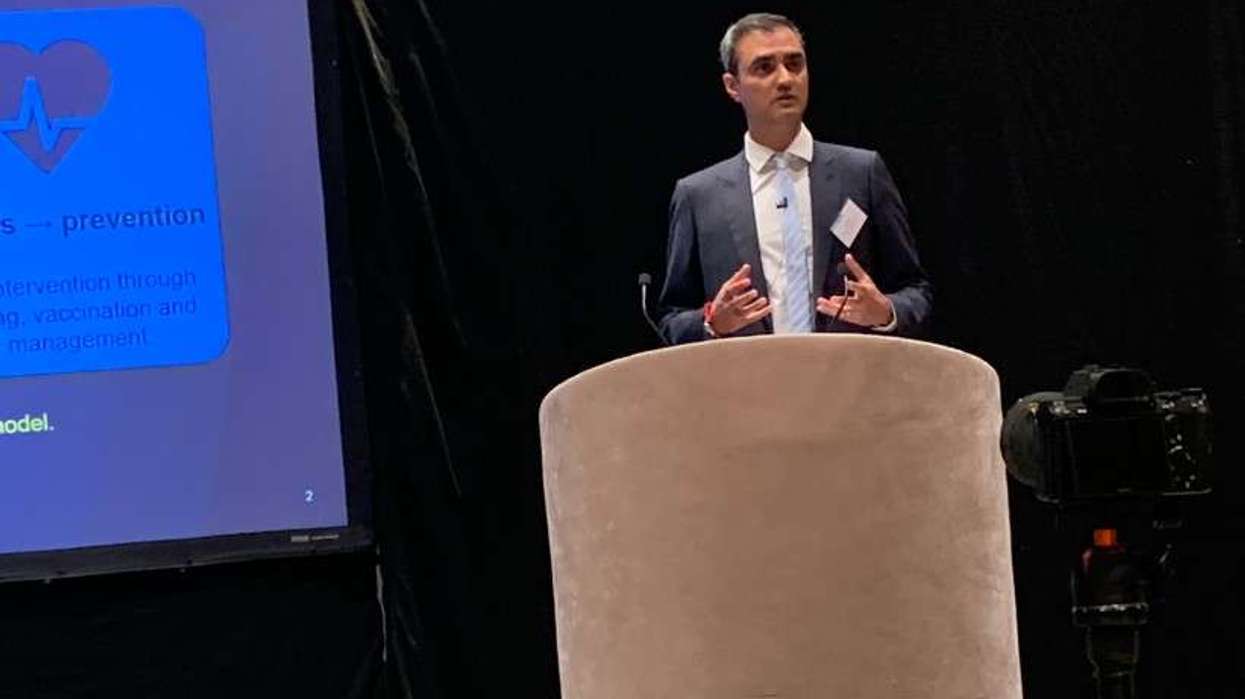
Speaking at a session on "Transforming the Pharmacy Business Model", organised by Avicenna in London on Sunday (20), Patel said pharmacies that adapt quickly to the changing market will be better placed to remain sustainable, with clinical and prescribing services, digital accessibility, targeted retail and better use of staff becoming increasingly important.
Patel, who shared the session with Baba Akomolafe, Director of Christchurch Health Centre, said the future pharmacy would need to offer patients the speed, convenience and ease of access they now expect from other parts of the retail and digital economy.
"Patients want speed, convenience, and the same sort of ease of transaction that they're getting in grocery, in digital retail, etc," Patel said.
He said pharmacies should focus on delivering a consistently good patient experience, arguing that successful businesses should be easy to find, easy to book and recognised for the quality of their services.
"A successful pharmacy should be easy to find, easy to book, have a confident team, and known for its services with an efficient dispensary," Patel said.
Patel said the pressures facing traditional dispensing-led pharmacies mean that prescribing and clinical services will become increasingly important to the future sustainability of the sector.
'Retail not dead'
However, he cautioned against abandoning retail altogether. Instead, pharmacies need to rethink what they sell and how products are connected to patients' healthcare needs.
"Retail is not dead," Patel said, but community pharmacies "will not win by carrying more products or competing with supermarkets or internet on price."
Rather than attempting to match supermarkets or online retailers on the breadth and price of products, Patel said pharmacies should curate their ranges around the health needs of the communities they serve.
"If your pharmacy looks like your local corner shop, you're doing great work," he said.
Patel identified pharmacy medicines and health-related products as a particularly significant opportunity, describing pharmacy medicines (PMEDs) as a "golden opportunity".
The objective, he said, should not simply be to sell more products but to understand the needs of patients and use every appropriate interaction to identify additional opportunities to support their health.
"Every time a patient comes for a prescription, do they have any other conditions that we need to think about? Do they need preventative care for the home medicine cabinet?" he asked.
He gave examples of how products could be linked naturally to clinical services. Travel-related products could be recommended alongside travel vaccinations, ear-care products following ear-care consultations and appropriate products alongside weight-management services.
This approach, Patel said, requires pharmacy teams to be trained to identify patient needs and make appropriate recommendations rather than leaving such activity solely to the pharmacist.
The focus should be on improving cash margins and adding value to patient interactions rather than simply chasing sales.
Focused service offering
Patel also urged pharmacy owners to resist the temptation to offer every possible service. "Do not offer everything, but become known for a few things first," he said.
Services should be selected according to local demand, available staffing, ease of delivery and whether the pricing adequately reflects the time and resources required from pharmacists.
Once services are established, pharmacies should focus on retaining patients and developing longer-term relationships through follow-up consultations, prescribing, monitoring, repeat services and seasonal healthcare offerings.
Patel placed particular emphasis on weight-management services, warning that pharmacies need to retain patients rather than allowing them to move to cheaper online providers after their initial consultation.
He said pharmacists should concentrate their time on consultations, prescribing and clinical quality, while the wider pharmacy team should be trained to support the patient journey from the initial point of contact.
"The next focus should be on training the whole team, not just the pharmacist," Patel said.
This would allow service opportunities to be identified before a patient reaches the pharmacist, helping pharmacies make better use of the skills available across their teams.
Digital footprint crucial
Patel said pharmacies also need to rethink how patients find them.
Increasingly, patients are discovering private pharmacy services through Google searches, online reviews, websites and social media rather than simply walking into their local pharmacy.
He urged pharmacy owners to take direct control of their Google listings, ensuring that opening hours, contact information, photographs and service details are accurate and up to date.
He also encouraged contractors to actively seek patient reviews.
Social media, Patel said, should be used to establish pharmacies as part of the local community rather than simply as businesses promoting products and services.
"I would highly recommend that you join your local Facebook group, but don't present your business as the name of your pharmacy. Present yourself as the local pharmacist," he said.
Patel noted that some local Facebook groups restrict business advertising but allow professionals such as pharmacists, cleaners and florists to participate as members of the community.
He described this as an advantage for independent pharmacy owners seeking to build local relationships and awareness.
Online booking should also be a basic part of the modern pharmacy experience, he said. Patients should be able to find the pharmacy, book an appointment, receive reminders and arrange follow-up digitally.
Complicated booking processes risk pushing patients toward competitors that offer a more convenient experience.
Match staffing to patient demand
Patel also highlighted the need for pharmacies to rethink traditional staffing patterns.
Staffing hours should reflect when patients actually use the pharmacy rather than simply following established schedules, he said.
Better alignment can help prevent pharmacies from being overstaffed during quiet periods while struggling to cope with demand at busy times.
Technology should also be used to reduce repetitive administrative work, including prescription chasing, printing, data entry and unnecessary interruptions.
Patel said pharmacists can carry out clinical checks earlier in the dispensing process and then delegate appropriate dispensing tasks to other trained members of the team.
The time released through better workflows and automation can then be redirected toward consultations, prescribing, private services, patient follow-up and staff development.
For Patel, the central challenge is therefore not simply to increase activity but to redesign the pharmacy around the work that creates the greatest clinical and commercial value.
Mindset change needed: Akomolafe
Akomolafe reinforced many of Patel's arguments, saying pharmacies can no longer operate in the same way as they have traditionally done.
"The mindset we got now is not good enough to get us to where we need to go," he said.
Akomolafe argued that pharmacy owners and staff need to move away from viewing their businesses primarily as retail operations and instead see themselves as healthcare providers.
"The main, the most important bit is to get my own staff to realise they're no longer retailers, but clinicians," he said.
He said counter staff should be regarded as healthcare assistants and described them as "the front door of our business."
Akomolafe also warned that pharmacies remain heavily dependent on dispensing income at a time when the NHS is increasingly emphasising clinical services.
He said many pharmacies continue to generate around 95 percent of their turnover from dispensing, highlighting the potential challenge if remuneration from traditional dispensing activity comes under further pressure.
He therefore encouraged pharmacy owners to develop private services alongside NHS-funded work rather than relying exclusively on one source of income.
"Private services take longer to build. So the sooner we start, the better we are," he said.
Making every patient contact count
Like Patel, Akomolafe emphasised the importance of using existing patient interactions to identify appropriate additional healthcare needs.
"Making every contact count is all important," he said.
He cited the example of training pre-registration staff to identify potential earwax problems, allowing an interaction that might otherwise generate limited income to become an opportunity for an appropriate clinical service.
Technology and automation are also central to his approach. At Christchurch Health Centre, he said robotic dispensing and an accuracy-checking system are being used to reduce routine workload.
"All we're doing with automation is to start my time off. Increase the capacity of our team to do more in clinical services," he said.
Akomolafe also stressed that training alone is insufficient. Staff need both the competence to deliver services and the practical capability and opportunity to use those skills.
"You cannot use those competences if the capability to do the services is not there," he said.