






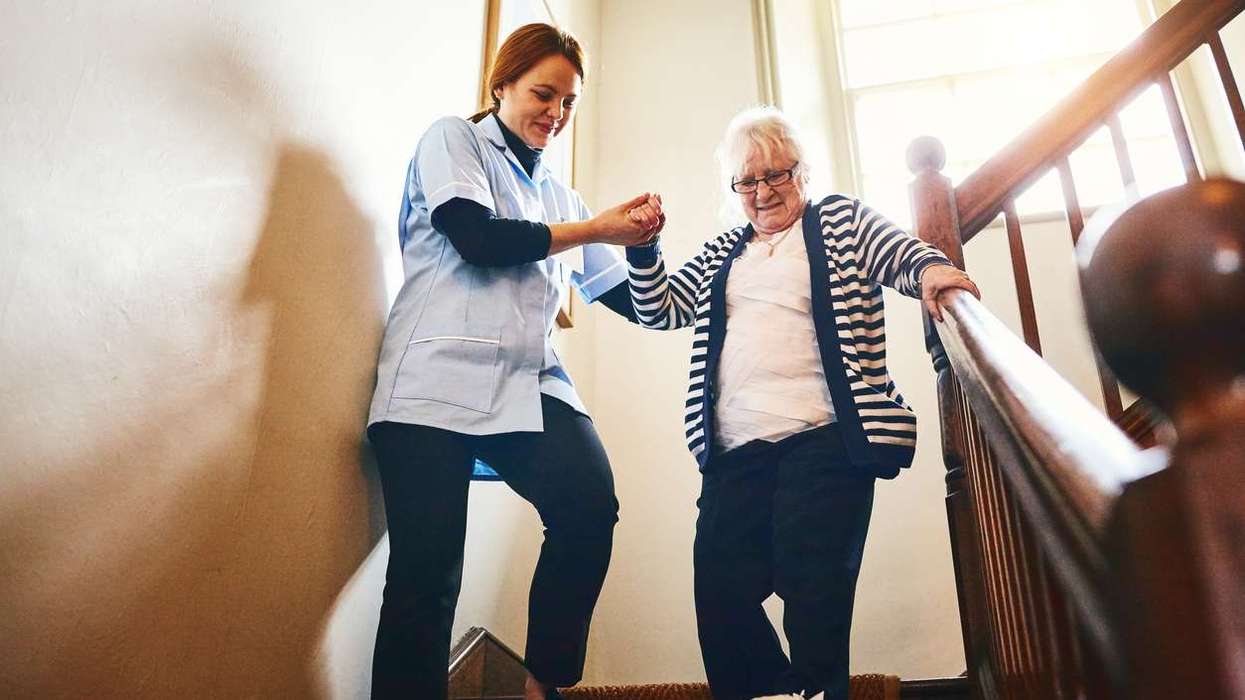

People receiving care at home are hoped to benefit from more consistent and personalised support under government plans to re-organise social care around local communities.
The Department of Health and Social Care (DHSC) has announced that local authorities will be encouraged to commission home care across small geographical areas, with one or two main providers serving each neighbourhood.
The move aims to help people see the same care workers more regularly, to build stronger relationships and reduce the time workers spend travelling between appointments.
Guidance and toolkits will be published in Spring 2027 to help local authorities adopt neighbourhood-based models of home care commissioning. The government will also work with local councils over the coming months to monitor and support their progress.
Improving continuity with personalised care
Under the current system, people receiving support a likely to be visited by different carers on different days, while care workers spend significant time commuting between appointments, often described as a "revolving door" of carers.
The proposed neighbourhood model will allow care workers to operate within smaller geographical areas, with more predictable rounds closer to home. For patients, this will provide opportunities with familiar carers to prioritise their needs and identify changes in their wellbeing.
Research in 2024 by the Health Innovation Network South West into care rounds across six providers in Bristol, found that reorganising existing visits into geographical zones could potentially deliver the same level of care with 35% less staff and 5% less driving.
Part of wider National Care Service plans
Alison McGovern, Minister of State for Social Care and Mental Health, said: “We have a growing, ageing population and an NHS facing significant pressures. Our National Care Service is the answer, and neighbourhood commissioning is a step towards this”.
She said the approach would help people stay well, independent and at home for longer, while enabling care workers to spend more time providing for their needs and priorities, rather than rushing from visit to visit and carrying out tasks in an impersonal way.
Better home care could reduce unnecessary hospital visits, with social care working more closely with the NHS to deliver proactive, planned and preventative support within communities, McGovern added.
The announcement forms part of the government’s 10 Year Health Plan, which will bring GPs, local authorities, social care providers, volunteers and enterprise organisations together to deliver more integrated health and care services.
This follows the announcement made by the Secretary of State on additional funding of £40 million for GPs this winter to support around 300,000 vulnerable patients, helping prevent serious illness, avoid hospital admissions and provide additional support to patients at more risk.
In September, Prime Minister Andy Burnham announced plans for a fully funded National Care Service (NCS) to be established in the next Parliament.
In the shorter term, the government is making an additional £4.6 billion available to local authorities in 2028-29 compared to 2025-26.
It is also establishing the first Fair Pay Agreement for care workers and developing an adult social care workforce plan.
Baroness Casey’s review on adult social care has been brought forward by a year to help establish the National Care Service. Following her recommendations, the government has held a safeguarding board for developing fast-track care for people with motor neurone disease and will appoint a dementia tsar.
Home care organisations welcomed the plans
Dr Jane Townson OBE, Chief Executive of the Homecare Association, welcomed the move, saying that neighbourhood commissioning reflected the organisation's long-standing position that commissioning was central to quality, fair working conditions and better outcomes.
However, she stressed that successful implementation would require fees to cover cost of care and payments for complete care rounds and emphasised that people must retain a genuine choice over who provides their support.
Caroline Abrahams CBE, Emily Holzhausen CBE and Jackie O’Sullivan, Co-Chairs of the Care and Support Alliance, said neighbourhood-level commissioning could improve coordination between health and social care for older and disabled people. They also stressed how strong relationships between patients and carers are central to good quality care.
Phil Holmes, President of the Association of Directors of Adult Social Services (ADASS), said: “We support efforts to improve continuity of care because relationships matter to carers and those who draw on care and support”.
“By making the best use of neighbourhoods and local communities, we can help more people see familiar carers who understand their needs and can spot any changes early”.
“This is about moving away from a system defined by time and task, where too many people see a succession of strangers at the door, and towards one built on trust and personalised support”, he added.