





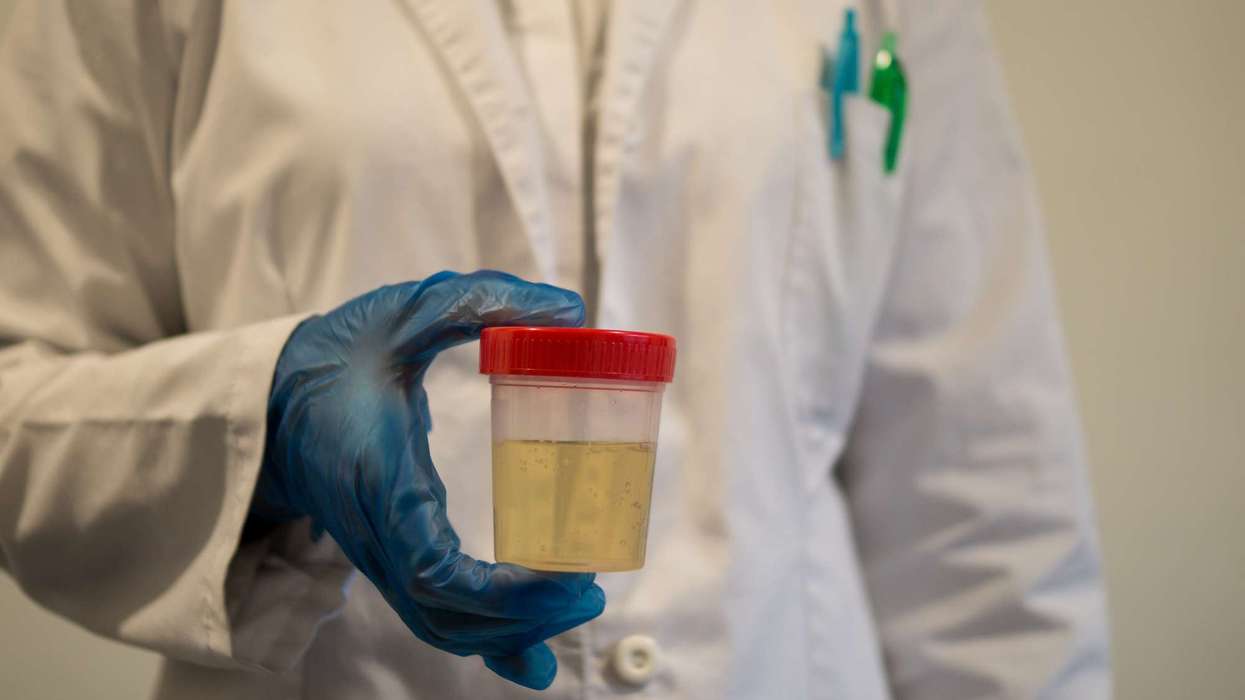

The NHS is trialling an at-home urine test for bladder cancer that could spare many patients from undergoing invasive procedures.
Known as Galeas Bladder test, it uses DNA found in a urine sample to help clinicians identify patients at greater risk of bladder cancer.
The study led by the University of Birmingham and Nonacus, a diagnostics company, involved 964 patients across seven NHS urology departments.
Galeas Bladder was able to detect 71 of 77 cancers (92.2%) among the patients, and the peer-reviewed results has been published in European Urology Oncology.
Screening tool
The tests showed significant results in detecting cancer as well as a screening tool.
Currently, all patients have to undergo cystoscopy, which involves inserting a small camera up the urethra and into the bladder.
If a larger trial of Galeas Bladder is successful, it could mean tens of thousands of patients will be spared of cystoscopy.
Only those identified at greater risk during the Galeas Bladder test need to undergo cystoscopy, while allowing those at lower risk to undergo it later.
The study also found that incorporating Galeas Bladder in bladder cancer pathways could reduce the burden on urology departments.
If Galeas Bladder is used to triage patients, it could result in 730 fewer urgent cystoscopies for every 1,000 patients, compared with urgent cystoscopy for everyone.
More than 300,000 cystoscopies are performed in the UK each year and there are significant waiting lists in some areas.
Years of research
Professor Richard Bryan, Director of the University of Birmingham’s Bladder Cancer Research Centre and co-author of the study, said: “We have spent many years developing and evaluating the science behind detecting bladder cancer through DNA in urine with support from Cancer Research UK and philanthropists, ultimately leading to the development of the Galeas Bladder test by Nonacus.
"This prospective study shows that the very promising early performance has now been reproduced across multiple NHS centres and in a large real-world patient population."
He observed that only 8% of patients in the study were ultimately diagnosed with bladder cancer, and a large numbers of patients currently enter the same urgent diagnostic pathway despite most not having cancer. "Galeas is a promising and less invasive test that can be easier to administer and make testing and screening for bladder cancer far easier.”
Lee Silcock, Co-founder and Chief Product Officer at Nonacus and co-author of the study, said: “Seeing Galeas perform so strongly across almost 1,000 patients in seven NHS urology departments is extremely encouraging. This is real-world evidence from the patients and pathways the test has been designed to support."