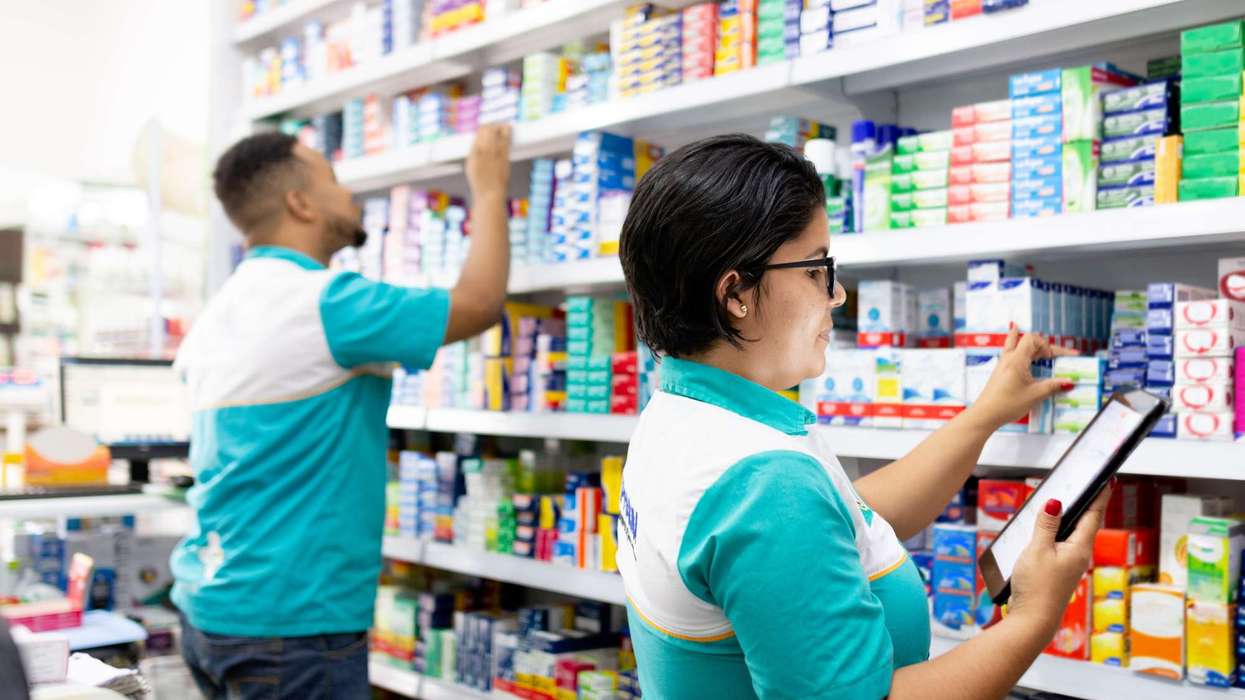







As health awareness grows, consumers are paying closer attention to their well-being. Many expect dietary supplements to support everyday health. Some also look to these products for disease prevention or treatment. However, many supplements still lack strong scientific evidence to prove their effects. Even so, sales have risen sharply in many regions around the world. At the same time, competition in the market is becoming more intense. Many products also look increasingly similar. In this context, packaging has become an important factor in product differentiation and market competitiveness.
A Growing Supplement Market Creates More Competition
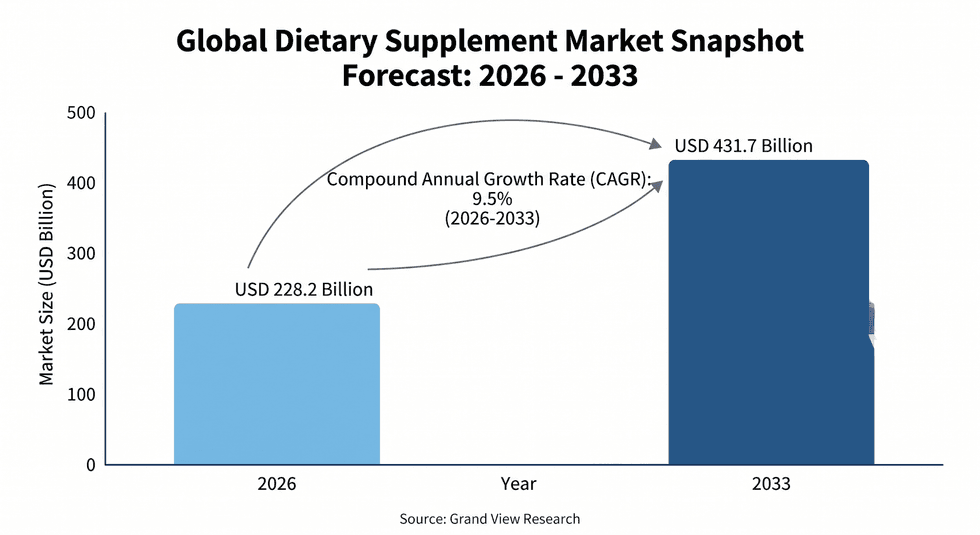
The dietary supplement market continues to grow. According to Grand View Research, the global dietary supplement market is expected to increase from USD 228.2 billion in 2026 to USD 431.7 billion by 2033. The market is projected to grow at a CAGR of 9.5% from 2026 to 2033. As more brands and products enter the supplement market, competition is becoming more intense. In this environment, product differentiation has become an important factor in market success. Ingredients, dosage forms, and claimed benefits can all help a product stand out. However, it is not easy for supplement brands to create a clear difference in these areas. That is why packaging has also become important. It can help attract consumer attention, protect the product, and better meet consumer needs.
 anxine.com
Why Packaging Matters in Product Competition
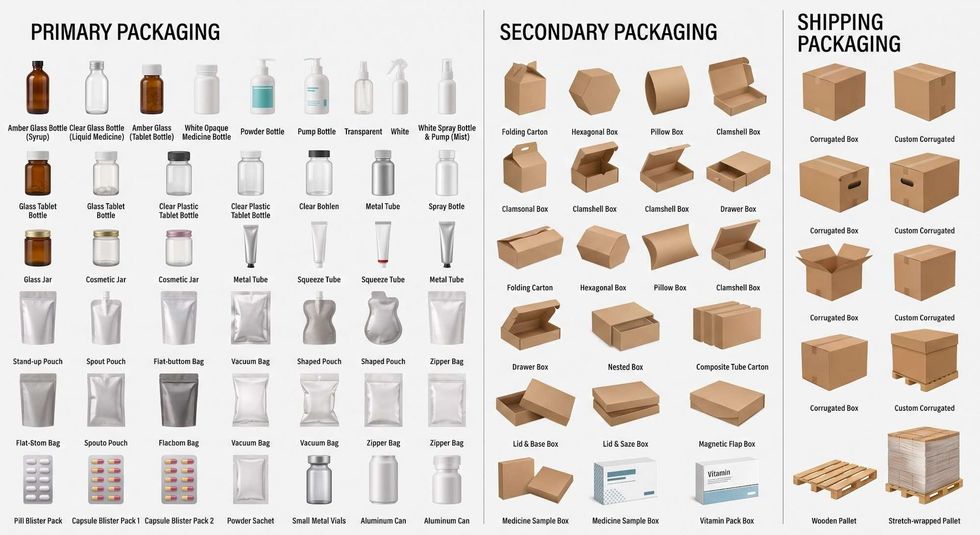
When people think about packaging, the first function that often comes to mind is consumer appeal. For example, with compliant messaging, brands can place the product’s key benefits in a more visible area. The right visual elements can also help capture the attention of target consumers more quickly. However, the value of packaging is not limited to marketing. It is also not only about the outer package. Packaging usually includes different layers, such as primary packaging, secondary packaging, and shipping packaging. Each layer serves a different function.
| Packaging Layer | Main Function | Common Formats |
| Primary Packaging | Product quality protection; stability support; moisture, oxidation, and contamination control; shelf-life extension | Bottles; blister packs; stick packs; sachets; gummy jars; liquid bottles |
| Secondary Packaging | Brand presentation; product communication; retail display | Folding cartons; paper boxes; set boxes; multipacks |
| Shipping Packaging | Warehousing; transportation; bulk handling | Shipping cartons; corrugated boxes; pallets; stretch wrap; shipping labels |
Therefore, for supplement products, pharmaceutical packaging is not just about visual design. It is also part of product quality and the consumer experience. Among them, primary packaging is the most basic and critical layer for supplement products because it comes into direct contact with the product. It plays a key role in protection, stability, safety, and the overall user experience.
 anxine.com
Match Supplement Dosage Forms with the Right Primary Packaging
Primary packaging is the packaging that comes into direct contact with the product. For dietary supplements, its most basic role is to protect the product from outside factors, such as moisture, oxygen, light, and contaminants. This helps maintain product quality throughout its shelf life. For example, if a product has a six-month shelf life, the primary packaging needs to protect it during that time, so the product can still meet its expected quality at the end of the sixth month.
Dietary supplements come in many dosage forms, and each form has different packaging needs. Therefore, primary packaging should be selected based on the characteristics of the product. For example, tablets and capsules usually need protection from moisture and contamination. Softgels are more sensitive to oxygen, temperature, and stability issues. Powders can absorb moisture and form clumps, while liquid products require reliable sealing and good compatibility between the formula and the packaging material. The table below introduces several common dietary supplement dosage forms and the types of primary packaging that are suitable for them.
| Dosage Form | Key Role of Primary Packaging | Common Suitable Primary Packaging |
| Tablets | Moisture protection; Contamination control; Breakage prevention; Unit-dose control | Bottles, blister packs, alu-alu blister packs, strip packs. |
| Capsules | Moisture protection; Shell integrity; Contamination control; Dose accuracy | Bottles, blister packs, alu-alu blister packs, strip packs. |
| Softgels | Oxygen protection; Leak prevention; Temperature stability; Shell integrity | HDPE bottles, blister packs, alu-alu blister packs. |
| Powders | High moisture barrier; Clump prevention; Seal integrity; Portion control | Sachets, stick packs, stand-up pouches, laminated pouches, jars. |
| Liquids | Leak prevention; Seal integrity; Material compatibility; Dosage control | Glass bottles, plastic bottles, ampoules, single-dose sachets. |
A suitable packaging choice should consider both product protection requirements and the needs of the target consumers.
How Pouch Filling Technologies Solve Different Production Needs
Based on the packaging options for different dosage forms, pouch filling has a wide range of applications. Products such as tablets, capsules, powders, and liquids can all use pouch packaging as a primary packaging solution. For supplement and pharmaceutical companies, no single pouch filling machine can handle every production need. Different needs call for different machine structures, filling systems, automation levels, and pouch feeding methods. Selecting the right packing and sealing machine based on specific production needs can help a company achieve its manufacturing goals more effectively.
1. Start with the Basics: Premade Pouches or Form-Fill-Seal?
From the type of pouch used, pouch packaging can generally be divided into two methods. One is a Form-Fill-Seal pouch filling and packing machine. The machine starts with roll film and automatically forms, fills, and seals the pouch. The other option is a premade pouch filling machine. In this case, the machine only needs to open, fill, and seal the pouch. For manufacturers, premade pouches offer more options in pouch styles, such as stand-up pouches, zipper pouches, and shaped pouches. A Form-Fill-Seal pouch filling machine, on the other hand, is often more efficient and can lower the cost per pack. Since it uses roll film and reduces the handling of ready-made pouches, it may also help lower handling-related contamination risks. There is no single better choice between the two. The right option depends on which method better fits the manufacturer’s production needs.
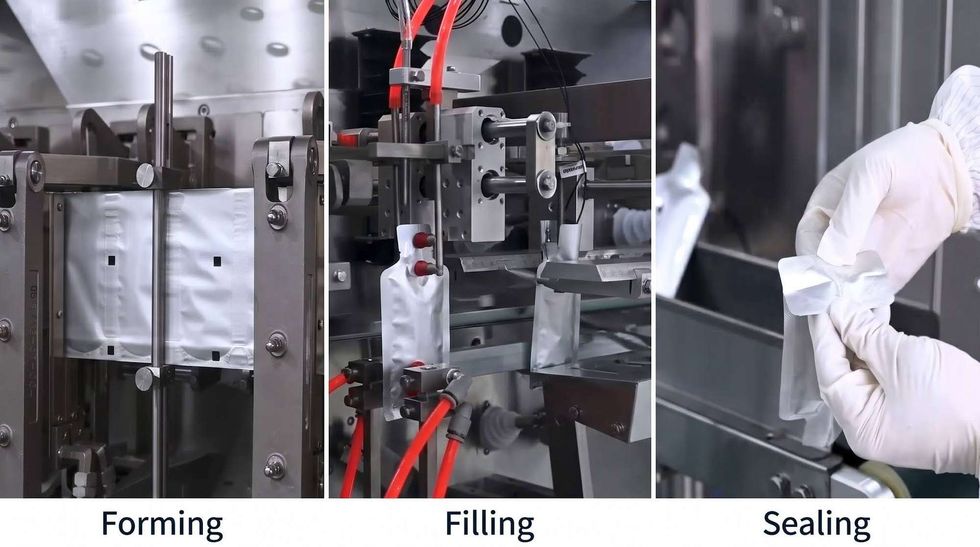 anxine.com
2. Use the Right Filling System for Each Supplement Form
Different products have different material properties, so they often require different filling methods. When choosing a pouch filling packing machine, the filling system should match the product form, whether it is powder, granules, liquid, or paste. For example, powder products are often filled with an auger dosing system. A pouch filling machine for liquids may use a piston pump, peristaltic pump, or a similar filling system.
3. Keep Fill Volumes Accurate Across Different Serving Sizes
Different dosing systems offer different levels of accuracy. When choosing a pouch filling machine, first confirm the target fill volume for each pouch and the acceptable tolerance. Then check whether the machine can meet those requirements.
4. Support More Product Variations with Faster Changeovers
If you have many product variations, such as different weights, flavors, or pouch sizes, make sure the machine is easy to change over. Changeover means switching from one product or package format to another. When choosing a machine, check whether the pouch width is easy to adjust, the dosing system is simple to replace, and the settings can be saved. The hopper should also be easy to remove for cleaning, and the sealing temperature should be quick to reset. For factories that switch products often, faster changeover means less downtime and better efficiency.
5. Meet Consumer Needs with More Convenient Pouch Designs
Consumer-friendly pouch designs can also help supplement brands improve their market position. For example, a tear notch lets consumers open the pouch without scissors. A resealable zipper is useful for multi-serving products because it helps keep the contents protected after opening. For liquid or gel supplements, a spout pouch can make pouring easier and help reduce leaks. Single-serve sachets or stick packs are also convenient for use at work, while traveling, or after exercise. Some pouch filling machines can support features such as tear notch punching, date coding, hang hole punching, zipper pouch handling, or spouted pouch filling. By choosing equipment that supports these user-friendly designs, manufacturers can make their products easier to use and more competitive in the market.
The End
The value of packaging is not only that it helps a product get noticed, but that it helps a product earn trust. For supplement brands, the right packaging protects product stability and communicates safety, convenience, and professionalism to consumers. That is why packaging should not be treated as a design detail alone. It should be part of product development and production planning. When packaging, dosage form, and equipment work together, a product can compete more strongly in quality, efficiency, and market performance.
This article is paid content. It has been reviewed and edited by the Pharmacy Biz editorial team to meet our content standards.