





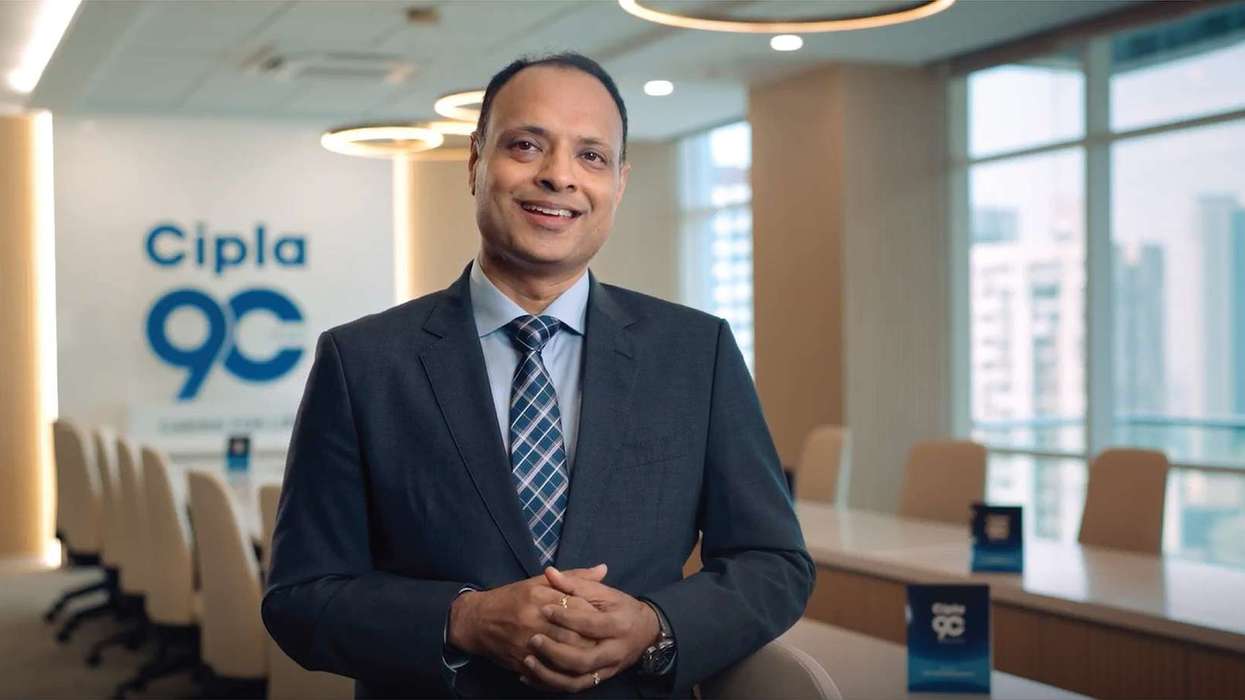
Before Achin Gupta set foot inside Cipla’s plush headquarters in Mumbai, India, as the CEO of its One India business in 2021, the company sent a book to his home. It arrived during the strange, suspended days of the Covid pandemic, and he read it cover to cover. It was the story of the company – decades of battles fought in the name of medicine, access, and a particular, stubborn strain of idealism rooted in India’s independence struggle.
“Growing up in India, everybody knows Cipla,” he says. “But I think when you read through how many of those decisions were made, what were the considerations, how it shaped the landscape – it’s very inspiring.” He pauses. “That was one of the big magnets which pulled me to Cipla.”
Now, on 1 April 2026, that magnet has drawn him all the way to the top. Gupta – IIT Delhi trained biochemical engineer, IIM Ahmedabad MBA, two of India’s premier universities ˗ the two-decade veteran of global pharma became managing director and global CEO of Cipla Ltd, one of the world’s largest generic and most storied pharmaceutical companies. And as he speaks to Pharmacy Business, he sits beneath a Cipla logo that reads, simply: ‘Caring for Life’.
The weight of that phrase is not lost on him.
A privilege, not a burden
Ask Gupta how his first six weeks in the role have felt and the word he reaches for first – before strategy, before metrics, before anything – is privilege.
“It’s a privilege to lead this organisation,” he says. “And as you can make out from the logo behind me, we’re completing 90 years. So it’s an honour.”
“Very exciting, a bit challenging, but yes – really looking forward to this,” he adds.
The challenge is real enough. Cipla is a 30,000-strong global operation with a presence in more than 70 countries, complex supply chains navigating active geopolitical disruption, and a UK and European business that has grown at 25 per cent compound annually over the past two years. The incoming CEO inherits not just a corporation but a legend – a company that, at the turn of the millennium, broke open the global HIV crisis by selling antiretroviral drugs for a dollar a day, slashing them from the $15,000-per-year brand price.
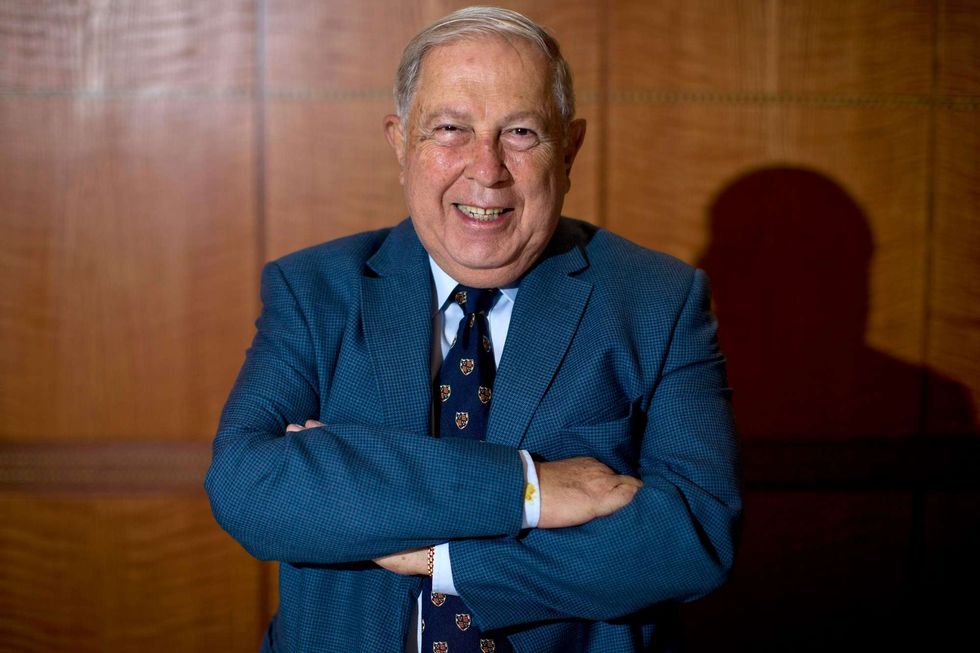 Dr Yusuf HamiedGetty Images
The documentary Fire in the Blood told that story to the world. The founding Hamied family’s patriarch, Dr Yusuf Hamied, remains an inspiration and guiding conscience for the organisation even today.
Far from finding that legacy weighing heavily, Gupta finds it energising. “The entire organisation – 30,000 colleagues – shares the same purpose and helps drive this every day,” he says. “In many ways we’re extending the solid foundation that we’ve already built, as opposed to trying to turn a corner into something different.”
That foundation is not simply corporate heritage. It is a decision-making framework. “It percolates down in all the decisions that we take,” he explains. “Where we decide to play. Which therapies we develop. High-quality medicines, but accessible to all.”
From generics giant to innovation pioneer
Stand back and look at what Cipla is actually doing and the scale of ambition becomes clear. This is not a company content to simply replenish the world’s generic medicine cabinet and call it done. Under Gupta’s watch – first as CEO of the India business, then as Global COO, and now at the helm – Cipla has been quietly, methodically climbing the value chain.
Take the headline that landed earlier this year: Cipla, through its African subsidiary Medpro Pharmaceutica, has entered a licensing agreement with ImmunoACT to commercialise an indigenously developed CAR-T cell therapy, India’s first, across South Africa, Algeria, and Morocco.
CAR-T therapy, for those unfamiliar, is cutting-edge immunotherapy: a patient’s own blood cells are extracted, genetically reprogrammed to recognise and destroy cancer cells, and reinfused – a significant step forward in the treatment of certain blood cancers.
“You don’t need to do everything by yourself,” Gupta says of the partnership model underpinning these forays. “There has to be a lot of sharing and partnering to bring the best technology and the best skill sets from either side.” Stem cell work, similarly, proceeds through joint ventures. In India, Cipla has launched an inhaled insulin, developed in partnership with an American firm. “I think that’s quite a breakthrough,” Gupta says, with characteristic understatement.
The company’s breath actuated device, he argues, significantly improves patient adherence. It is the kind of patient-centred engineering that Gupta clearly relishes: not innovation for its own sake, but innovation as a delivery mechanism for access.
Further up the pipeline, GLP-1 peptides – the class currently reshaping global health discussions around weight management and diabetes – are firmly in Cipla’s sights.
“As these products start going off-patent, the market will expand,” Gupta says. “We’ve already launched in the first-generation GLP-1s in the UK and we would be working on future loss-of-exclusivity products as well.”
Europe: The fourth home market
Gupta is disarmingly direct about the company’s ambitions in the UK and Europe. “India, the US and South Africa are the big markets for us; amongst all of the rest, the UK is now probably the fourth largest,” he says. “It’s growing very rapidly for us.” Cipla’s European headquarters are in the UK.
Today, Cipla holds around 50 registered products in the UK. “If you go out five years, we would try to double this number,” Gupta says. “There’s a serious commitment from the organisation to keep building our front end and building our offering in the UK and in Europe and do that on the back of more complex products, because that’s where a need gap exists.”
In revenue terms, whilst he declines to publish specific figures – “these are not numbers that we report, nor do others” – he reveals that UK and Europe combined already represent “close to $100 million” and the ambition is to scale that “three to four hundred” over the next five years. In other words, tripling or quadrupling in the next five years.
The growth lever is complexity. Cipla is not, Gupta insists, interested in piling into the commodity end of the generics market. “Where there are multiple players who can service the market” is not where Cipla wants to compete. Instead: respiratory (already a strong portfolio), complex injectables, peptides including GLP1s, biosimilars and a handful of rare disease medicines.
Cipla is also transitioning its metered-dose inhalers to lower-carbon-footprint propellants – a move that responds directly to NHS and European sustainability targets, and which Gupta believes will position Cipla “amongst the leaders in the space.”
The volatility problem
When asked about the volatility of medicine supply in the UK, the conversation becomes somewhat uncomfortable but in the most useful way. Gupta has spent years working the UK market. He knows its mechanics intimately. And he does not shy away from describing what is, in effect, a structural dysfunction.
“The volatility that we see sometimes on the retail side is something that we want to guard against,” he says.
The race to the bottom driven by price comparison platforms has pushed some generic products below the cost of their own packaging. Manufacturers walk away. Shortages follow.
“If it falls below the sustenance level, it is an issue,” Gupta says. “We try to be as open as possible with the customers that we deal with and try to give advanced indications a product is nearing a point where it’s not sustainable.”
On the question of government intervention, he is measured – but pointed. “Branded generics,” he argues, deserve different treatment. These are products where, for patient safety reasons, you need to identify which product it is – and so they become branded generics that fall into an in-between space, neither pure generic nor innovative branded medicine.
“That’s one area which could be considered,” he says, gesturing at the VPAG (voluntary scheme for branded medicines pricing, access and growth) system. “It would help relieve some pressureon those complex products where there are fewer manufacturers who made large investments, put up the infrastructure to supply – and then having to compromise on your margins puts extra pressure on the supply.”
It is a cri de coeur that will resonate with many community pharmacists, who have seen their dispensing budgets stretched beyond tolerance whilst the supply of certain medicines has grown unreliable. What Gupta is saying, in essence, is that the economics of complexity deserve recognition – and that the system’s current bluntness risks penalising precisely the suppliers it most needs to retain.
Community pharmacy
Community pharmacy in the UK – a sector that has long endured funding issues and is now, tentatively, beginning to see recognition of its role – is clearly a subject close to Gupta’s heart.
“Roughly one-and-a-half million patient visits each day in England,” he says. “This is a very vital role.” The Pharmacy First initiative, the walk-in accessibility, the service to patients who cannot get a GP appointment for weeks – he understands all of it analytically. But then he says something else.
“Sometimes we underestimate the personal connection that pharmacists build. I, personally, would prefer to walk into a community pharmacy rather than a multiple pharmacy next door, because there’s a bit of a personal connect.”
It is a small thing. But from the global CEO of a £2.4-billion pharmaceutical company – a man who could, on virtually any measure, access healthcare at its most sophisticated – it speaks to something that community pharmacists have always known and struggled to quantify: that proximity and trust are therapeutic in themselves.
Gupta sees a strong future for community pharmacy, though not an easy one. “It’s not going to be a cakewalk,” he says. The challenges he identifies – competition from organised chains, online players, margin pressure – are ones Pharmacy Business readers know from the inside. His prescription: “better service, more availability, more personalisation, a little more diagnostic first line.” The levers, he acknowledges, “keep these pharmacies going.”
90 years – and counting
As the interview draws to a close, we offer a toast: “We look forward to celebrating your centenary.”
“Absolutely,” Gupta replies. There are rumours that occasionally surface in financial markets about a potential sale of Cipla – the Hamied family’s stake, the question of succession, the appetite of large Western pharma for exactly the kind of global generics infrastructure Cipla represents.
Gupta addresses the question without flinching. “Cipla has completed 90 years. The endeavour is to position it well for the next 90.” He notes that the company has been professionallymanaged for over a decade; that he himself, as an executive professional rather than a family member, is the sole executive director on the board. “I don’t see any reason or anyindication that the company needs to or wants to exit. This is a long-term commitment.”
The founding story of Cipla runs through India’s independence movement. Khwaja A. Hamied, the company’s founder, built a pharmaceutical company from the conviction that his country shouldnot have to beg the world for its medicines. His Cambridge educated son Yusuf took that conviction and wielded it on the global stage during the HIV crisis, becoming the man who saved millions of lives.
Gupta read all of this book, Caring for Life: The Cipla Story Since 1935, in a locked-down house, before he ever clocked in for a day’s work. He is not a Hamied. He carries no genetic claim to the legacy. What he carries instead is something harder won – and perhaps more durable: the understanding that the most powerful thing a pharmaceutical company can do is simply ensure that the medicine reaches the patient.
‘Caring for Life’, says the logo on the wall behind him.
He means it.
Science with purpose
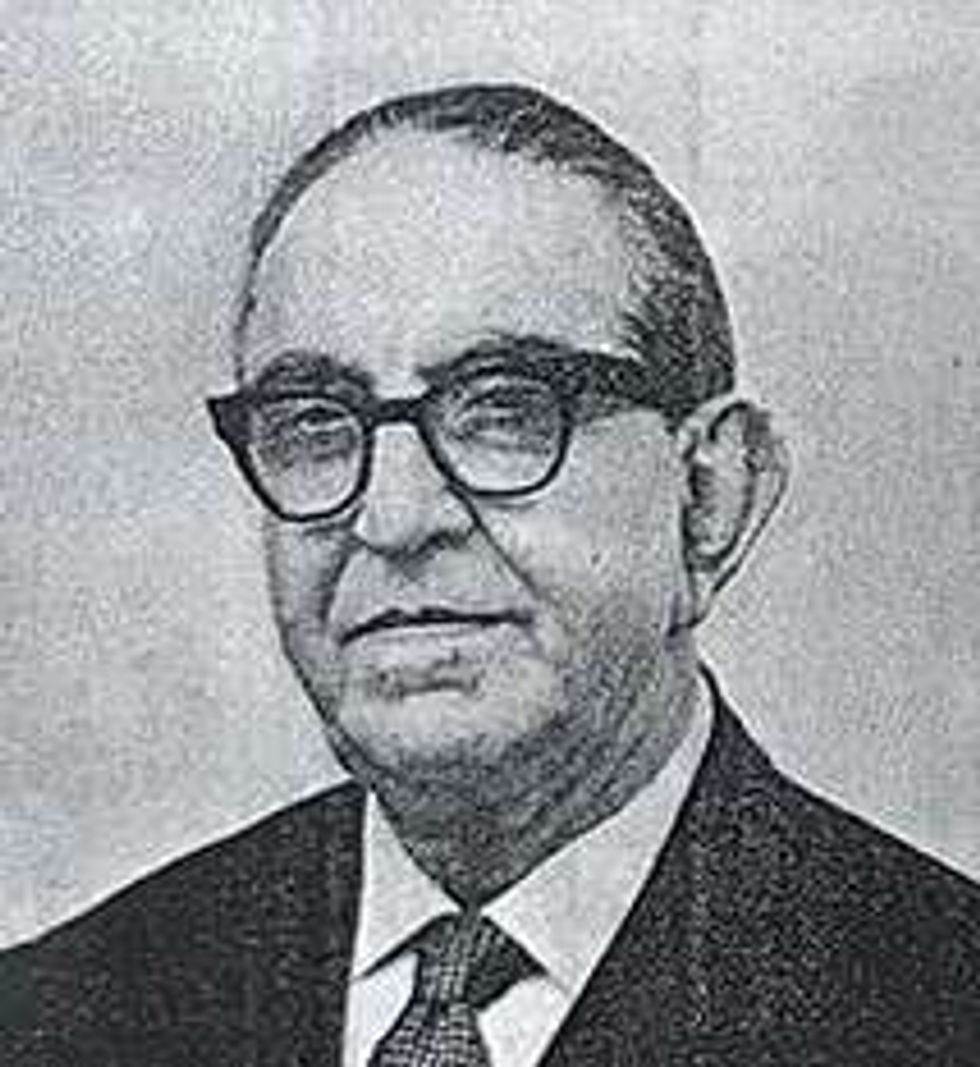 Khwaja Abdul Hamied.Cipla
Cipla’s origins are closely tied to India’s freedom movement and the vision of its founder, Khwaja Abdul Hamied, a chemist who believed scientific capability was essential to nation-building.
Born in Aligarh in 1898, Hamied studied chemistry at Allahabad University before becoming involved in Mahatma Gandhi’s Non-Cooperation movement in the early 1920s. Inspired by Gandhi’s emphasis on self-reliance and service, Hamied came to see science and industry as tools for India’s economic and social emancipation.
At a time when India depended heavily on imported pharmaceuticals and chemicals, Hamied believed the country needed its own research and manufacturing base. His conviction strengthened during his years in Berlin, where he completed a PhD in chemistry at Friedrich Wilhelm University, now Humboldt University. Germany’s industrial and scientific prowess left a deep impression on him, particularly the role chemistry had played in transforming the country into a global manufacturing power.
Returning to India in 1927, Hamied resolved to build a modern pharmaceutical enterprise rooted in indigenous research and production. He wanted not only to manufacture medicines commercially, but also to create laboratories capable of original scientific work and process development.
That vision led to the establishment of Cipla in 1935. From the outset, the company positioned itself as an Indian pharmaceutical manufacturer focused on making quality medicines more widely accessible. Gandhi himself visited the company’s Mumbai office in 1939, reflecting the close alignment between Hamied’s industrial ambitions and the broader nationalist movement.
Over the decades, Cipla grew from a domestic manufacturer into one of India’s best-known pharmaceutical companies, building expertise across respiratory, antiinfective and chronic therapies while expanding internationally. The company also earned global recognition for its role in improving access to affordable HIV/AIDS medicines in the developing world during the early 2000s.
Today, Cipla operates across 74 countries, but the company continues to emphasise the philosophy articulated by Hamied and later championed by long-time chairman Yusuf K Hamied: “that access to affordable, quality medicine is a fundamental human right.”
Beyond the balance sheet
The phrase on Cipla’s logo – Caring for Life – is not marketing copy. It is, in many ways, a statement of historical record.
At the turn of the millennium, HIV/AIDS was killing millions across sub-Saharan Africa. The antiretroviral drugs that could keep patients alive existed – but at brand prices of up to $15,000 per patient per year, they were entirely out of reach for the populations that needed them most.
In 2001, under the leadership of Dr Yusuf Hamied, Cipla offered a triple antiretroviral combination therapy to Médecins Sans Frontières for $350 per patient per year – roughly a dollar a day.
“Cipla has led a crusade in the fight against HIV in Africa and saved millions of lives,” Achin Gupta says. The company went on to fight malaria and other infectious diseases on the same access-first terms.
The same philosophy plays out today in developed markets. In the US, Cipla has launched a frontline asthma rescue inhaler at a fraction of the price previously charged by the innovator, with a second approval just secured. In the UK and Europe, Gupta points to a striking equation: generics account for just 15 to 20 per cent of the total world medicines spend, yet deliver 70 per cent of the volume of medicines dispensed.
“That equation is not going to change,” he says. Cipla intends to remain at the heart of it.
In India, the humanitarian commitment extends further still. Cipla runs palliative care programmes extensively across the country – providing end-of-life care to patients in communities where such support would otherwise not exist. It maintains research partnerships with leading Indian institutions and continues to ask, as Gupta puts it, “where can we reach and serve patients.”
For a company now eyeing CAR-T therapies and biosimilars, the founding philosophy remains the compass.