






Northern Ireland’s Western Health and Social Care Trust, in collaboration with the Centre for Research Equity (CfRE), Nuffield Department of Primary Care Health Sciences, University of Oxford, recently launched a mobile health research service aimed at increasing participation in clinical trials among socioeconomically deprived and underserved communities.
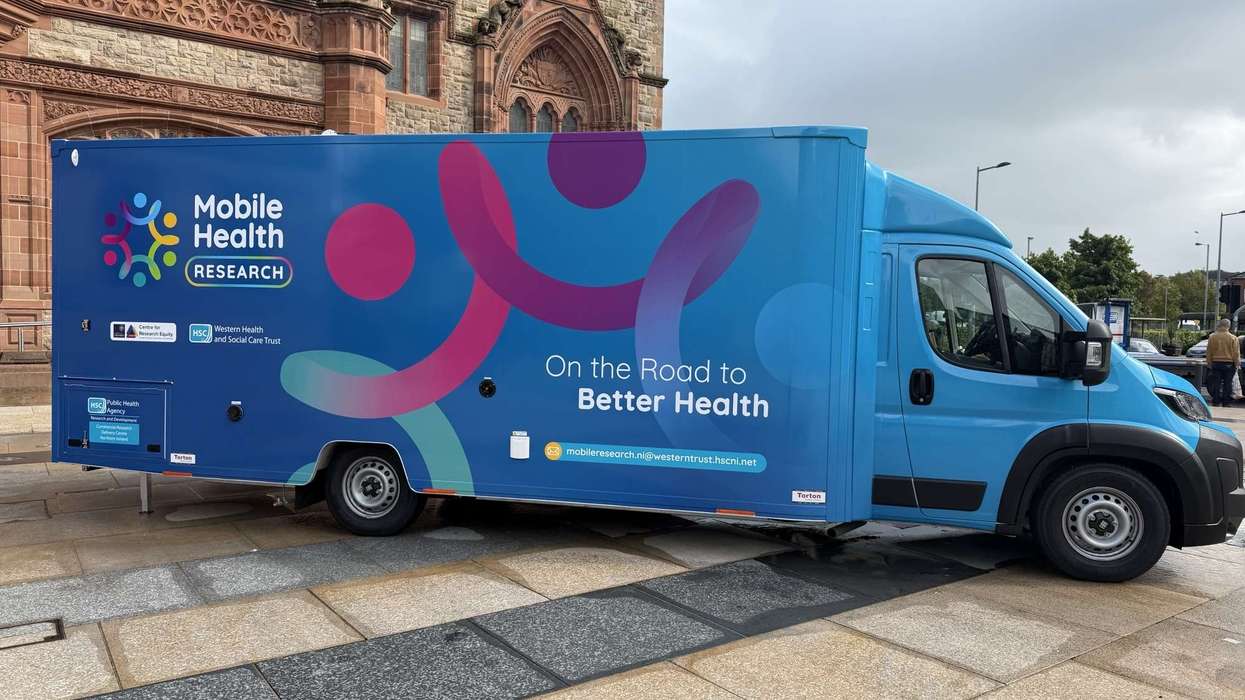
Branded Mobile Health Research – ‘Wheels in Motion, Research in Action’ and ‘On the Road to Better Health’, the specially designed mobile unit will take research out of hospitals and into the heart of communities.
Following its launch at the Guildhall, Londonderry, on 17 September, the mobile unit will begin its journey across Northern Ireland.
The initiative is focused on tackling some of the practical and cultural barriers that can prevent people from taking part in research, including distance from research centres, transport difficulties, time constraints, lack of awareness, and differences in beliefs, attitudes and trust.
Extensive patient and public involvement and engagement (PPIE) sessions were held with local communities to help shape and support the initiative.
Whether parked in a town square, community centre, workplace or rural village, the Western Trust’s Mobile Health Research Unit will bring research opportunities directly to people who may previously have faced barriers to participation.
The Mobile Health Research Unit is a fully functioning clinic on wheels. It is equipped to carry out a range of health assessments and research procedures, including blood pressure monitoring, ECG tests, height and weight measurements, blood sampling and other research-related health checks.
The vehicle has two private clinical rooms, allowing trained healthcare professionals to undertake many activities traditionally carried out in hospitals or GP surgeries. Research samples can also be safely prepared and stored on board.
Visitors will be able to learn about research studies, discuss whether participation may be right for them and, where appropriate, complete research appointments closer to home.
Diversity in clinical research
The initiative aims to tackle health inequalities and help ensure that the future of healthcare is shaped by all communities, not simply those living close to major research centres.
The funding is provided by HSC Research and Development Division through the industry-funded Voluntary Scheme for Branded Medicines Pricing, Access and Growth Investment Programme (VPAG).
Professor Mahendra G Patel, Director of the CfRE, said: “Clinical research has the potential to improve healthcare for everyone, but only if everyone has a fair opportunity to access and take part in it.
“For too many people, where they live, their work, experiences and understanding of research, alongside barriers around beliefs, attitudes and trust, can make it difficult to take part in clinical research.
“This exciting and convenient, community-based service brings research almost to your doorstep, helping to dismantle some of those barriers, build relationships of confidence and trust, while also providing researchers with greater insight into the needs and experiences of the people they serve.
“In doing so, it can help create a stronger, more representative evidence base and, importantly, one that is relevant and meaningful to everyone, not just a few.”
The initiative has also been welcomed by the Royal College of Pharmacy (RCPharm), of which Professor Patel is Vice President and Chair of the English Pharmacy Advisory Council.
More avenues for Royal College
For the Royal College, the initiative presents an opportunity to work more closely with pharmacy professionals in Northern Ireland and to strengthen collaboration across the UK.
It also provides an opportunity to build wider multi-professional working, bringing pharmacy and other healthcare professions together around a shared commitment to improving access to research and addressing health inequalities.
The Royal College is already a party to the Concordat agreed by the Association of Pharmacy Technicians UK, Pharmacy Forum Northern Ireland and the APEX groups to work collaboratively.
The Northern Ireland initiative therefore provides a practical opportunity for the College to build on those relationships and its wider commitment to collaboration, research, education and professional development.
Professor Aaron Peace, Director of Research, Western Trust, said: “Research plays a vital role in improving healthcare and developing new treatments, but not everyone has had the same opportunity to take part.”
He said the new initiative would help ensure research is more representative of the population it serves and give more people the opportunity to benefit from it.
Western Trust Chief Executive Karen Hargansaid: “For too long, many people have faced barriers to taking part in research because of where they live or their personal circumstances. This innovative Mobile Health Research Service will help change that.
“By taking research directly into our communities, we can create new opportunities for people to get involved, help shape the future of healthcare and ensure that everyone has the chance to benefit from advances in medicine and treatment.”
 Professor Mahendra G Patel Photo provided by Mahendra Patel
The initiative builds on a wider programme of work to make research more accessible and representative. In December 2025, the CfRE entered into a collaboration with the National Pharmacy Association to support independent community pharmacies across the UK in recruiting participants from deprived communities and minority ethnic groups into clinical trials.
The CfRE has also established strategic partnerships with government research and development agencies in Wales and Northern Ireland, supporting and helping to shape policy on more inclusive approaches to health and research across the UK.
For the Royal College of Pharmacy, the initiative also aligns with its commitment to strengthening research as an important part of supporting its members and advancing the profession.
Research is a key element of the vision and common purpose for the pharmacy sector, which has been supported and signed up to by pharmacy professional leadership bodies and specialist groups as part of the profession’s commitment to working more collaboratively and moving pharmacy forward.
The Northern Ireland initiative therefore provides a practical opportunity for the Royal College to build on this commitment — supporting members to engage more actively in research, strengthening links with pharmacy colleagues across the UK, and developing wider multi-professional collaboration.
It could also form part of the College’s developing international trajectory, creating opportunities to connect UK pharmacy with international partners around research, education, innovation and knowledge exchange.
Professor Patel’s recent appointment as Distinguished Visiting Professor at the Medical Technology, Research and Innovation Centre at IIT Bombay also provides an opportunity to further strengthen international relationships between pharmacy, healthcare and academic institutions.
It could support greater collaboration in education, research and practice, while creating opportunities to raise the profile of the Royal College of Pharmacy and its members internationally and develop meaningful partnerships with colleagues and institutions in India and beyond.
For RCPharm, this is therefore about more than geographical collaboration. It is an opportunity to translate the profession’s shared Vision and Common Purpose into practical action — bringing pharmacy professionals, researchers, other healthcare professions and communities together around a shared commitment to improving access to research and addressing health inequalities.
Closer working with Northern Ireland could provide a valuable foundation for wider UK and international partnerships, while supporting the Royal College’s ambition to ensure that research becomes an increasingly important part of the support it provides to its members and the contribution pharmacy makes to healthcare.