






Pharmacist prescriber Sunil K. Kochhar outlines key considerations to support people with eczema or psoriasis this winter.
Q. How can the pharmacy team best support patients with eczema or psoriasis this winter?
Community pharmacy is often where patients come first when their skin starts deteriorating, so we have a real opportunity to intervene before a flare becomes severe.
I would focus on three things: checking that patients are using their treatments correctly, identifying what may be triggering the flare, and recognising when somebody needs escalation rather than simply another moisturiser.
With eczema in particular, I often find the issue is not that the patient does not have an emollient; it is that they are not using enough, not applying it frequently enough, or have stopped using it once their skin improved. Emollients should really be thought of as ongoing skin-barrier therapy rather than something that is only used during a flare.
Pharmacy teams can also check whether prescribed topical corticosteroids are actually being used. There is still a great deal of anxiety around steroid creams, and sometimes patients have a perfectly appropriate treatment sitting at home that they are frightened to apply.
With psoriasis, we should remember that it is more than a cosmetic skin condition. Ask about the extent of the disease, whether treatment is working and whether there is persistent joint pain, swelling or morning stiffness that may warrant further assessment for psoriatic arthritis. The psychological and social impact should also form part of that conversation.
Q. Why does winter make eczema and psoriasis worse?
There is rarely one single culprit. It is usually a combination of cold weather outside and warm, dry environments inside.
Cold air tends to contain less moisture, while central heating can reduce indoor humidity. The skin consequently loses water more readily and an already compromised skin barrier can become drier and more vulnerable to irritation.
We now talk much more about trans-epidermal water loss (TEWL), which describes the water that passively escapes through the skin. In conditions such as eczema, where barrier function is compromised, TEWL can be increased. Winter conditions can exacerbate dryness further, which is why maintaining and supporting the skin barrier is so important.
Some of the biggest problems, however, are behavioural. People start having hotter and longer showers, wear wool directly against their skin and may continue using heavily fragranced shower gels, soaps and skincare products despite their skin becoming increasingly sensitive.
I generally advise keeping showers warm rather than very hot, keeping them relatively short and using a soap substitute or gentle fragrance-free cleanser where appropriate. Wearing a softer, breathable layer such as cotton underneath wool can also make a significant difference.
 Cold air tends to contain less moisture, while central heating can reduce indoor humidity.iStock
Q. Is there a right way to apply an emollient?
The correct technique is often overlooked. Apply emollients generously and smooth them gently onto the skin rather than vigorously rubbing them in. Ideally, they should be smoothed in the direction of hair growth, which may help reduce irritation and the risk of folliculitis.
Timing matters too. After bathing or showering, gently pat rather than rub the skin dry and apply the emollient promptly. It should then be reapplied throughout the day according to need rather than waiting until the skin becomes extremely dry or uncomfortable.
I also explain that the best emollient is ultimately one that the patient will actually use. Someone may prefer a lighter cream during the day and a greasier ointment at night or during the colder months. Giving patients some choice can make a big difference to adherence.
One important counselling point for pharmacy teams is fire safety. Emollient residue can accumulate on clothing, bedding and dressings, making these fabrics more flammable. Patients using emollients should therefore be counselled to keep away from cigarettes, naked flames and other ignition sources.
Q. Do eczema and psoriasis present differently on darker skin?
This is an area where healthcare professionals need much greater awareness.
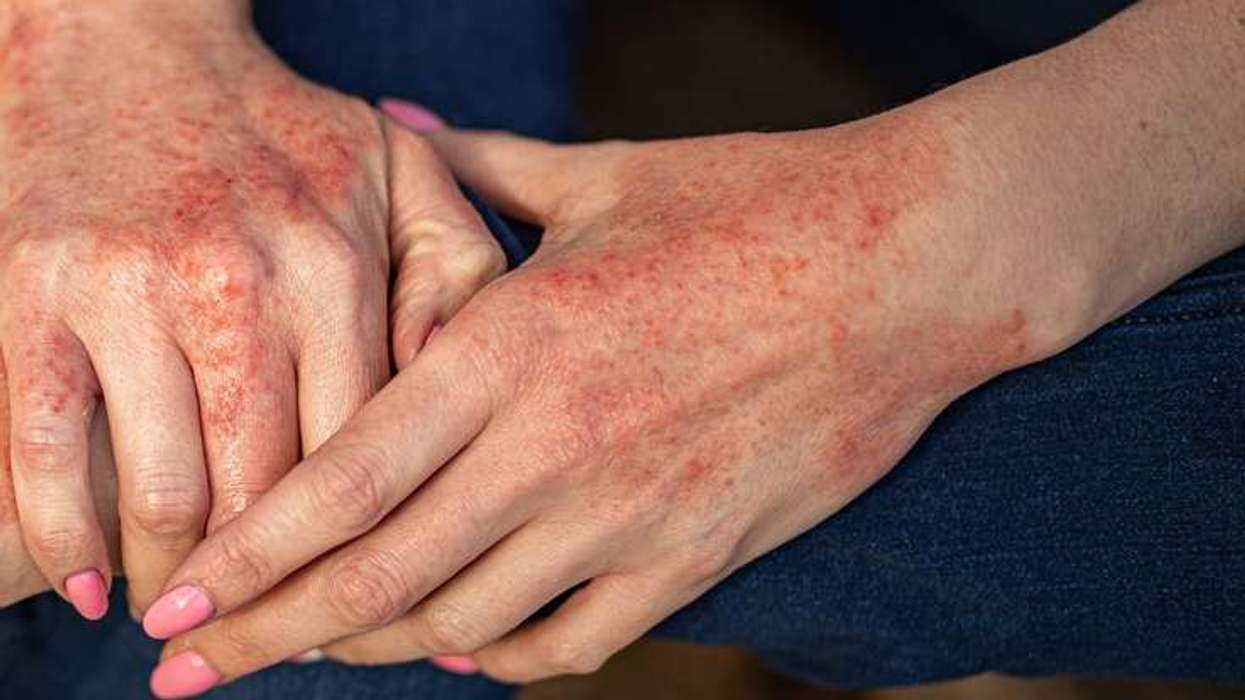
The traditional dermatology description of inflammation as simply being ‘red’ can be misleading. On more deeply pigmented skin, eczema may appear purple, grey, brown or darker than the surrounding skin. Follicular or papular patterns may also be more prominent.
Psoriasis can similarly look different. On brown or black skin the scale may appear grey rather than the classic ‘silvery-white’ description, while changes in pigmentation can remain long after the active inflammation has settled.
That matters because relying on redness alone can lead us to underestimate inflammation and disease severity. I would encourage pharmacy teams to look at texture, scale, itching, thickening, distribution and changes from the patient's normal skin colour rather than simply asking, ‘Is it red?’
Q. Are there cultural considerations that pharmacy teams should be aware of?
Definitely, but I think it is important that we ask rather than assume.
Within South Asian communities, for example, I regularly encounter patients using oils, traditional preparations or home remedies alongside prescribed treatment. Rather than immediately dismissing those practices, ask exactly what they are applying to their skin. Some may be perfectly acceptable, while fragranced products or preparations containing unknown ingredients could potentially aggravate already inflamed skin.
Steroid anxiety is another common issue, and certainly not one confined to any particular community. I prefer to explain the difference between appropriate, intermittent use of a correctly selected topical corticosteroid and inappropriate prolonged or unsupervised use.
Simply telling someone that steroids are ‘safe’ rarely changes behaviour. Explaining where to use the treatment, how much to use, how long to use it for and what we are trying to achieve is much more reassuring.
Pharmacy teams are particularly well placed to uncover these concerns because we often have more informal conversations with patients than they may have during a short medical appointment.
Q. How much can eczema and psoriasis affect mental health and confidence?
The impact can be far more than the appearance of the skin might suggest.
Itching can disturb sleep night after night. Visible plaques or eczema affecting the face, scalp and hands can affect confidence, relationships, work and social interaction. Patients may deliberately choose clothes that hide their skin or avoid activities altogether.
Importantly, psychological impact does not necessarily correspond to clinical severity. Somebody with relatively limited disease in a highly visible area may be significantly more distressed than someone with more extensive disease elsewhere.
That means pharmacy teams should occasionally go beyond asking, ‘Is the cream working?’
A simple question such as, ‘How much is your skin affecting you at the moment?’ can open a very different conversation.
Q. How would you advise pharmacy teams to make the most of the dermatology category?
I would move away from treating dermatology simply as shelves of creams for ‘dry skin’.
Train the team to differentiate between simple dry skin and inflammatory conditions such as eczema and psoriasis, and then build recommendations around the individual patient's needs.
Ask where the problem is, what it looks and feels like, how long it has been present, what has already been tried, and whether there are signs of infection or deterioration. For patients with established eczema or psoriasis, ask what prescription treatments they already have before recommending another product.
With psoriasis, look beyond the obvious plaques. Ask about the scalp and check the nails where appropriate. Nail pitting, separation of the nail from the nail bed, thickening or changes in colour can indicate nail involvement and help us understand the wider extent of the disease. Nail psoriasis can also be associated with psoriatic arthritis, so this should prompt questions about joint pain, swelling and morning stiffness.
The retail opportunity then follows good clinical care. A patient may benefit from an appropriate soap substitute or cleanser, a day-time emollient, a richer night-time product and ongoing barrier maintenance rather than repeatedly purchasing whichever moisturiser happens to be on promotion.
Most importantly, teams need clear referral triggers; rapidly worsening or widespread disease, suspected infection, significant pain, treatment failure, diagnostic uncertainty, severe psychological impact or possible psoriatic arthritis.
 The impact of a skin condition on someone can be far more than the appearance of the skin might suggest.iStock
Q. Is there an example of where a small change in advice can make a big difference?
What stays with me most are patients who tell you that they have ‘tried everything’, but when you explore their routine, you realise that nobody has ever properly explained how to use what they already have.
It might be somebody applying a tiny amount of emollient once every evening, having a very hot shower every morning and then using a fragranced shower gel. They may also have stopped their prescribed corticosteroid because somebody told them that steroids thin the skin.
You can sometimes make a considerable difference without adding another product. Correct the washing routine, increase appropriate emollient use, explain how and when their prescribed anti-inflammatory treatment should be used and arrange review if it is not improving.
For me, that is where pharmacy adds enormous value. We do not always need to sell or prescribe something new; sometimes we need to make the existing treatment work properly.
Q. Is there anything new or notable in the treatment of eczema and psoriasis?
There have been several significant advances in prescription treatments for eczema and psoriasis, particularly for moderate-to-severe disease. We now have increasingly targeted biologic medicines and newer oral therapies available for appropriate patients whose conditions have not responded adequately to conventional treatments.
However, I think what is equally important for community pharmacy is how much our understanding of skin disease, skin-barrier health and the retail dermatology category has advanced.
We understand concepts such as TEWL and barrier dysfunction much better, and there is now a far wider choice of sophisticated emollients, barrier-supporting creams, soap substitutes and fragrance-free skincare available without prescription. This means we can move away from simply telling somebody to ‘use a moisturiser’ and instead help them develop a skincare routine appropriate to their condition, lifestyle and preferences.
The biggest advancement, however, is not necessarily another product on the shelf, it is better knowledge, skills and awareness within pharmacy teams.
We are becoming better at recognising inflammatory skin disease, understanding how eczema and psoriasis can present across different skin tones, identifying poor adherence and incorrect application technique, addressing steroid anxiety, assessing the wider extent of psoriasis and recognising when somebody needs referral rather than another OTC product.
Checking the nails in somebody with psoriasis is a good example of this. Something as simple as spotting nail involvement and asking about joint symptoms can completely change the direction of that consultation.
There is also greater appreciation of the psychological burden of chronic skin disease and the importance of maintaining the skin barrier between flares rather than only treating the skin when things become severe.
That creates a real opportunity for the dermatology category within pharmacy. Rather than simply retailing skincare products, we can combine accessible products with clinical knowledge, better questioning and appropriate referral to provide a much more personalised service.
For me, that is where community pharmacy can add something genuinely valuable.
The advancement isn’t only what we have available on the shelf; it is what we now know to look for, ask about and do with it.