





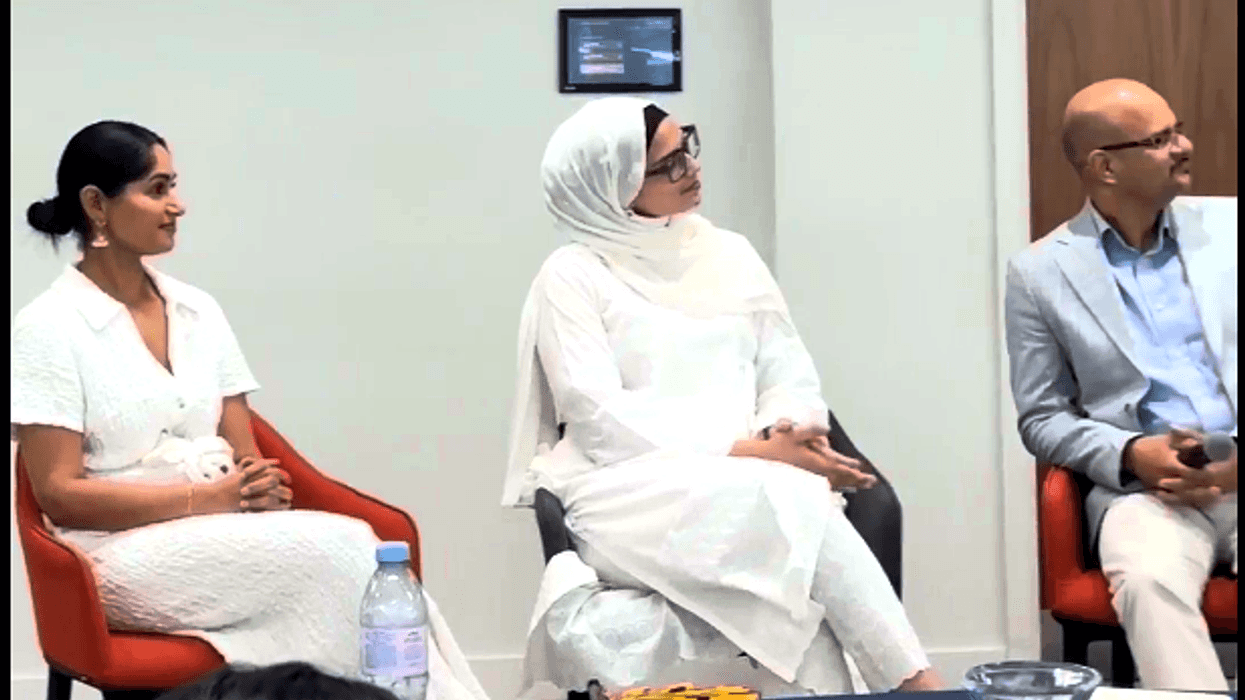

‘Many Threads, One Fabric’, marking South Asian Heritage Month, was held at the Royal College of Pharmacy (29 July).
Here's are some of the key points raised by the speakers on the day.
Q. What aspect of your heritage do you think has most influenced the leader you are today?
Anisa Islam is a British Bangladeshi pharmacist working in the Black Country and inclusivity and diversity ambassador in her workplace.
Valuing and living our differences…
“I'm a Bangladeshi, and my family stem from an area called Dhaka. Bangladesh has a lot of cities, a lot of dialects, and that's the same across all of South Asia.
“When we talk about the ‘Bengali language’, it's not – it's an assumption by everyone that everyone speaks the same dialect. I can sometimes struggle to understand a different dialect, as they may struggle to understand my own.
“I think that this is kind of important to highlight is our differences, because we learn from each other.”
Taking the time to share…
“I like to think that I am that person as a leader. In my own pharmacy department, last week we had a South Asian potluck where everyone brings in a dish, and we get to share our love and food.
“I think you spend at least 37 and a half hours at work your life, and I think you should be able to feel comfortable to be yourself; you should be able to bring the food that you want to bring in without having to think that it's going to be offensive to anyone else.
"I think these things can seem small but have a big difference in someone's quality at work and their productivity.”
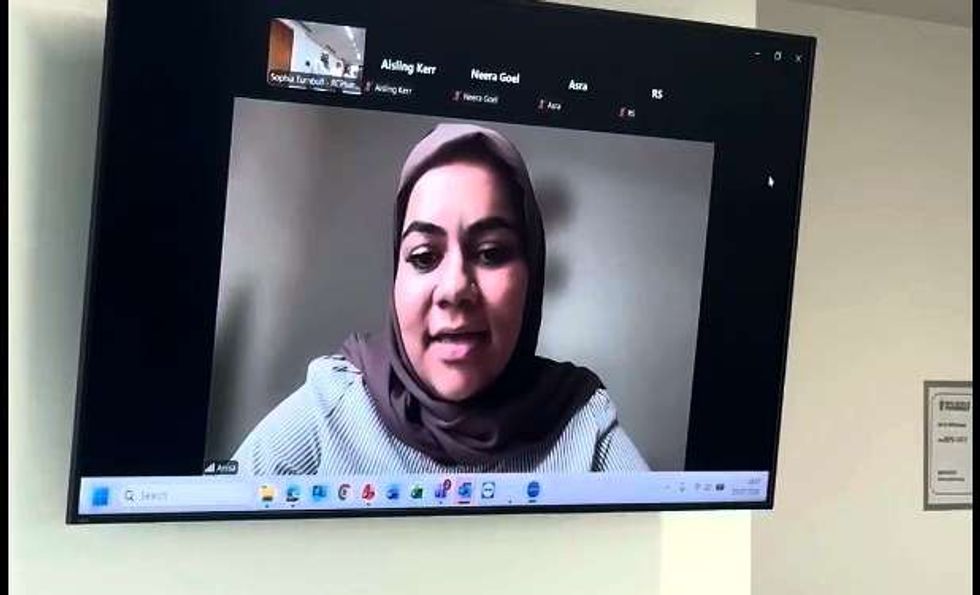 Anisa IslamPanel member Anisa Islam, who took part in the hybrid session remotely
Q. Our identities are shaped by many factors beyond ethnicity, such as gender, religion, social background, migration experience, or other lived experiences. Thinking about these intersections, why does visible leadership matter in the next generation of pharmacy professionals?
Maheer Khan is an OSPAP graduate from Aston University and foundation trainee pharmacist at Fulham Pharmacy
Representation is only where the conversation begins…
“Intersectionality reminds us that we as individuals are not defined by a single characteristic. I myself come from a history of migration. From my father's side, we came from India, Pakistan, and we now reside in Lahore, and that experience of sacrifice and struggle.
“I'm sure everyone who is here, having a South Asian heritage, has a different migration experience. They understand the sacrifice, the struggle that our ancestors have gone through, to be the wind beneath our wings to allow us to be where we are at this moment.
She was recently invited by a university in Lahore to speak to students about being an OSPAP graduate.
“They had asked for an OSPAP graduate to talk about future pharmacy and how a newly graduated pharmacy professional can actually go into OSPAP, which is actually a very far-fetched dream for many individuals in countries where I come from.
“It’s the kind of leadership that you don't see in books, it comes from presence. It comes from conversation. It comes by the belief that you're standing there as an example. If I can, you can as well.
“I've been here only for a year in the UK. As someone who is literally just in the beginning of my career, getting to know that there are individuals who share my identity, who share my heritage, who share my ancestry. The possibilities are truly limitless.”
Show leadership for others to follow…
“Representation opens the door. Inclusion invites you. But leadership keeps the door open for others who want to follow.
“If we won't do that, then who will? I believe that representation is just where the conversation begins. Leadership is where the conversation changes, and it allows others to speak as well.
“Because we can't just occupy positions without creating opportunities for others as well. Otherwise, we wouldn't be here ourselves.”
Q. How can leaders use their influence and lived experience to help address health inequalities affecting South Asian communities and improve outcomes for patients?
Atif Shamim is Pharmacy Dean in London for NHS England. He is the first pharmacy dean of colour and the first Muslim pharmacy dean.
I can’t speak on behalf of others…
“For me, I think the lived experience is important, because it kind of helps to fill the gaps between policy and data, which doesn't pick up some of these nuances that we see.
“What we see, unfortunately, is that when policies are set up to provide services for patients, they don't always consider all of these nuances. That's why you see some of these policies not actually considering what those individuals need.
“Then, overlay that with some of the other barriers to proper healthcare delivery – the cultural things around language, your own belief system; some of the stigma that comes with people accessing or not wanting to access certain types of healthcare…
“A ‘South Asian’ label does quite a lot of heavy lifting, but if you look at what sits under that label, you've got entire nations; entire subcultures within those nations, entirely different languages, different systems of belief.
“One thing I think that I shouldn't do is to speak on behalf of people. If you're speaking on behalf of an entire label, you will then kind of perpetuate the issues that we see at the moment.”
Neighbourhood working is an opportunity…
“It provides senior leaders with a golden opportunity, because what it's talking about is local care for local people.
“That gives the senior leaders the kind of opportunity to actually reach out to local populations: local faith leaders; schools – people that you know that can actually talk to their particular demographic in a much more detailed way and actually feed into that kind of neighborhood journey.
“Now is the time to start having those conversations.”
Live your beliefs as a leader…
“The other thing I think that you then need to do if you're a senior leader is to live your beliefs. Don't talk a good game: play a good game. If you're talking about equality, diversity; inclusion, make sure that those areas that you can directly influence yourself, those areas around you, have that embedded as part of your day-to-day working journey.
“If you're on the front line, what that means is, what are the things that you can do locally to actually influence the patients that you serve, but also the teams that work with you? And again, thinking back to the kind of neighborhood conversation, who are the people that. You may be able to kind of locally influence the people that you can reach out to that will help that patient journey get much better.
Visibility and diversity at senior levels…
“What you like to see is senior leaders supporting the people around them and making sure that “the ladder stays down” for the people that will follow and the patients they serve.
“So, when you get there, don't pull the ladder up. Make sure that you're supporting as many people as you can.
“That's what will change healthcare and how we work together as a diverse population of people and leaders.
Q. If you could change one thing to improve equality, inclusion, and representation in pharmacy leadership, what would that be?
Dalvinder Moman is Lead Pharmacy Technician at Boots, providing leadership for more than 1,000 pharmacy technicians nationwide.
Make opportunities more visible…
“If I could change one thing tomorrow, it would be to make opportunity more visible, make it more accessible, but make it more intentional as well.
“When I look across pharmacy, I see an incredibly diverse profession. We've got colleagues from many different backgrounds, many different cultures, communities, and that includes a significant number of South Asian professionals. But when we look at senior leadership, that diversity isn't always reflected to the same extent.
“It's not about a lack of talent. We've absolutely got an abundance of talent out there. The challenge is whether individuals can see that pathway that's available to them, and if they can see what opportunities are out there and available, but also whether they have someone who is actively encouraging them to take that step forwards.
“As a South Asian woman, I know from my own experience that there were many times where I didn't put myself forward for things, and there were opportunities which I didn't feel comfortable or confident enough to put myself forward for.
“What made a difference for me was having leaders and allies who recognised the potential in me, who opened those doors, encouraged me to take these opportunities that I probably wouldn't have pursued myself.
I've recently completed a management and leadership degree, and I was very deliberate in who I chose to be my mentor. This person is someone that I can see myself in – a South Asian woman in senior leadership, and who leads with authenticity, confidence, and compassion. Having that representation really mattered to me.
Robust mentoring schemes are vital…
“I really believe that organisations need to move beyond just making those opportunities available, to be more transparent with their pathways, have more robust mentoring schemes, and have leaders who actively spot talent but nurture that talent along the way and help it grow.
When I think about this for pharmacy technicians, how do we make sure that they can see a future for themselves. How do we also help them develop a lead with influence? But not only that, to ensure that their progression is driven by talent and potential, not just by who happens to be in their network.
“True inclusion isn't just about having diverse people in the room. It's about ensuring that everyone has an equal opportunity to get there in the first place.”
On leadership, mentorship and maintaining connections
| The Panel's key takeaway points |
| Anisa Islam: “For me, it's bringing everyone together. I think that that has so much power. If you have an opportunity to mentor someone, definitely do that. Working in a hospital pharmacy I'm quite visible with my leadership, and I do have a lot of young aspirational individuals who want to kind of follow those footsteps and ask me questions.” |
| Dalvinder Moman: “A key thing for me is that it's not just about the position that you hold. It's about the opportunities that you create for others – and being really intentional about those opportunities. It's not about hitting a quota for diversity. It's about having the right skill and people within those roles.” |
| Maheer Khan: “My major takeaway would be the moment we start to stop measuring success by counting the people. We are many threads of one fabric, which we are. But I feel when that moment comes, that we no longer have to have a thread count to see this rich tapestry that we make. We no longer have to count how many of us make who we are. It's just something you show and lead with.” |
| Atif Shamim: “I think the key thing is to make sure that you build your network. No one does it alone. We are so lucky in pharmacy that the opportunities are almost endless. You can do pretty much anything, but you do need people to actually see something in you that you maybe haven't seen yourself. Build your network, maintain the network. And be a network for other people as well.” |
The panel discussion was facilitated by Carolyn Scott of Pharmacy Business