







Wander into your average pharmacy and you’ll find shelves stocked with shampoo and shower gel – but times are changing.
The future of community pharmacy is increasingly going to be built around services.
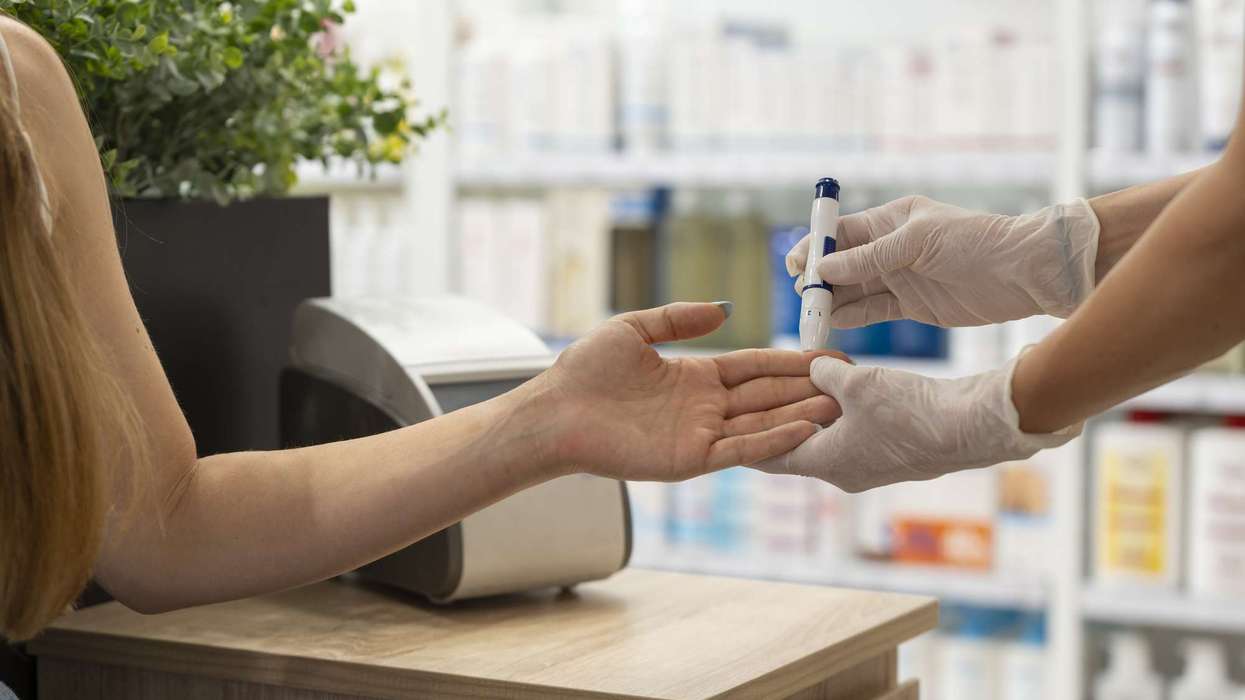
Pharmacy First, vaccinations, contraception, weight management and a growing number of clinical services are already changing what patients expect from their local pharmacy and – importantly – how pharmacies need to use the space available to them.
For many, the next step will be expanding consultation capacity. Some will need a second consultation room and, in pharmacies where space is already constrained, something will inevitably have to give.
That makes this a good time to ask a much broader question.
What should the front of a modern pharmacy actually look like?
Historically, pharmacies have stocked toiletries and fragrances alongside their core healthcare ranges. But the retail market has changed.
Many of those everyday essentials have become highly commoditised. They are routinely picked up as part of the weekly supermarket shop, ordered online or bought through specialist health and beauty discounters.
Can pharmacy realistically compete in those areas and, more importantly, should it still be trying to?
I would argue that for many the answer is no.
Of course, location matters. A rural pharmacy with fewer retailers nearby may still need to carry a small selection of essential toiletries. But elsewhere, there is a strong case for taking a long, hard look at stock that continues to occupy valuable shelf space simply because it has always been there.
Every contractor will have slow-moving lines that sell perhaps once a month, or even less frequently.
Individually they may seem harmless. Collectively, they occupy room that could be put to much better use.
So, what should take priority instead?
The starting point should be understanding why patients are coming through the door.
When it comes to OTC medicines, pharmacy’s great advantage is the advice that comes with the sale.
People are often not simply looking for a box on a shelf. They want to know what is appropriate for their symptoms, whether there is a more suitable treatment or whether they should speak directly to the pharmacist.
That means concentrating on the areas where the sector has genuine authority.
Pain remains a major driver of OTC purchases, alongside seasonal needs such as allergy and cold and flu.
Smoking cessation, weight management, first aid and foot care are other examples where patients naturally look to pharmacy for both treatment and advice.
But focusing on the right areas is only half of the answer.
We also need to question how much choice patients really need within them.
In some cases, selections have become unnecessarily complicated. Do customers benefit from being presented with numerous versions of essentially the same thing? Or would the leading brands alongside a strong own-label alternative provide sufficient choice while making shelves easier to navigate?
There is a commercial argument for simplifying the offer too.
Pharmacy is never going to win a race to the bottom against supermarkets and discounters on something such as paracetamol. Nor should it try to.
A well-positioned own-label alternative can provide competitive value, while professional advice and expertise offer something those competitors cannot always replicate.
Then we come to perhaps pharmacy’s biggest point of difference: pharmacy only medicines.
How many patients really understand that these are stronger and more efficacious products, that can only be sold under a pharmacist’s jurisdiction?
Patients can access treatments here that are not available from supermarkets and many other retailers, yet I am not convinced we make enough of that distinction.
There are practical considerations.
Theft is a very real concern, and certain medicines require appropriate controls. But there are ways of giving these treatments greater visibility, including displays using dummy packs or other secure merchandising solutions.
Done well, that creates a natural opening for trained teams to explain that another treatment may be available without prescription and discuss whether it is appropriate for that patient.
This is not about stripping shelves bare.
It is about making every part of the pharmacy work harder.
A sharper OTC offer can give greater prominence to the treatments patients actually come to pharmacy for, make the environment easier to navigate and potentially release valuable floor space for the clinical services that will become increasingly important to the sector.
Getting there, however, requires owners to challenge some established habits.
OTC ordering does not always receive the same scrutiny as other parts of the business. Stock can be inherited, shelves replenished and the same lines reordered because that is simply what has always happened.
That approach needs to change.
As the balance between dispensing, retail and clinical services evolves, contractors need to be much more deliberate about what earns its place in the pharmacy.
The aim should not be the biggest possible selection. It should be the most relevant one.
That means protecting the areas where pharmacy has genuine expertise, making more of medicines patients cannot access elsewhere, providing sensible choice and freeing capacity for the services that will increasingly shape the profession’s future.
The question for every contractor is simple.
If you were designing your pharmacy from scratch today, would you fill the shelves with exactly the same products?
I suspect for many, the answer would be no.