






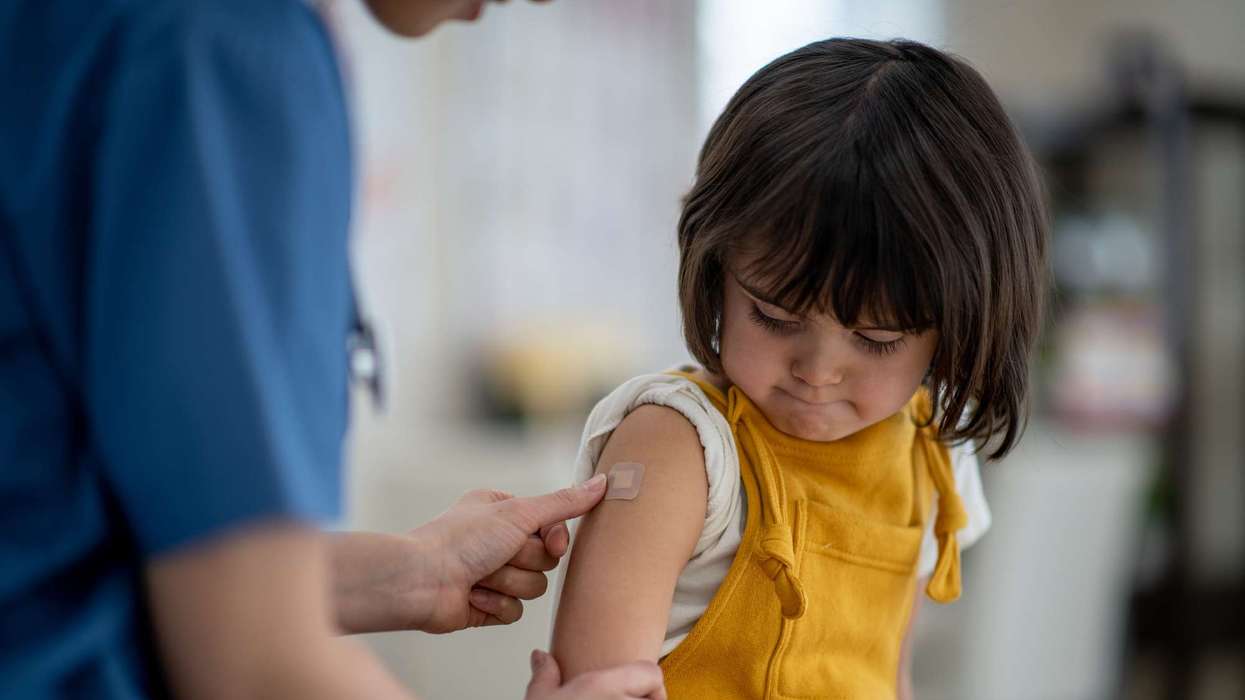

Childhood vaccination rates in England have fallen for more than a decade, leaving growing numbers of children exposed to preventable diseases and widening health inequalities, a House of Lords committee has warned.
In its report, No time to lose: reversing the decline in childhood vaccination rates, the Childhood Vaccinations Committee calls for urgent and coordinated action from the Government and NHS to improve uptake, strengthen accountability and make services easier for families to access.
The report estimates that childhood vaccination prevents more than 200,000 hospitalisations and 5,000 deaths in England every year. However, pre-school vaccination coverage has dropped below the World Health Organization’s 95 per cent optimal performance standard, while adolescent vaccination rates are below the 90 per cent target.
The consequences are already becoming apparent. The UK lost its measles elimination status in January 2026. By October, an estimated 4,403 measles cases and three deaths had been recorded during the year. The committee also warns that falling HPV vaccination coverage threatens England’s ambition to eliminate cervical cancer by 2040.
The decline has not affected all communities equally. The gap in MMR vaccination coverage between the most and least deprived areas widened to 7.7 percentage points in 2024/25, compared with broadly similar rates in 2016/17. For HPV vaccination, the disparity had grown to more than 22 percentage points.
What is driving the fall in vaccination rates?
The committee says there is no single explanation. While 84 per cent of parents surveyed by the UK Health Security Agency said they trusted vaccinations, the report identifies growing barriers to accessing services and weakened opportunities to build confidence.
Inflexible appointments, limited time for discussions with healthcare professionals and difficulties navigating booking systems can all discourage families from attending. The report stresses that access and trust are closely connected: rushed consultations or dismissive treatment can undermine confidence, while conversations with trusted professionals can help parents make informed decisions.
It also points to structural changes to the NHS and public health system since 2013, which it says have contributed significantly to the decline. Responsibilities have become fragmented, pressures on GPs, nurses and health visitors have increased, and continuity of care has weakened.
Health visitor numbers have halved over the past decade, despite their important role in supporting parents and discussing childhood vaccinations.
The committee is calling for a new national plan, clearer accountability across the NHS and local authorities, and investment in the children’s public health workforce. It also wants more flexible GP appointments, stronger coordination between GP practices and school vaccination teams, improved call-and-recall systems and sustained outreach in communities with the lowest uptake.
Other recommendations include restoring the 95 per cent pre-school coverage target to NHS planning guidance, introducing stepped improvement targets, improving vaccination education in schools and establishing a national training programme for healthcare professionals. The report also calls for better data systems and a communications strategy to address misleading information.
Could community pharmacies play a bigger role?
Although most childhood vaccinations are delivered through GP practices and school-aged immunisation services, the committee considers whether supplementary providers, including community pharmacies, could help close gaps in access.
It notes that pharmacies generally deliver adult vaccinations rather than most routine childhood vaccines. However, the Government has been testing an expanded role for pharmacies. In 2025/26 and 2026/27, they have been commissioned to provide flu vaccinations for two- and three-year-olds. The Government has also commissioned pharmacies to deliver a one-off MenB vaccination offer for 17- and 18-year-olds, while its 10-year health plan includes an ambition for young people who missed HPV vaccination at school to be able to receive it at a pharmacy.
The report recognises that pharmacies can offer convenient and flexible access, particularly for older adolescents and young adults who need catch-up vaccinations. Their presence in some deprived communities could also help reach people who may find it harder to access general practice.
However, the committee cautions against assuming that expanding pharmacy provision will automatically improve overall uptake or reduce inequalities. Evidence from other pharmacy vaccination pilots has been mixed, with concerns that supplementary services could simply attract people who would otherwise have attended their GP, rather than reach those who are currently missing out.
The report also flags potential risks, including additional costs, vaccine wastage, greater complexity in the system and disruption to GP services if responsibility is not properly coordinated.
It concludes that there is some evidence that commissioning supplementary providers such as community pharmacies could improve access and reduce inequalities, but says the Government should evaluate such provision carefully. The central aim must be to reach children who are missing vaccinations, rather than simply offer families another choice of provider.
For community pharmacy, the report signals potential opportunities to contribute to the wider immunisation programme. But it makes clear that any expansion must complement, rather than weaken, the existing GP and school-based services.