






Key Summary
- To mark International Self-Care Day, the PAGB launched its inaugural podcast featuring key leaders.
- The panel agreed that shifting healthcare toward individual self-care and community pharmacy is essential.
- For this vision to succeed, government and Whitehall must overcome their traditional bias toward hospital care and actively prioritise pharmacy-led reclassification, patient education, and community funding.
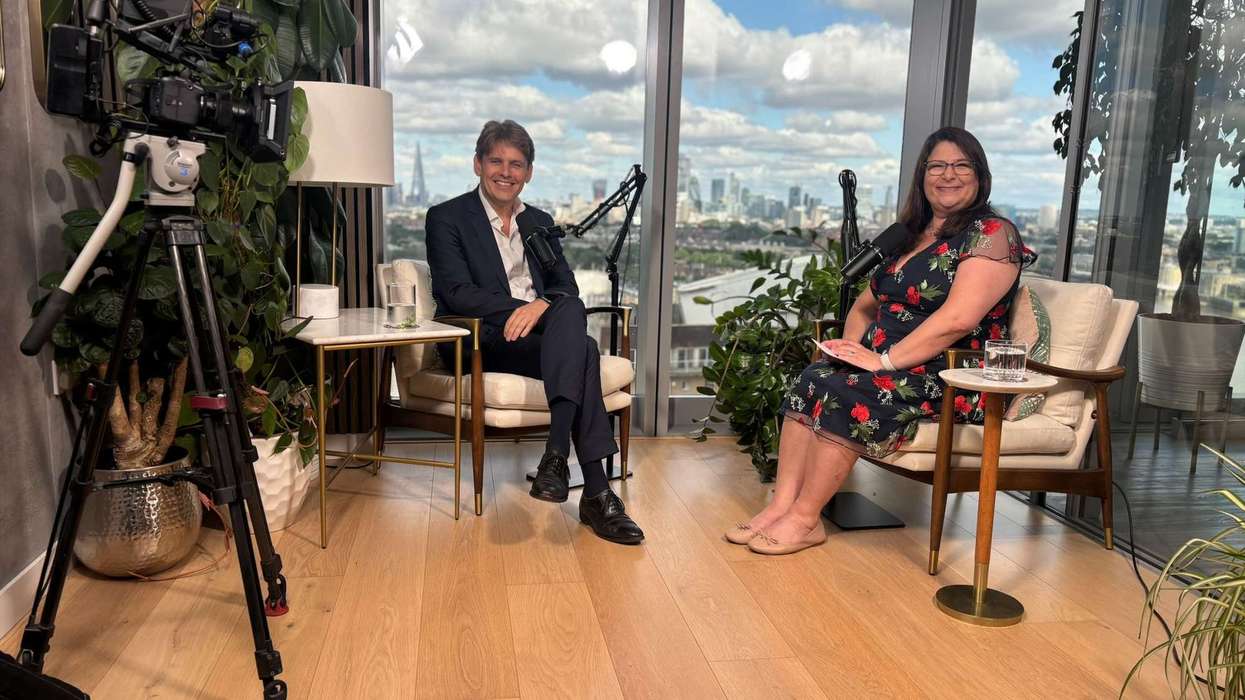
The UK consumer healthcare sector commemorated International Self-Care Day on 24 July with the launch of the Proprietary Association of Great Britain's (PAGB) inaugural podcast, “PAGB: Self-care, progress, policy and practice”.
Hosted by PAGB Chief Executive Michelle Riddalls, the episode brought together key figures across regulation, pharmacy practice, policy, and industry, featuring Laurence Tallon, Shilpa Shah, Bill Morgan, and Bas Vorsteveld.
Laurence Tallon, Chief Executive of the Medicines and Healthcare products Regulatory Agency (MHRA), outlined how regulatory frameworks support self-care and detailed the agency's future direction.
Tallon emphasised that shifting patients toward individual self-care and pharmacy-led consultations aligns directly with the government's long-term health priorities, while highlighting potential savings of up to £1.4 billion annually for the health service.
Addressing the unsustainable demand on GP surgeries, Tallon stressed that expanding self-care requires moving healthcare delivery into the community and empowering patients to seek help from pharmacists rather than defaulting to general practice.
“We think that shifting care both into the community and to individuals who take more responsibility for their own care... the overall shift towards a more responsible, individual and community-led model of care is the right way to go.”
For community pharmacists, the primary mechanism driving this transition is the reclassification of prescription-only medicines (POM) to pharmacy (P) or over-the-counter (OTC) status. Tallon pointed out that downshifting medicines enables patients to bypass the morning GP bottleneck and utilise pharmacy services directly.
"Reclassification of medicines is a really important tool to help us drive that agenda, because it means that rather than patients always having to book a GP appointment -- and we all know that it can be quite challenging and we've all experienced the 8 a.m. rush -- in order to get those medicines that can help them self-care, increasingly they can go to a pharmacist..."
Removing financial barriers
Shilpa Shah, chief executive at Community Pharmacy North East London, addressed financial inequalities, explaining how community pharmacies are helping patients overcome economic barriers when managing self-limiting conditions.
"We now offer free over-the-counter medication for people coming in from a GP surgery on the Pharmacy First scheme that aren't able to afford it... we're able to offer medication for almost 24 different conditions and quite a few different medications within those."
"This has been a game changer for people in North East London, because it then means that they can get treated for their symptoms, not have to take extra time off work, or maybe like, you know, for kids doing exams, getting hay fever, tablets, etc."
"The important part of it is around educating people on where they can go. Because self-care is so important... a lot of these conditions that we offer self-care medication for are self-limiting. So it's often just treating symptoms and you can go into any pharmacy and purchase these products."
Barriers to self-care
Despite ongoing ambitions to move care closer to home, health policy expert Bill Morgan warned that self-care risks being overlooked due to institutional blind spots within government.
Reflecting on progress since the release of the NHS 10-Year Health Plan, Morgan explained how tight fiscal conditions, acute sector demand, and Whitehall’s traditional bias toward hospital care continue to hamper the growth of preventative, pharmacy-led models.
While acknowledging Prime Minister Andy Burnham’s background as Health Secretary, Morgan noted that political and economic constraints present severe hurdles.
"Andy Burnham has won as a change candidate... We know what Burnham's instincts are on health because, of course, he has been health secretary. And as health secretary, he published a white paper... It is very much, as you'd expect, a focus on prevention and public health."
Morgan added that Burnham’s approach reflects "a scepticism about markets in the NHS" and a reluctance to pursue major structural overhauls, suggesting policy will gradually align with public health principles as his term unfolds.
Emphasising the indispensable role of pharmacy teams in alleviating general practice workloads, Morgan noted: "Self-care is obviously very important... If you've got a self-limiting illness, taking yourself to the pharmacy and speaking to the pharmacist about what support you can get from a pharmacy and those kinds of services... that's very important as well for taking pressure off, not necessarily hospitals, but certainly GP services."
He urged policymakers to use every available tool, reiterating that "we really need to pull every lever we have because there's a lot of pressure on the NHS."
UK a European leader
Bas Vorsteveld, Area Managing Director Northern Europe at Kenvue, commended the PAGB's ongoing advocacy work and its success in embedding self-care into mainstream UK health policy.
"I think PAGB in the UK is something really special. Having worked in so many different markets, I've seen the impact we have had, putting self-care really as part of the healthcare policy in the markets, showing the impact self-care can have. And you might say that's illogical, but it isn't."
"We have seen that mindset of the government has changed over the years, thanks to the work we have been doing within the PAGB, showing the impact self-care can have to consumers, but as well to the healthcare system. That has been a massive journey... If you look at the impact we have been having as PAGB, it has been massive."
"I think self-care has not been seen everywhere in Europe in the same way, and making self-care as part of the healthcare system has been a massive move we've made in the UK."