








Healthcare is fundamentally about looking after others. But amid the pressures of patient care, workforce challenges, financial constraints and increasingly demanding professional lives, how often do healthcare professionals stop to look after themselves?
That question stayed with me after attending "The Inner Compass – London Leadership Dialogue & Himalayan Meditation Experience", organised by Asian Media Group, publishers of Pharmacy Business, at The Bhavan London.
It was a beautifully curated evening that brought together leaders from healthcare, pharmacy, public life, defence, business, culture, faith and community organisations.
What made it particularly relevant to pharmacy was its focus on inner leadership – the idea that clarity, balance and conscious awareness can form the foundation of better decision-making and more sustainable leadership.
The evening was led by H.H. Shree Shivkrupanand Swami, a Himalayan Yogi who spent 16 years in the Himalayas immersed in meditative traditions before founding Samarpan Meditation in 1994. The practice is now represented in more than 70 countries.
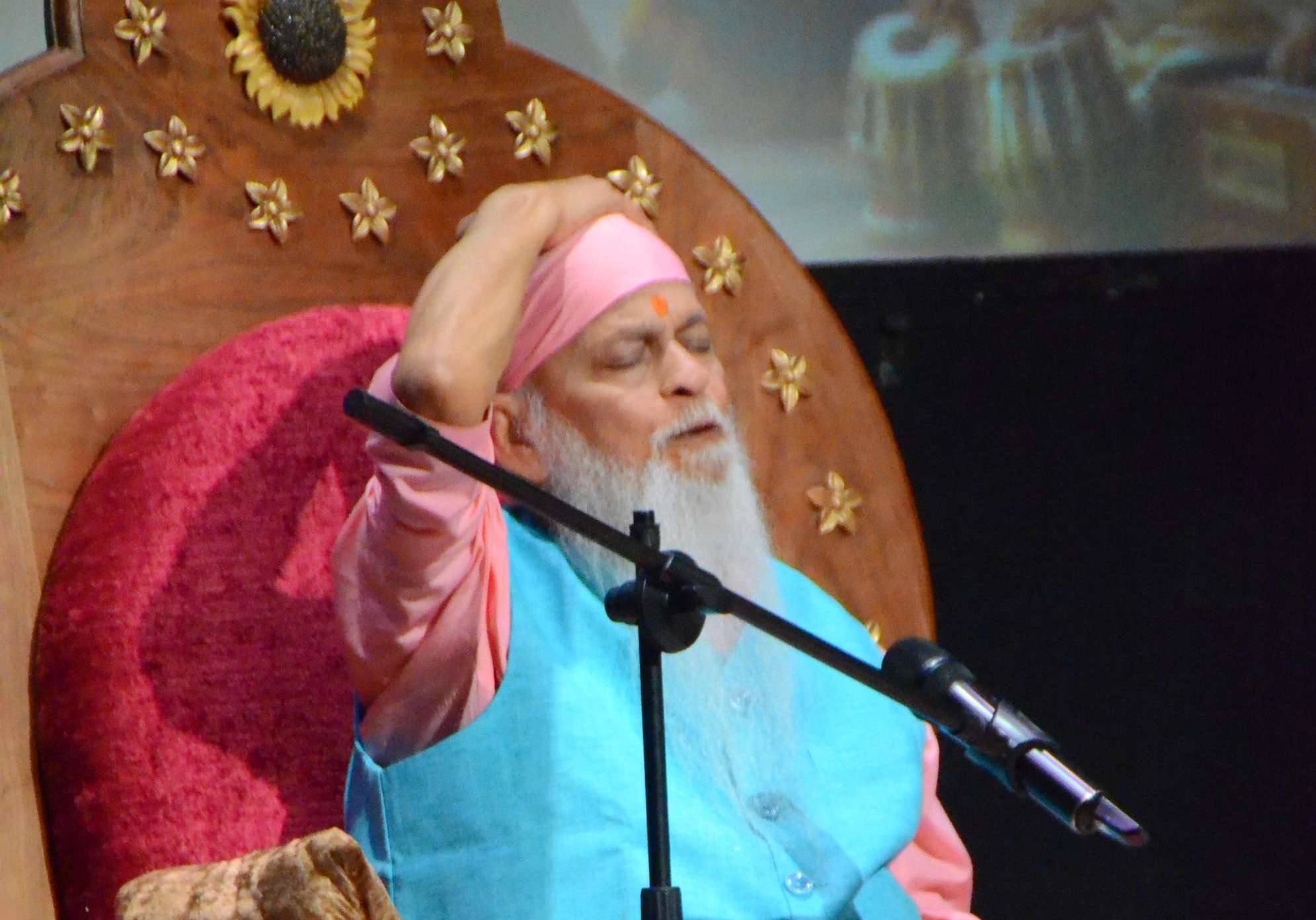 H.H. Shree Shivkrupanand Swamiji delivering his discourse on meditation and inner wellbeing.Pharmacy Business
His central message was strikingly simple: in a world where we devote so much time to our responsibilities, professions and other people, can we give just 30 minutes each day to ourselves?
Swamiji spoke about developing an “inner compass” – cultivating sufficient self-awareness and inner stability to respond to situations with clarity rather than simply reacting to pressure.
For those working in pharmacy and healthcare, that message has particular resonance.
 Guests listening to H.H. Shree Shivkrupanand Swamiji during the meditation discourse.Pharmacy Business
Pharmacy leadership represented
A prominent pharmacy sector figure at the gathering was Dr Bharat Shah CBE, founder of Sigma Pharmaceuticals plc, who was specially invited to participate in the ceremonial lighting of the diya at the opening of the programme.
Dr Shah later joined civic, healthcare, business, cultural and community leaders in honouring H.H. Shree Shivkrupanand Swami.
His participation carried particular significance for a gathering exploring leadership and wellbeing. Over decades in the pharmaceutical sector, Dr Shah has seen both the transformation of community pharmacy and the growing responsibilities placed upon pharmacists and pharmacy teams.
He said: “Pharmacy has always been a profession of care and service, but those who spend their lives caring for others must also look after their own wellbeing. The evening was a valuable reminder that good leadership requires not only professional knowledge and experience, but also clarity, balance and the ability to pause and reflect. These qualities are increasingly important for pharmacy teams.”
The presence of senior figures including community pharmacy leadership, pharmacists and pharmaceutical industry leaders also demonstrated why conversations around wellbeing should increasingly sit alongside discussions about the future of healthcare.
‘Self-care is not a luxury’
Olivier Picard, Chair of the National Pharmacy Association (NPA), was among the senior pharmacy leaders attending the event, and said the experience remained with him in the days afterwards.
“Healthcare professionals spend their careers looking after the health and wellbeing of others, yet we often neglect our own,” he reflected. “The evening was a reminder that self-care is not a luxury or simply something for others.”
For Picard, the message is particularly pertinent to community pharmacy teams operating under sustained pressure.
He also took away a broader understanding of mindfulness.
It need not, he said, be viewed solely through a spiritual lens. Meditation can be one route, but so can the simple discipline of pausing and creating space to think.
“In pharmacy, every interaction matters. Whether we are looking after the wellbeing of our teams or our patients, it’s all about supporting better decision-making and stronger teamwork.”
Picard acknowledged something familiar to many leaders: the instinct to put everybody else first.
“My instinct is always to prioritise everyone else’s needs first. The evening reminded me that investing in one’s own wellbeing enables us to better support others.”
A reminder to those whose purpose is helping others
That message was echoed by Shilpa Shah, Chief Executive of Community Pharmacy North East London.
Reflecting on Swamiji’s journey and the discussion, Shah said the evening made her think again about purpose.
“My purpose is to help people, but this session was a reminder that to effectively help people it’s important to make time to look after yourself.”
It is a simple observation, but one with considerable relevance to pharmacy.
The ability to pause, regain perspective and protect one's own wellbeing therefore matters not only personally, but professionally.
Jignesh Patel, Pharmacist Independent Prescriber, said his key reflections centred on developing inner awareness, resilience and emotional balance within today's demanding healthcare environment.
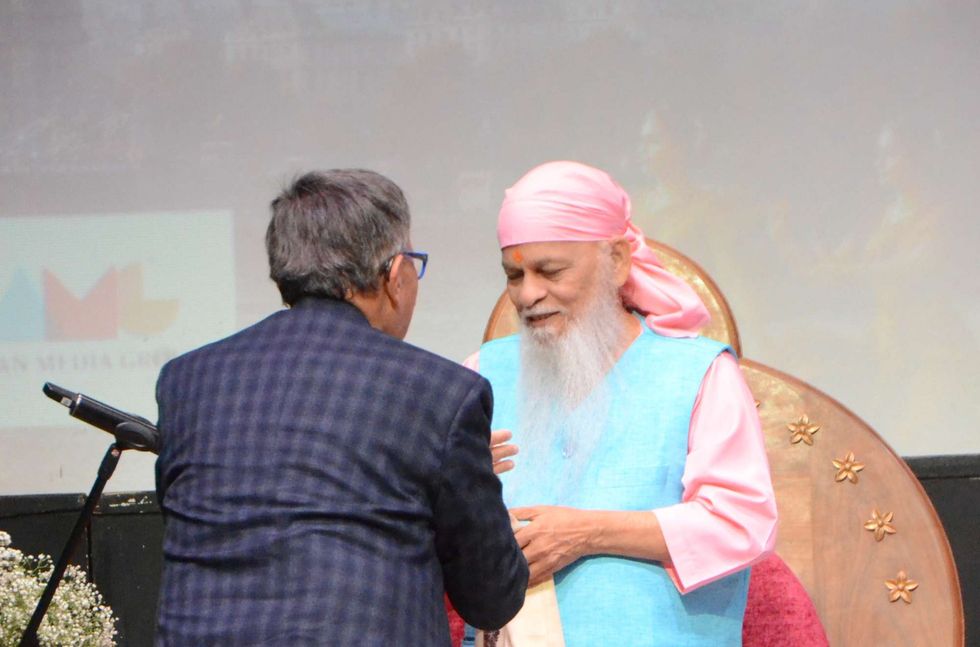 Dr Bharat Shah CBE honouring H.H. Shree Shivkrupanand Swamiji during the felicitation ceremony.Pharmacy Business
He saw the meditation experience as a practical opportunity to quieten the mind and develop greater awareness of one's thoughts and responses.
For healthcare professionals in particular, Patel felt practices that encourage people to pause and reflect could provide a useful tool for managing stress and protecting against burnout and compassion fatigue.
Leaders who are calm, centred and self-aware, he observed, can be better positioned to support their teams, navigate complexity and respond thoughtfully rather than emotionally during difficult situations.
For Patel, one of the broader messages was that wellbeing cannot be considered purely in physical terms. Emotional and mental wellbeing are also important elements of how individuals’ function, lead and care for others.
“The event was an inspiring reminder that investing time in practices such as Himalayan Meditation can support healthier individuals, stronger leaders and more resilient healthcare systems,” he reflected.
“In a world of constant demands and distractions, developing the ability to pause, reflect and reconnect with ourselves may be one of the most valuable skills we can cultivate.”
From outer responsibility to inner leadership
Swamiji's discourse explored a paradox of modern life: society has access to more information than ever before, yet individuals can remain disconnected from themselves.
Meditation, he suggested, is a journey inward – allowing individuals to better understand their thoughts, emotions, values and purpose.
He encouraged those present to spend 30 minutes each day in meditation and emphasised the importance of living in the present rather than remaining caught between regret about the past and anxiety about the future.
Crucially for such a diverse audience, Swamiji presented meditation not as something confined by religion, nationality or ideology, but as an experience centred on self-awareness and inner wellbeing.
Following the leadership dialogue, the audience participated together in a guided Himalayan Meditation Experience, transforming the auditorium into several minutes of collective silence.
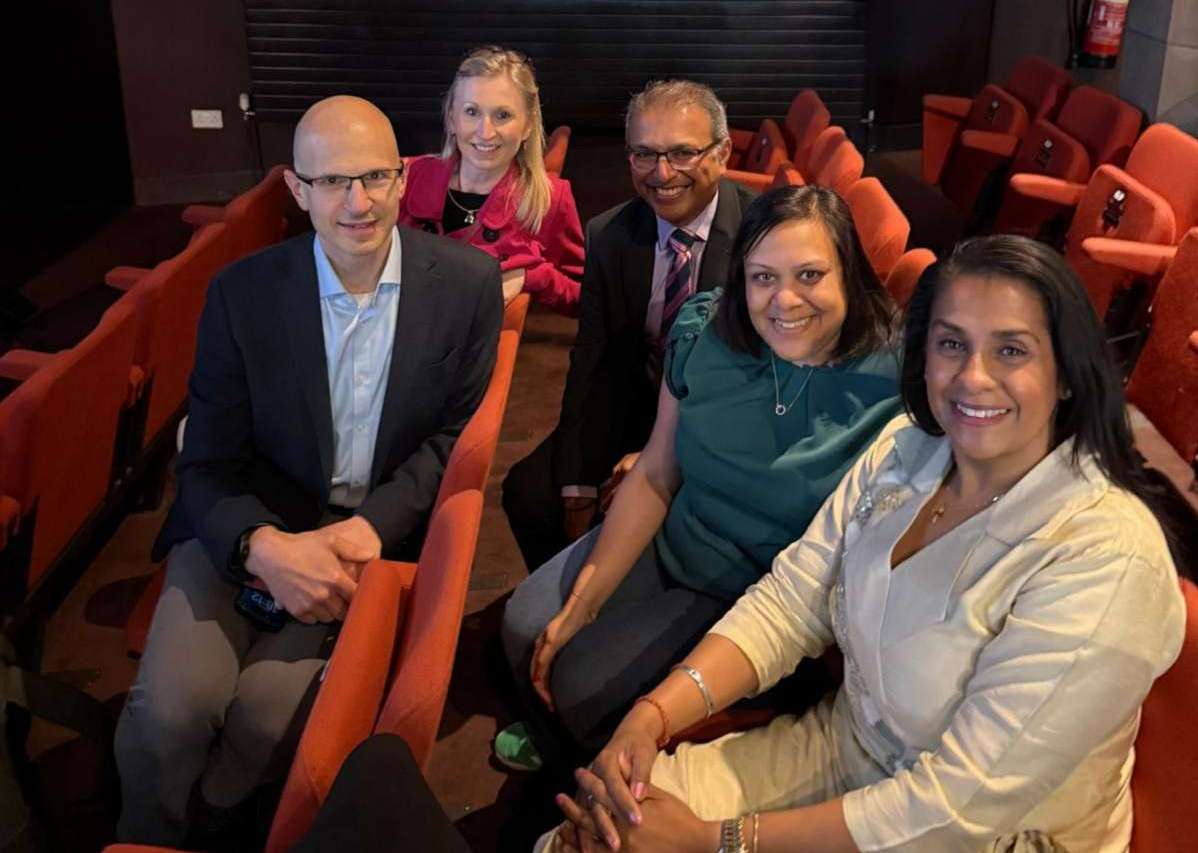 Pharmacy leaders and professionals at the event. Left to right: Olivier Picard, Mrs Picard, Jignesh Patel, Shilpa Shah and Neelam Katechia.Pharmacy Business
Leadership begins within
For me personally, one of the most meaningful parts of the evening was an opportunity to speak with Swamiji one-to-one.
His guidance was personal and direct: before stepping into positions requiring leadership, influence or communication, we must first learn to ground ourselves.
The message I took away was that clarity comes from alignment. When our inner voice is steady, our external work becomes more purposeful.
That philosophy also strongly connects with the work of Commercial Curiosity 108, which centres on collaboration, clarity and purposeful engagement across sectors.
The Inner Compass was therefore much more than a meditation event.
For pharmacy leaders and healthcare professionals, it raised a timely question: How can we sustainably care for others if we never create the space to care for ourselves?
In a profession built around accessibility, service and responsibility, perhaps conscious leadership begins with something deceptively simple – finding the time to pause.
Neelam Katechia is Founder and Owner at Commercial Curiosity 108 Ltd