







Future discussions on the proposed membership of the Royal College of Pharmacy (RCPharm) of pharmacy technicians will be “collaborative,” the President of the Association of Pharmacy Technicians (APTUK), Amy Laflin, has stressed.
Commenting on the proposal, to be decided by a special resolution vote of RCPharm members and a vote by APTUK members by 2028, she said that discussion with the College around the plans for the change would not be "one-sided" and will take place over the next year.
“We are in really good constant communication. We are engaged and fully participating within the discussions around that transformation. It's definitely collaborative. It isn't one-sided at all by any means, and we will progress over the next 10 to 12 months, working together to come to that special resolution vote for the Royal College.
“APTUK will also then have a vote for its members at the same time, so that we can then come together; see what that outcome looks like.”
She added that she was hopeful for a positive outcome: saying: “Hopefully that will be really positive from both sides to be able to then move forward in terms of a pathway for that transition to be able to take effect.”
APTUK has been invited to take part in a series of roadshows to be arranged by RCPharm as part of a listening exercise to discuss the proposals with Royal College members, she said.
“I think it's really important that we have a space within those, so that people can overcome the worries and concerns that they may have,” Laflin said.
Having pharmacists and pharmacy technicians in “one professional home” would have advantages, she suggested.
“It's not a competition: it's around how we open that up so that both professions, parts of pharmacy, can come together into one professional home and be together within that space, working side by side; knowing where our scope and our boundaries lie,” she said.
RCPharm: "the reality of modern pharmacy practice"
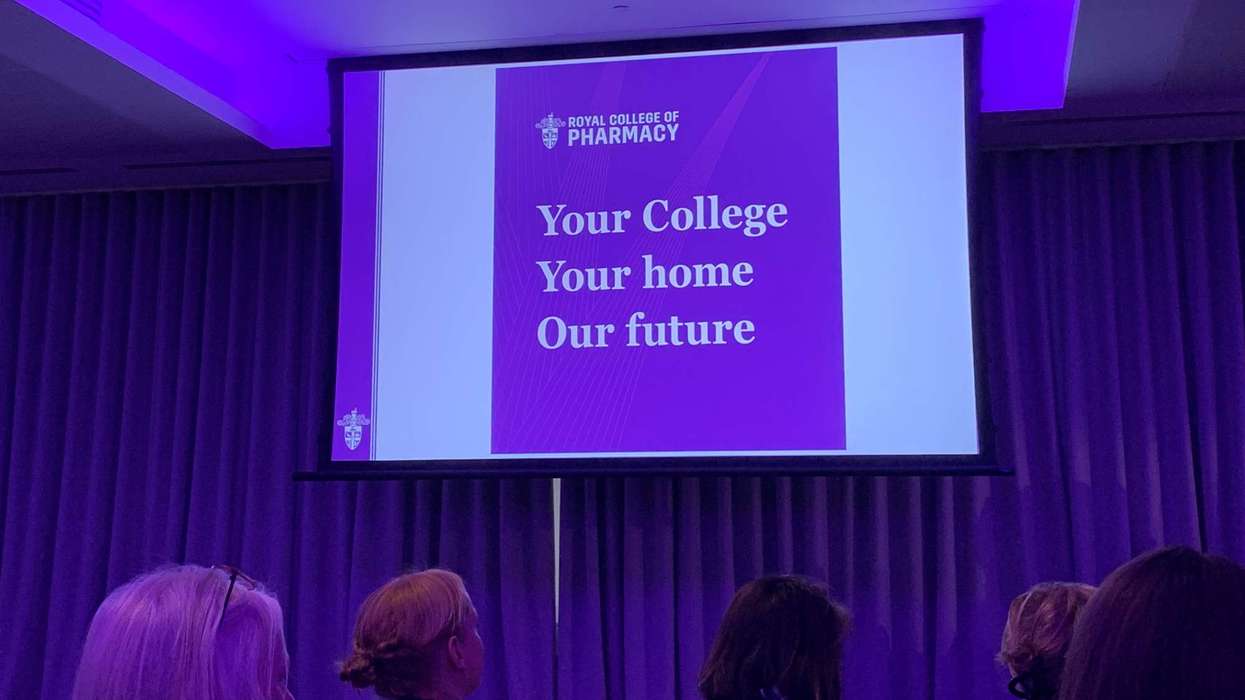
The Royal College announced that pharmacy technician membership would be considered at their first annual conference of the new Royal College, held on Friday in the City of London. This is part of new strategic priorities covering the next two years.
Tase Oputu, RCPharm's President, told conference delegates that the proposal was an important opportunity, as pharmacists and pharmacy technicians are working “ever more closely together”.
She told delegates: “As healthcare becomes increasingly collaborative, we must think about how the College reflects and supports the whole pharmacy team. I'm pleased that we will be exploring how pharmacy technicians may become part of the Royal College as our professions work ever more closely together to meet the needs of patients.”
“This is an important opportunity to develop a College that reflects the reality of modern pharmacy practice, while respecting the unique contribution of each profession.”
A “Your Voice” engagement programme and online portal has been launched to support members, patients and the public to help shape the College’s future, RCPharm has said.
Steps outlined in the College’s new strategy, Building the future of pharmacy: Our strategy 2026–2028, include the launch of a proposal for pharmacy technician membership and to "create a pathway" to a special resolution vote to decide pharmacy technician membership of the College. Other work will also include defining scope of practice for pharmacists, working too with pharmacy technicians “to align their professional ambitions in this area”.
Speaking at the conference, Karen Baxter, interim chief executive said: “We recognise that there are differing views on this matter and strong views in both professions.” She said that the Royal College must have “difficult conversations” over the next 12 months.
Earlier this year, the UK Pharmacy Professional Leadership Advisory Board (UKPPLAB), chaired by Sir Hugh Taylor, proposed opening RCPharm membership to pharmacy technicians, potentially creating a “more inclusive Royal College of Pharmacy by December 2029”.
It also recommended adding Northern Ireland pharmacists to College membership and the creation of a Forum of Specialist Associations.
Evolution must be led by the profession
Pharmacy technicians are practising at a time of unprecedented transformation in a rapidly changing landscape, Laflin said in a panel discussion at the RCPharm conference.
“We are seeing changes in clinical practice, digital technology, AI, medicines optimisation, supervision, legislation changes that are coming in due course; workforce models, public expectations being the biggest one, and alongside that, healthcare systems continue to face significant pressures around demand, workforce supply, and health inequalities. And in this environment, our profession as a whole has an amazing opportunity.
“The question is not whether around pharmacy technician roles will evolve, because they absolutely already are, but the real question is around how we ensure that the evolution is led by the profession for the benefit of patients and the public.”
She spoke about the importance of professional confidence, investment in development, and collaboration and influence for the profession.
“The landscape will continue to change: new technologies will emerge, new models of care will develop, and roles will evolve. But our core purpose remains the same, and that is improving care for our patients, care, and public outcomes,” she said.
Embracing change is an important way forward for pharmacy technicians, she suggested.
“I believe that the future of our profession will not be defined by the changes happening around us. It will be defined by how willing we are to embrace them, support one another, and have the confidence to lead. Because leadership is not about having all the answers; it's about having the courage to help create what comes next.”