






After running two pharmacies for more than a decade, Amerjit Singh decided to help aspiring pharmacy professionals realise their potential. In 2015, he founded Skills4Pharmacy to train people to become pharmacy technicians and dispensers.
“My mother taught me that the essence of living is giving. I wanted to help other people gain certificates that could change their lives.”
The business got off to a slow start, but steadily grew. A decade later, Skills4Pharmacy had become the UK’s largest pharmacy apprenticeship training provider.
“Equality, inclusion and diversity are very important to me. We want to help people from all backgrounds have the same opportunities I had. Pharmacy has been very good to me, and I wanted to give something back.”
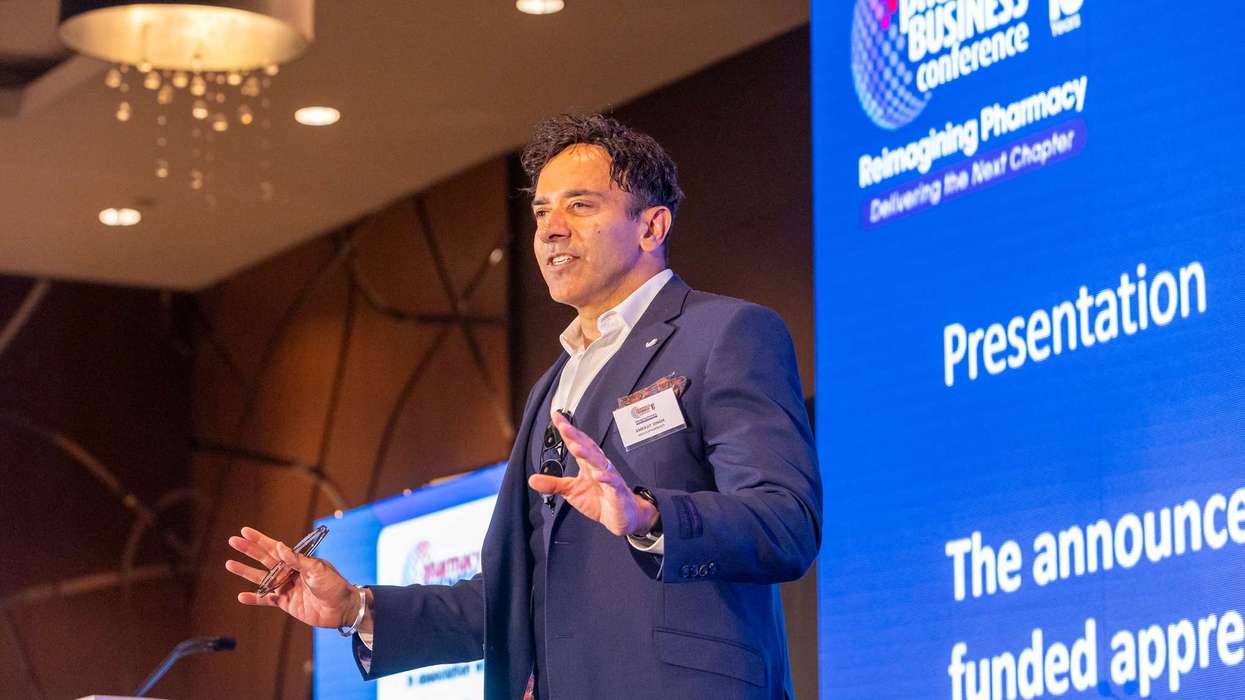
Singh’s contribution to pharmacy was recognised at the 2025 Pharmacy Business Awards, where he received the Pharmacy Business Development Award, in association with Cipla.
He believes the future of pharmacy depends on empowering the wider pharmacy team and allowing pharmacists to focus on clinical services.
“We need to educate and empower technicians and accuracy checking technicians so they can take on more responsibility. This will allow pharmacists to focus on services.
“In GP surgeries, the GP does a small proportion of the overall work, while the wider team handles the rest. In pharmacy, the pharmacist still does most of the tasks. That must change. We need better resources, investment in teams and greater use of technology.”
The influence of his mother
Singh credits his mother with playing a defining role in his life, particularly when it came to his career.
Growing up, pharmacy was the last career he had in mind. He initially dreamed of becoming a professional footballer, but soon realised he was not good enough. Then, after watching the 1980s Hindi film "Naseeb" and being impressed by Amitabh Bachchan’s performance, he decided he wanted to become a Bollywood actor.
He told his mother about his new ambition. She was not impressed. Instead, she decided that he should pursue pharmacy.
Singh reluctantly agreed. He took his exams and achieved the required grades, but deliberately avoided completing his university application because he still wanted to become an actor.
His mother discovered what he had done and intervened.
“She called the university and secured my place. She told me clearly that I would attend and work hard. Soon after, I was on a train to university.”
Singh now regards that moment as a turning point and describes his mother as his greatest teacher. Coming from a humble background, he did not attend an elite school, but he considers himself fortunate to have had his mother’s guidance.
“Everything good I have learned in business and in life came from her,” he said.
Pharmacy ownership
Singh studied pharmacy at the University of Sunderland, where he spent four years.
“At first, I thought I would not like it, but I enjoyed it very much. It was a good environment. Everyone was my age. We worked hard for the pharmacy degree, which is not easy, and we enjoyed each other’s company. The culture and social life were very good.”
After qualifying as a pharmacist, Singh completed his pre-registration training with Lloyds Pharmacy, then one of the country’s largest pharmacy companies. However, he soon realised that he did not want to spend his career managing someone else’s pharmacy. He wanted to work for himself.
Once again, he turned to his mother for advice.
“I asked her if I was good at my job. I said yes. She asked if I made money for the company. I said yes. She told me that if I could make money for a company, I could make money for myself. That was the start of my journey.”
In 1999, Singh opened his first pharmacy, followed by a second in 2001.
“Education was always very important to me. It changed my life. It took me from living on a council estate in the northwest of England to owning pharmacies. My degree certificate was like a passport to a better and more fulfilling life. It allowed me to go into business, travel the world and meet wonderful people.”
A sector under pressure
After more than two decades of running pharmacies, however, Singh says the business environment has become increasingly challenging.
“When I first started in pharmacy 26 years ago, you didn't have to be particularly brilliant. You just had to do a good job, and you would be reimbursed.
“You were helping your community, and you were making a good living for yourself and your family. Over the last 25 years, funding within the pharmacy sector has dissipated. I've seen it go piece by piece before my eyes.”
Singh believes funding has failed to keep pace with the demands being placed on pharmacy owners.
“My colleagues around the country, who work tirelessly for their communities and populations, are just not being reimbursed.
“Friends of mine, colleagues of mine — not one or two, but many — have had to dip into their savings to keep their doors open. They've had to dip into their pensions to keep their doors open. It is a very dangerous time for the sector.
“We are doing more and more and more to take the pressure off our GP colleagues, nurse colleagues and fellow healthcare professionals, but we are breaking.”
Unless the funding crisis is addressed, Singh warns that more pharmacies could face administration or liquidation.
“More and more will go down the routes of administration and liquidation,” he said.
He contrasts the current environment with the early years of his career.
“It used to be that you could do 60% to 70% of things right and you would get a great return. Now you have to do 98% of everything spot on to have any chance of a return or making a reasonable living within pharmacy.”
He said it has become increasingly difficult for pharmacies to remain sustainable without providing additional services, while the broader business environment remains challenging.
“Unless some real funding comes in, it will be difficult to keep the lights on, keep the doors open and keep serving your communities.”
Singh also points to the fate of Lloyds Pharmacy, where he completed his pre-registration training. Once the country’s second-largest pharmacy chain, Lloyds Pharmacy has since disappeared from the market.
Despite the challenges, Singh praises the determination of pharmacy leaders and contractors who continue to campaign for the sector.
Organisations including the National Pharmacy Association, Company Chemists’ Association and Independent Pharmacies Association have continued to highlight the pressures facing pharmacy, he said.
“What is good for the sector, though, is there are lots of good, strong people out there who are fighting, and pharmacy contractors who are very good at reinventing themselves.”
He describes pharmacy contractors as highly entrepreneurial and says most are capable businesspeople. The problem, he argues, is that they are being asked to provide more services without receiving adequate compensation.
Medicine shortages
Singh said medicine shortages are now affecting almost every pharmacy.
“Important medications are often unavailable. Staff spend hours on the phone to surgeries to change prescriptions. This affects patients’ confidence in their medication and their health outcomes.
“Some medicines are only available above the drug tariff price, which means pharmacies lose money when supplying them. This is not sustainable.
“During COVID, pharmacies kept their doors open and supported the population. It would be good if the government remembers that support and reciprocates it.”
A new era for pharmacy
Despite the financial pressures, Singh remains optimistic about the future of pharmacy, particularly because of the expansion of clinical services.
“It has never been a more exciting time to be a pharmacist. There are many services available, such as Pharmacy First, blood pressure checks, weight management, erectile dysfunction treatment, hair loss treatment and phlebotomy.
“It is also the most exciting time to be a pharmacy technician. Their roles are expanding, and there is momentum for them to do even more in the future.”
Singh believes independent prescribing has the potential to transform pharmacy, but pharmacists need to be freed from the dispensing bench to make full use of their clinical skills.
“Independent prescribing is not a new concept. It has been in existence for more than 15 years. But it has not made a big impact because pharmacists are tied to the dispensing bench. Pharmacists need to be freed from dispensing duties.
“In my pharmacy, 80% of the pharmacist’s time is spent in consultation rooms. In many pharmacies, pharmacists are still checking prescriptions for most of the day.”
Training for the future
Singh says Skills4Pharmacy has designed its training to reflect both the current and future needs of the sector.
“The training we provide is fit for today and tomorrow. We teach the core elements but also focus on what will make technicians valuable to modern pharmacy businesses. We gained our own accreditation to deliver training in a way that meets the needs of pharmacy contractors.”
The company regularly consults pharmacy contractors and organises focus groups to understand what employers need from technicians, accuracy checking technicians and dispensers.
“We ask them what they need from their technicians, accuracy checkers and dispensers. We listen to what they want in training courses. That is why we have grown quickly.
“We are learner-focused and want the journey to be enjoyable and high quality. At the same time, we value the opinions of employers.
“Pharmacy technicians are healthcare professionals, and it is an honour to train them. We help shape the future workforce by listening to contractors and responding to their needs.”