







Key Summary
- A study found that providing heavy levels of care activities speeds up mental decline by a third.
- But giving light care for just a few hours a week keeps the mind sharp and slows down brain ageing by a third.
- The study authors urge the government to provide “intensive” carers with better access to funded formal care and replacement care.
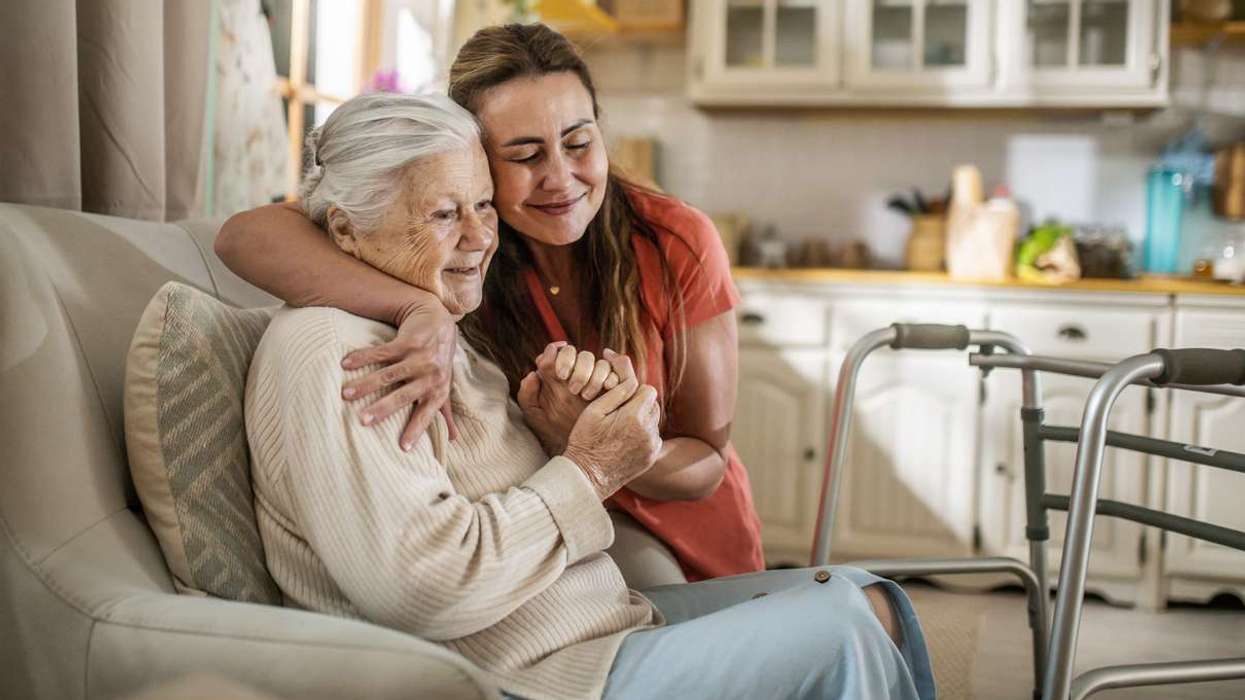
A new study from University College London (UCL) reveals that older adults with intensive caring responsibilities may experience faster cognitive decline, whereas lighter caregiving duties could actually help preserve brain function.
In the study, published in Age and Ageing, researchers analysed data spanning from 2004-05 to 2021-23 from the English Longitudinal Study of Ageing (ELSA).
This long-running survey gathers a wide range of health, physical, and social information from around 20,000 people aged 50 and older in England, re-interviewing them every two years.
To isolate the specific impacts on brain health, the researchers zeroed in on survey data regarding participants' caregiving responsibilities alongside their responses under the Cognitive Function module.
The findings highlighted a stark divide based on the intensity and setting of the care.
Individuals providing highly intensive care – defined as 50 hours or more per week – as well as those caring for a spouse or partner within their own household, showed a significantly more rapid decline in brain function compared to non-carers.
Conversely, individuals who took on lower-intensity caring responsibilities of between five and nine hours per week showed a slower rate of cognitive decline. This protective, brain-boosting effect was most visible among those providing care outside their immediate household, such as assisting parents or parents-in-law.
Building on previous UCL research, the study quantified this "double-edged sword" effect. Heavy carers experienced an extra level of cognitive decline equivalent to about one-third of the normal decline typically seen each year with ageing.
By contrast, lighter carers saw their mental decline slow down by an equal margin, effectively offsetting about one-third of the usual annual age-related decline.
The researchers noted that these shifts were most prominent in executive function, while memory changes followed a similar but much weaker pattern.
Lead author Dr Baowen Xue (UCL Institute of Epidemiology & Health Care) said: “Our study shows that the caring responsibilities many people take on later in life can be a double-edged sword.”
She added that by 2040, around 20 per cent of adults in England will be living with major illnesses. With the NHS struggling to cope and social care in crisis, much of this growing demand for care will fall on family members and friends who step in as unpaid carers.
The researchers are calling for the Government to provide “intensive” carers – that is, people with high caring workloads – with better access to funded formal care and replacement care.