






Key Summary
- BHF has identified "defibrillator deserts" across England, Wales, Scotland, and Northern Ireland, where long retrieval times and low device density put residents at higher risk of fatal cardiac arrests.
- BHF is taking applications for 400 free defibrillator packages, prioritising areas of high deprivation.
- Over 40,000 out-of-hospital cardiac arrests occur annually in the UK.
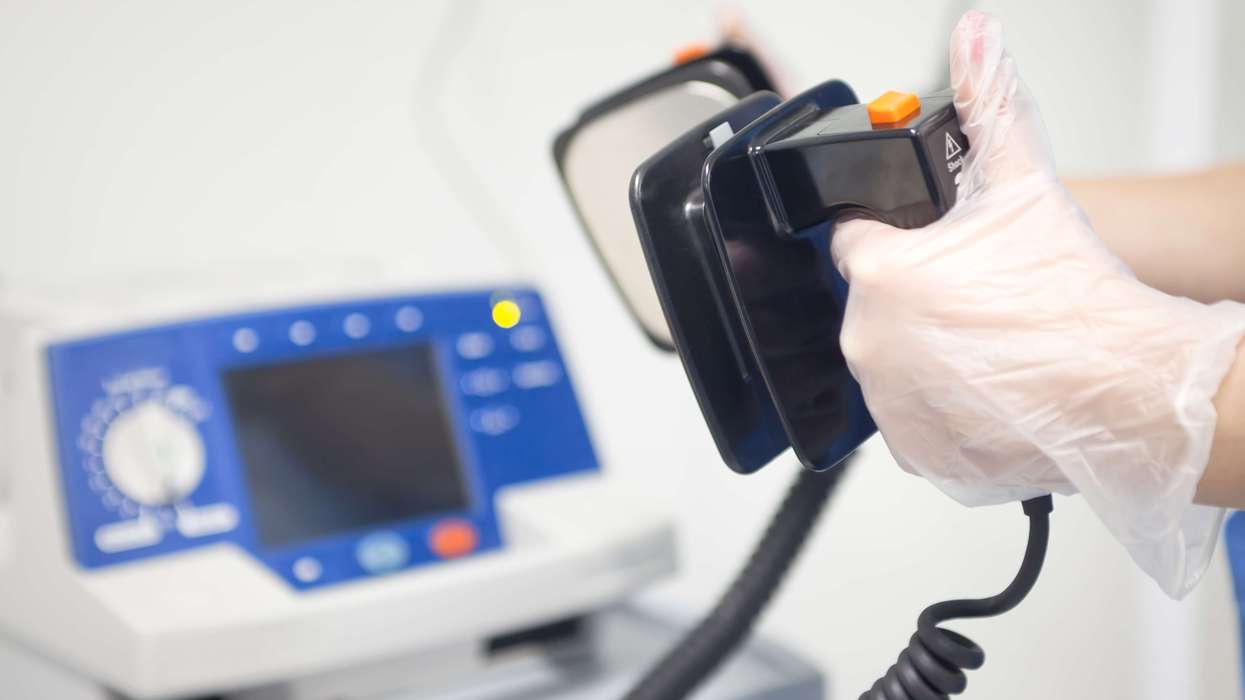
The British Heart Foundation (BHF) is calling on local community group leaders in 10 areas of the UK to apply for 400 free lifesaving devices as part of its relaunched Community Defibrillator Funding Programme.
The charity has revealed 10 areas across the UK designated as "defibrillator deserts" – communities severely lacking immediate access to public-access defibrillators.
More than 40,000 out-of-hospital cardiac arrests take place in the UK each year, but fewer than one in 10 patients survive. Because a person's chance of survival drops by up to 10% for every minute without CPR and defibrillation, immediate access to a registered device is crucial.
Identified high-risk locations
The BHF selected target regions based on a combination of long retrieval times, high population density, and high socio-economic deprivation. These are:
- England: Barking and Dagenham, Liverpool, Southampton, Nottingham
- Wales: Wrexham, Newport
- Scotland: Airdrie, Hamilton and Motherwell; Bonnybridge, Croy and Cumbernauld
- Northern Ireland: West Tyrone, Cusher.
In rural West Tyrone, Northern Ireland, researchers found the average retrieval time for a defibrillator was 19 minutes and 20 seconds.
Addressing health disparities
According to the BHF, more deprived communities experience higher rates of cardiovascular disease and cardiac arrest deaths yet frequently lack defibrillators due to the costs of equipment and installation.
While over 120,000 public access defibrillators are currently registered on “the circuit” – the national network used by emergency services – their distribution remains uneven across the UK.
Sam Kennard, Community Defibrillator Manager at the BHF, emphasised the urgency of the campaign: “When someone has a cardiac arrest, every second counts, and quick access to a defibrillator gives someone the best possible chance of survival before emergency help arrives. We’ve made great progress in placing more defibrillators in areas that need them, but there are still so many communities... which are still too far away from the nearest lifesaving device. That's why we're thrilled to relaunch our community defibrillator funding programme.”
The funding scheme – supported by corporate partners Royal Mail, Sky Bet, and Omaze – has already successfully placed 1,000 devices across the country. Successful applicants receive a full defibrillator and cabinet package, with installation support and free replacement parts for up to 10 years.