





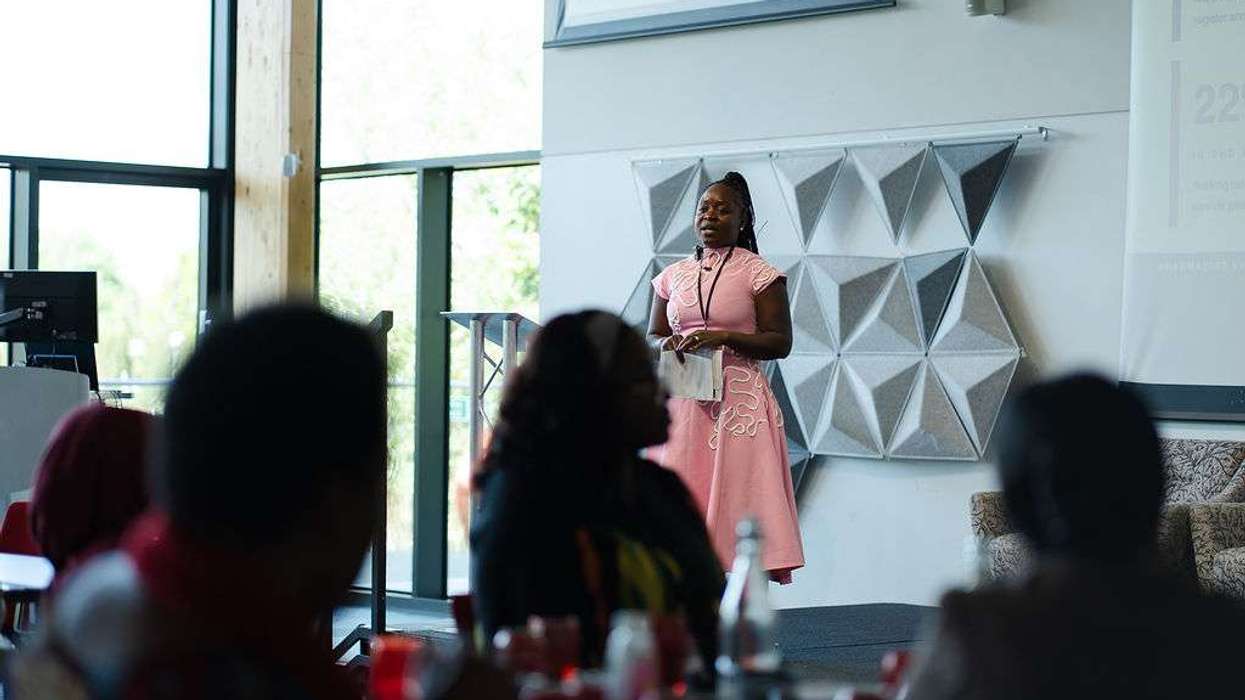

While internationally trained pharmacists have the professional competence, it is crucial to address the barriers they face while settling down in a British workplace, said Faith Adebimpe, founder of Pharmacist Evolve, at the Catalyst Conference held recently.
"A lot of them come to the country to pursue pharmacy, but many go through the rigours of exams and tests.
"At the end, many feel, 'I am qualified for this, but not fully prepared'."
Adebimpe pointed out that an internationally trained pharmacist is "not only navigating a transition, but also a new environment, new culture, and a new system."
She feels there is a huge gap. "It is not lack of intelligence, or lack of tenacity, but lack of tailored support," she said.
She said that from the early days of her mentoring the internationally trained pharmacists, she realised the problem was much more layered.
She said that if these issues are not addressed in the beginning, the confidence level of these pharmacists declines, and it could lead to attrition and loss of workforce talent.
Adebimpe pointed out that workforce readiness, communication confidence, mentorship, psychological safety, leadership, and cultural acclimatisation play a crucial role in ensuring that internationally trained pharmacists succeed and thrive in the UK.
She said these are open to debate and she would welcome suggestions from stakeholders, as it is a shared responsibility.
Lack of data
At the conference held on 23 May in London, she said there is little data out there on internationally trained pharmacists, and she herself had to work towards collating it.
Adebimpe claimed that most of these pharmacists are reluctant to speak up, and hence, data collection was a challenge.
"I had to do a lot of poking and prodding to make them speak up," she said.
Over a period of time, she persuaded some to speak up.
Integration challenges
She pointed out that at least 10 percent of new UK registrants are internationally trained pharmacists.
If one in ten people are not properly integrated, the team will struggle, and it could even drain the system, she said.
"We have people who are struggling, not because of a lack of competence, but out of a lack of being properly integrated and supported."
She said 58 percent have passed the GPhC registration exam, but some of them face visa issues and financial constraints.
The visa issue arises if the candidate fails some exams and clears them later. By that time his visa may be close to expiry and may have already spent a lot on day-to-day expenses.
She said from the survey she has done, 22 percent would like start their own dispensary, but there is no support for them. So, they end up working with retail outlets and chains.
We need to come together and create a structure to help them, she said.
She felt the overseas talent had not been nurtured properly.
While 74 percent claim to have suffered burnouts, 50 percent have alleged discrimination. It is nothing new, but now the layers are more, she observed.
Different stages
"International pharmacists go through different stages: OSPAP (Overseas Pharmacists Assessment Programme), foundation registration, and career.
"Every stage of this pathway has its own difficulty, and each institution or stakeholder is trying to address this in their own way."
Workforce readiness
Some pharmacists are not ready to tackle the OSPAP exam and are keen to take up dispensing, but lack the experience that employers seek.
Helping them provide early exposure will ensure that they will be able to face the barriers they face later on and help pass the GPhC exam.
She pointed out that these topics get discussed in Pharmacy Evolve website, which she started.
For early exposure placement, they can also seek the help of organisations like the Pharmacy Defence Association and others.
Adebimpe pointed out that the examination and training done in the UK can differ from those in other countries.
And in the first year, the internationally trained pharmacists have a lot to do. "Organisations like CPPE can help address the challenges they face, and how to tailor their support for this group," she said.
Some of the universities are also doing their bit to help these candidates, she added.
She observed that some employers don't understand that internationally trained pharmacists have their expertise, "but they need to focus on helping them understand now the system works."
We need to help them understand the support the internationally trained pharmacists need and help them bring "their very best to the table”.
She also observed that many of these pharmacists suffer from 'transition grief'. We need to encourage them to speak up and help overcome it.
She said an internationally trained pharmacist should understand their boundaries as a professional and understand the support they can expect as a professional.
She said that there is very little awareness about the challenges they face and called for greater sensitisation of the challenges faced by them.