






Community Pharmacy England (CPE) director James Wood said neighbourhood health means "shifting care built around organisations to shifting care being built around people and communities."
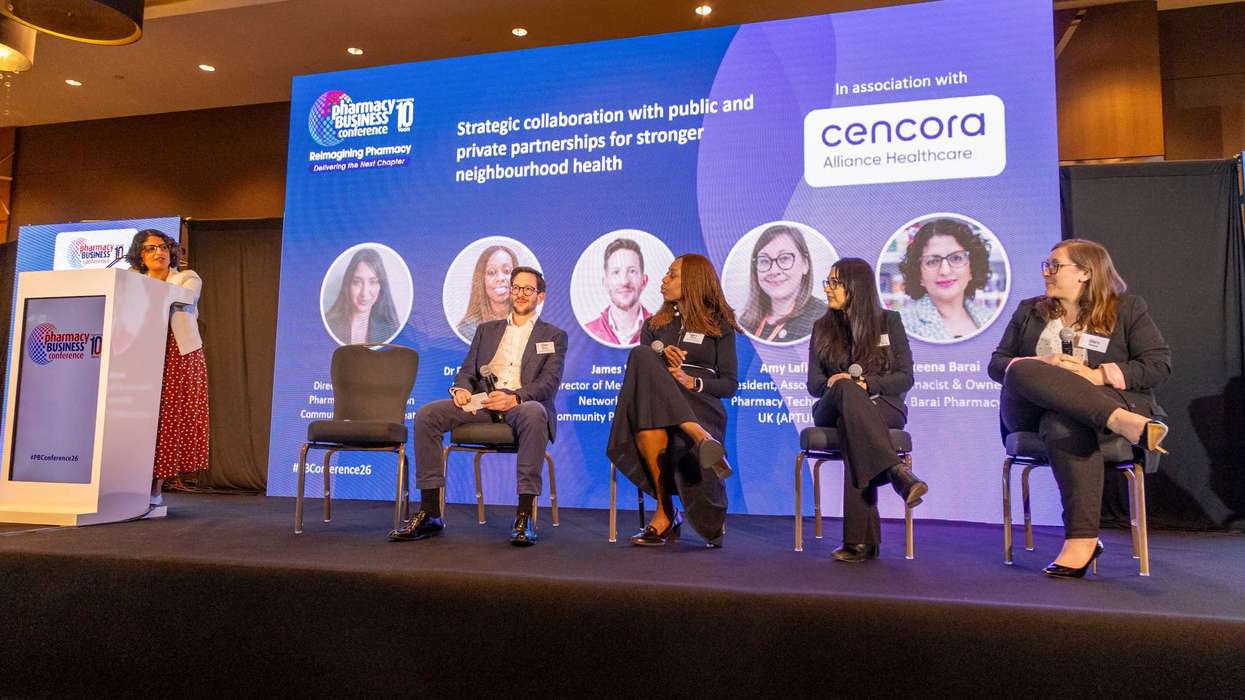
While taking part in a panel discussion "Strategic collaboration with public and private partnerships for stronger neighbourhood health" at the 2026 Pharmacy Business Conference on Sunday (19), he said that while bringing in neighbourhood health the existing community pharmacies should not be replaced.
While initiating the discussion, the moderator, Reena Barai, pharmacist and owner of SG Barai Pharmacy, remarked that neighbourhood health is the new buzzword, and "no one who knows their patients better than the nurses and pharmacists".
She said that neighbourhood health means three things - "What we do every day, we literally know our neighbourhood, and we know our people."
Dr Dupe Akomolafe, Medical Director, Christchurch Health Centre, said community pharmacy is very well placed at the grassroots level to provide neighourhood health.
She said community pharmacists are the most trusted healthcare professions and community pharmacies are the "door" to neighbourhood health.
However she also wondered what the "doorway" can offer. "Are we ready for neighbourhood health?"
"I'm asking what the patients need. You need to be there. You need to be well placed."
She said it is a very exciting time for community pharmacy, and despite the challenges there are many opportunities out there.
Manchester experiment
Luvjit Kandula, Director of Strategy and Pharmacy Transformation, Community Pharmacy Greater Manchester, explained that neighbourhood health is the delivery arm of the NHS 10-year plan.
She said that community pharmacies have the access, got more sites in deprived areas, and are delivering Pharmacy First and other services, but she lamented that community pharmacies are not integrating with local partners - the GPs, social prescribers and public health teams.
Citing an example of GM Livewell Programme in Manchester, she said all the four disciplines of primary care are working together under the leadership of the mayor.
She pointed out that there are community pharmacies in Greater Manchester who receive over 400 pharmacy first referrals a month from GP practice.
Kandula said as a sector community pharmacies need to be outward looking and start building those relationships.
"Because if we don't have the visibility, we are invisible," she said.
She said this efforts should not be confined to sector leaders, but every contractor should be his own marketeer.
"And if that is, we're going to have that visibility. It's got to be a collective movement," she said. Amy Laflin, President, Association of Pharmacy Technicians UK (APTUK), said that pharmacy technicians can provide wide-ranging support, especially after the recent changes in Patient Group Directions (PGDs) legislation.
"So please do utilise them to be able to support your patients. We are all here for patient safety and for our public services."
When Barai queried Wood about how community pharmacies would benefit from neighbourhood health, he said the pharmacies have been mentioned many times in the NHS neighbourhood framework.
Since pharmacies provide high value services to neighbourhoods and the local NHS, there will be many opportunities.
However, he cautioned that pharmacies need to be sustainable to benefit from it.
Technology in pharma
Then the question about the use of technology in pharmacy arose.
Akomolafe said that digital integration plays a key role and it will free us to do our work better.
She said many pharmacists continue with the old ways - they work in silos and want to do everything.
She pointed out that healthcare has moved on and we should increase the use of technology to treat patients better.
"We need to increase technology for dispensers, so that they can be there to do what they need to do. You didn't go to university to dispense.
"You can do so much more clinical services."
Engaging the GPs
Regarding the ties with GP surgeries, Kandula said the frontline team should be provided training and leadership.
Citing the Manchester example she said, "We equip our frontline pharmacy teams and give them sets of tools to go and speak to the GP professors."
They go and set up a meeting, where they make the GPs about the services on offer at pharmacies. "Because often general practice don't understand the extent of what we do."
Pharmacies in most places fail to do so, or don't do it in a consistent manner, she added.
She said the GP practice is going to be quite central to the neighbourhood model, and pharmacies need to be "at the table" or it will send the message that community pharmacy is not interested.
"Therefore, when they develop their next clinical pathway, we will not be there and involved in it."
Hence it is a good investment to train pharmacy teams, and all others also need to become "confident and external facing", she added.
She also cited another example of engagement at the ICB level. Their clinical leader and chief pharmacist Alison goes and speak to every single leader to promote what pharmacies are doing and give them the numbers.
As a result, they hit 40,000 Pharmacy First referrals in one month last September.
Making pharmacy future-ready
On being asked what tips the panellist would like to give to the audience, Laflin said, "Please utilise the workforce that you have in your businesses.
"Pharmacy technicians can really strengthen the engagement of your patients and public.
"Please make sure that you're allowing clinical service opportunities and being able to put them at the forefront of your pharmacy business.
"It will absolutely benefit you to be able to focus on other parts of your services."
Akomolafe said pharmacists should get their premises ready.
"When I open that front door, do I open it to a shop? Or a health care hub?
"Because I'm not going to get my coils fitted in a shop. So get your premises ready.
"If you don't have the premises, no matter what skill set you have, nobody would want to come."