






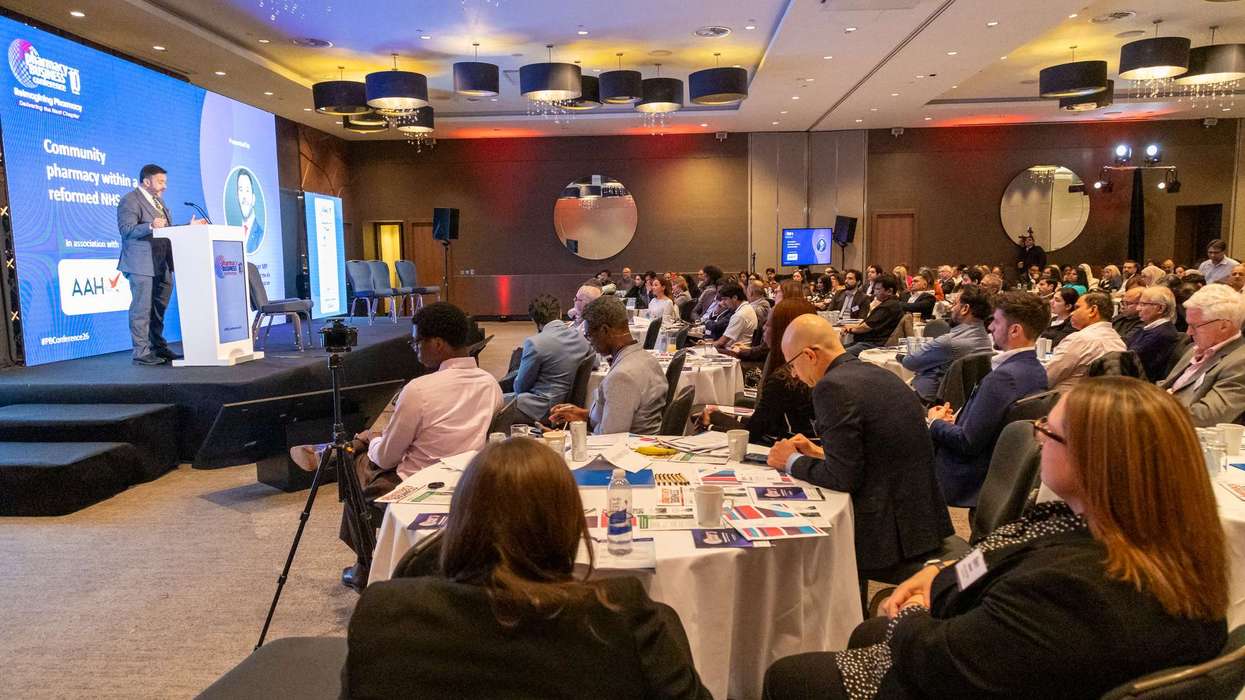

Member of Parliament Sadik Al-Hassan has called upon the community pharmacy fraternity to be more united to fight for their rights.
While delivering a keynote address at the 2026 Pharmacy Business Conference at London Hilton Wembley on Sunday (19), Al-Hassan, a former pharmacist, said that unity is not just "desirable", but is "essential".
"When pharmacy speaks with a fractured voice, when different parts of the sector pull in different directions, we hand our opponents an easy way out.
"When pharmacy speaks with one voice, things change. I have seen it. A united sector is a sector that gets heard - and more importantly, a sector that gets results.”
Al-Hassan, who also chairs the All-Party Pharmacy Group (APPG), pointed out that pharmacies are delivering more complex clinical services to a growing patient base while receiving significantly less funding in real terms than a decade ago.
"The figures reflect this issue just as clearly - the total cost of delivering NHS pharmaceutical services across England last year was estimated at over £5 billion. The funding provided at the time was just over two and a half billion. That leaves a shortfall of £2.3 billion," he said.
However, he also cautioned that the public finances are under strain and no one should expect a "sudden, transformational injection of funding overnight."
The North Somerset MP said the 2026/27 negotiations, which are currently underway, should not be seen as a single payout, "but a credible, multi-year pathway back to profitability."
He assured that the government was committed in principle to bring in a sustainable funding and operational model. "We must hold them to that commitment - loudly, unitedly, and with the evidence to back it up."
Al-Hassan said the government was committed towards moving care from hospitals into the community, as part of its 10-year plan. "And in that world, pharmacy is not a peripheral player. It is a cornerstone."
He cited the administration of over four million flu vaccines and the success of the Pharmacy First initiative - which delivered more than five million consultations in its first year - as evidence of the sector’s impact.
Al-Hassan, however, praised the sector’s political influence, noting that community pharmacy “punches above its weight.”
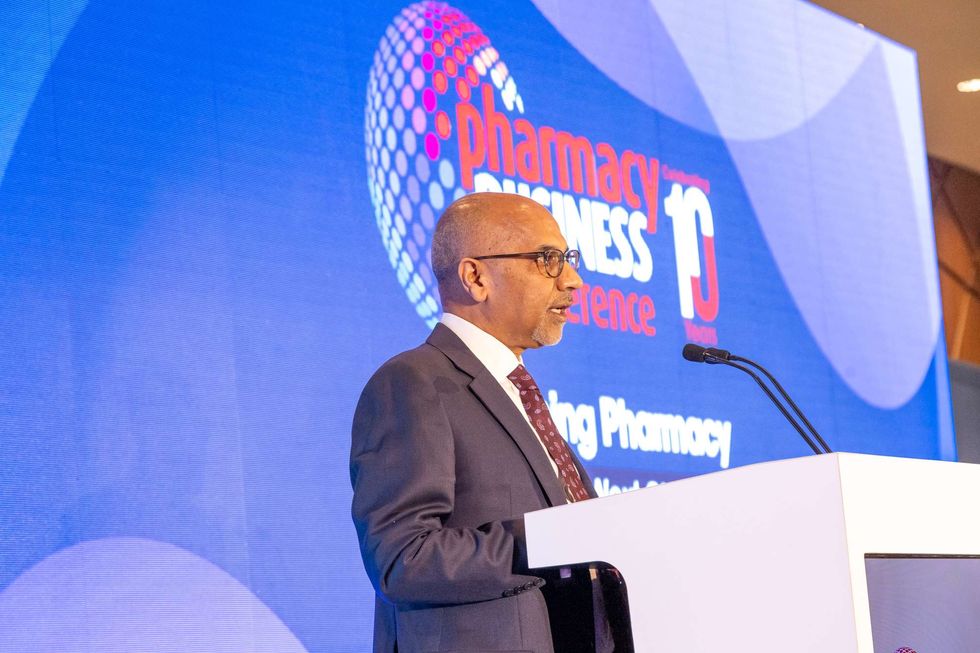
In his opening remarks, Shailesh Solanki, executive editor of Pharmacy Business, said while the new funding settlement announced last year was a vital first step, it was largely offset by rises in national insurance, the national living wage and business rates.
 Pharmacy Business
He told the conference, “Pharmacies have no idea whether they are accessing what they are owed.“Reimbursement remains non-transparent, unfairly distributed and buried within a deeply complex system.”
Solanki also noted that pharmacy can play a bigger role in women’s health, in weight loss and in delivering a wider range of NHS vaccinations.
“To achieve these ambitions, community pharmacy must speak with a unified voice, own a common vision and a have a plan aligned with the government’s reform of the NHS.“Only then will the government begin to listen and respond,” he said.
Earlier, the conference chair, Baba Akomolafe, director of Christchurch Health Centre, opined that regardless of the outcome of CPCF negotiations, the current funding model is unlikely to sustain community pharmacies.
He framed the event as an opportunity to explore how the sector can strengthen its business model through innovation, efficiency, and expanded services. The conference focused on leveraging technology, building capacity to deliver high-quality NHS and private services, and developing self-care offerings as new revenue streams, he added.
A panel on “Strategic Collaboration for Stronger Neighbourhood Health,” chaired by Reena Barai, brought together leaders including Luvjit Kandula, Dupe Akomolafe, James Wood, and Amy Laflin. The panel agreed that community pharmacies are ideally positioned to lead neighbourhood-based care.
Discussions highlighted the need for stronger collaboration with general practitioners, better utilization of pharmacy technicians, and increased visibility of pharmacy services.
Technology and innovation
Technology and innovation were recurring themes throughout the conference. Speakers stressed that digital tools and automation can improve efficiency and free pharmacists to focus on patient care, but emphasised that clear business objectives must guide the adoption.
Other sessions explored leadership, workforce development, and evolving service models. Angela Carle discussed the growing importance of self-care and over-the-counter solutions, while Trevor Gore highlighted the distinction between leadership and management and urged pharmacy managers to focus on controllable factors to drive performance.
Industry insights from Joanne Redding revealed a changing pharmacy landscape, with fewer contractors dispensing higher volumes and a shift toward independent pharmacies. She noted that services like Pharmacy First could significantly boost patient engagement, particularly for independents.
Public vs private services
In the latter half of the conference, Olivier Picard illustrated the financial imbalance faced by pharmacies but citing his personal experience of running the Newdays Pharmacy. He noted that while 90 percent of their work is NHS-funded and often loss-making, but private services, with just 10 percent of activity, generated all the profits.
A technology-focused panel featuring Tariq Muhammad and others reinforced the importance of aligning automation with strategic goals.
Meanwhile, Sunil Chandarana of May & Thomson Pharmacy, who won the Pharmacy Business of the Year Award in 2025, shared his professional journey.
He attributed his success to resilience, innovation, and teamwork.
The conference concluded with a leadership panel moderated by Shilpa Shah, where sector leaders called for closing the funding gap, stabilizing medicine pricing, and investing in workforce development.
One of the participants, Brian Chambers, managing director, AAH Pharmaceuticals, remarked that medicine prices have become unsustainable, and the supply chain is suffering. He called for predictability in prices.
In his closing remarks, Akomolafe reiterated that neighbourhood care represents the future of healthcare delivery and urged the sector to collaborate, innovate, and take ownership of its role in shaping that future.
In a LinkedIn post after the conference, Akomolafe thanked the organisers for bestowing faith in him to chair the Pharmacy Business Conference, which he felt was like his ‘first day as an apprentice’, though he appeared happy to get out of his comfort zone. He also thanked Reena Barai for pushing him forward.
The conference also provided the participants the opportunity to network with people whom they haven’t met for long, or seen only during Zoom and Teams meetings, and explore opportunities to innovate and grow their businesses.